


Custom Tactical Flashlight Design: Engineering Optical, Thermal, and Electronic Performance
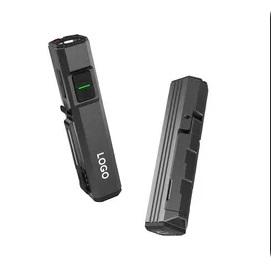
Developing a differentiated tactical flashlight for law enforcement agencies, defense contractors, security personnel, or demanding outdoor retail channels requires far more than selecting a high-wattage LED emitter. In mission-critical tactical environments, sudden output throttling, internal lens fogging, or momentary switch failure under weapon recoil or torrential rain can render a lighting tool completely ineffective. Consequently, brand owners seeking to build high-margin proprietary tactical product lines must collaborate closely with R&D engineering teams capable of balancing optical beam throw, thermal dissipation, and ruggedized electronic architecture from the earliest blueprint stage.
Successful custom tactical flashlight design begins with defining the operational mission profile and optical geometry. A long-range perimeter search or hunting flashlight requires a deep, precision-polished smooth parabolic reflector (SMO) paired with a high-intensity, small-die emitter to maximize peak beam intensity (candela) and effective throw distance. Conversely, a close-quarters duty light or indoor room-clearing tool benefits from a micro-textured orange-peel reflector (OP) or custom TIR optic that smoothly blends the central hotspot into a wide, artifact-free peripheral spill beam. Experienced R&D engineers utilize optical ray-tracing simulation software during the CAD phase to model beam angles and verify optical transmission efficiency before cutting a single steel mold.
Thermal and mechanical engineering are equally decisive when pushing compact aluminum housings to high outputs exceeding 1,000 to 3,000 lumens. High-power LEDs generate intense localized heat directly beneath the emitter die; without an efficient thermal conduction path, LED phosphor degrades prematurely and luminous flux plummets within seconds. Custom engineering solves this challenge by mounting LEDs onto thermoelectric-separated copper MCPCBs press-fitted directly into thick-walled aluminum head shelves, while dual-spring gold-plated battery contacts absorb severe axial shock from firearm recoil or concrete drops. On the firmware and electronics side, custom microcontroller programming allows brands to specify exact user interface sequences—such as instant-on turbo, momentary tactical tail switching, hidden strobe, or electronic lockout protection—tailored to their end-users.
Equally important in custom tactical hardware development is environmental sealing and ergonomic grip reliability under adverse field conditions. Engineers incorporate hardened stainless-steel strike bezels, anti-reflection coated tempered mineral glass lenses, deep trapezoidal square-cut threads, and concealed internal waterproof USB-C charging ports that maintain full IP68 submersion integrity even without external rubber dust covers. Every mechanical detail—from tail-cap shrouding that prevents accidental activation to deep-carry titanium or spring-steel pocket clips—is refined during prototyping to meet real-world duty requirements.
Through comprehensive ODM engineering services at Shengqi Lighting, product managers can customize bezel geometry, anti-slip knurling patterns, clip retention, and charging port sealing while retaining full intellectual property protection over private molds. By integrating optical precision with ruggedized electronics during the R&D phase, brands deliver genuinely superior tactical hardware that commands premium retail pricing and resists market commoditization.
 Dutch
 English
 Arabic
 French
 Spanish
 Portuguese
 Deutsch
 Turkish
 Italiano
 Russian
 Romaian
 Portuguese (Brazil)
 Greek