


BaoZhiWei's Carlamp-Facory: A LED Truck Tail Lights Manufacturer Explains Load Resistor Placement
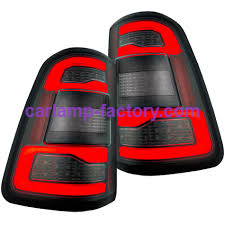
A truck driver replaces old incandescent tail lights with new LED units. The lights shine bright. Then the turn signals start flashing twice as fast. This rapid blinking, called hyperflash, happens because the truck's computer detects low electrical resistance. A Led Truck Tail Lights set from Carlamp-Facory, produced by Taizhou Baozhiwei Vehicle Industry Co., Ltd., addresses this issue with load resistors. Some models house the resistor inside the light body. Others require an external component. This difference raises a direct question for any fleet operator: why do some LED truck tail lights feature a builtin load resistor while others require an external one to prevent hyperflash?
The load resistor mimics the power draw of a traditional incandescent bulb. A stock incandescent tail light pulls a certain current. An LED pulls far less. The truck's computer interprets this drop as a failed bulb and speeds up the flash rate. Carlamp-Facory's builtin resistor eliminates this error by adding extra load inside the light housing. The truck sees normal resistance and flashes at a regular pace.
Space constraints dictate resistor placement. A builtin resistor requires extra room inside the tail light housing. Carlamp-Facory's larger truck lights for semitrailers have enough internal volume for an embedded resistor. A compact light for a pickup truck may lack that space. The factory chooses an external resistor for smaller designs. The user mounts the resistor near the light and wires it into the circuit.
Heat management separates the two approaches. A load resistor converts electrical energy into heat. A builtin resistor radiates heat inside the tail light housing. Carlamp-Facory's engineers design housings with heat sinks and ventilation slots for builtin resistors. An external resistor hangs in free air. The surrounding airflow cools the component. A truck owner who mounts an external resistor against a plastic bumper risks melting the bumper. The factory recommends metal surface mounting for external units.
Installation complexity favors the builtin resistor. A driver replaces the tail light, plugs in the factory connector, and finishes. No extra wiring. Carlamp-Facory's builtin resistor models serve fleet managers who swap lights across hundreds of trucks. An external resistor kit requires cutting, splicing, and mounting. The installer must identify the turn signal wire and ground. A mistake causes no light at all. The extra labor cost offsets the lower price of an externalresistor light.
Vehicle compatibility varies between the two types. Some trucks use a pulsewidth modulated signal that fools simple resistors. Carlamp-Facory's builtin resistor includes a filtering circuit that works with PWM systems. An external resistor alone may not stop hyperflash on these trucks. The factory's technical guide lists which vehicle models need the filtered builtin resistor. A buyer who chooses an external unit for a PWMcontrolled truck will still see rapid flashing.
Custom lighting setups often use external resistors. A truck owner building a custom tail light panel from individual LED strips needs to add resistance. Carlamp-Facory offers bare external resistor packs for these projects. The builder attaches one resistor to each turn signal circuit. A builtin resistor works only for the specific light it ships with. A custom builder cannot extract a builtin resistor for a different application.
Heat generation scales with resistance value. A higher resistance creates more heat. Carlamp-Facory's builtin resistors use a carefully chosen value that balances heat output and hyperflash prevention. The factory molds the resistor into a ceramic housing inside the light. An external resistor of the same value runs at the same temperature but sits exposed. A driver touching an external resistor after a long trip feels significant heat. The builtin resistor contains this heat within the light assembly.
For any fleet or individual needing correct flash rates, https://www.carlamp-factory.com/product/ shows Carlamp-Facory's LED Truck Tail Lights resistor configurations, where BaoZhiWei's engineers specify builtin resistors for plugandplay convenience and external resistors for custom or spaceconstrained installations. A builtin resistor saves installation time. An external resistor offers flexibility for nonstandard wiring. Which hyperflash solution matches your truck's electrical system and your available installation time?
 Portuguese
 English
 Arabic
 French
 Spanish
 Deutsch
 Turkish
 Dutch
 Italiano
 Russian
 Romaian
 Portuguese (Brazil)
 Greek