


How to Estimate Epoxy Flooring Costs?
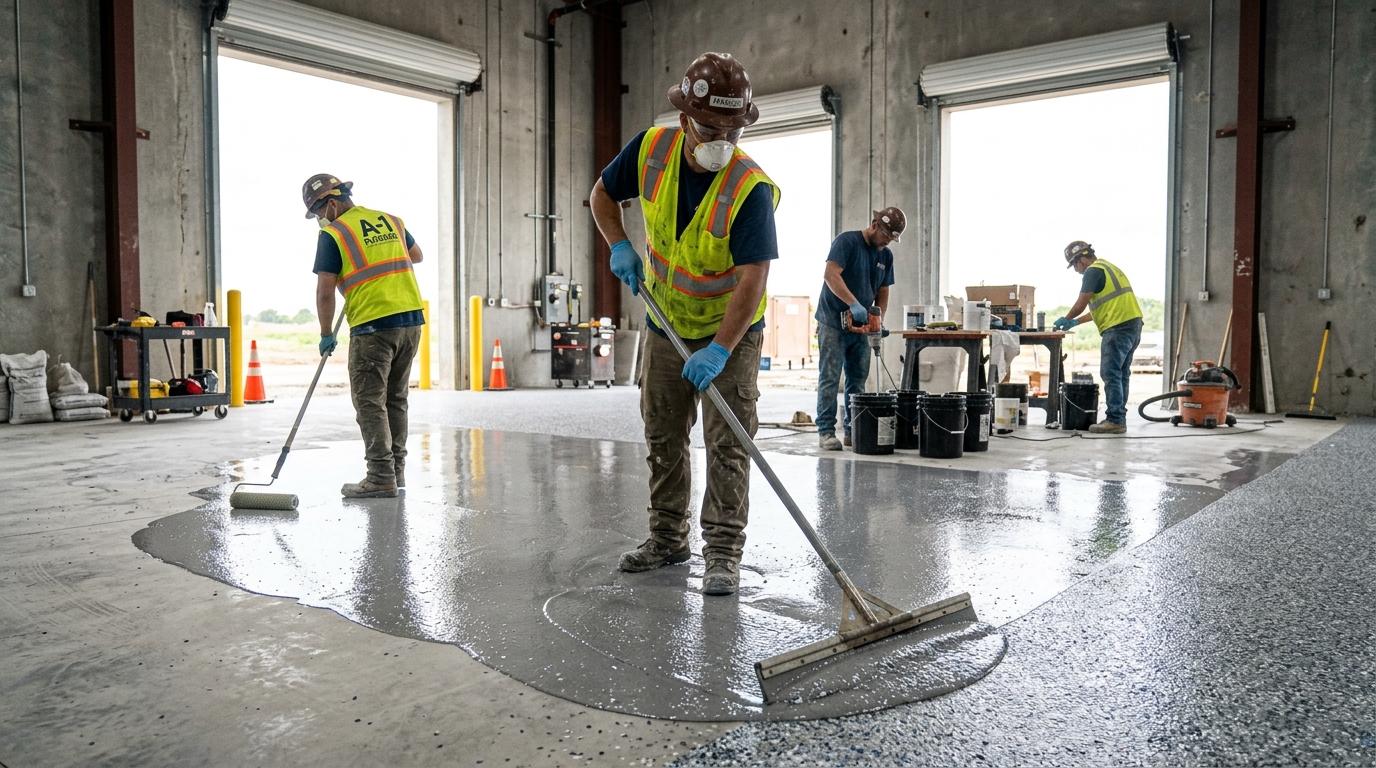
To calculate the price for epoxy flooring in the US, you first need to know how big your floor is and then multiply it by the average price of the installation, which is $4-$12 per square foot. Apart from that, you need to consider the surface preparation, the kind of material, the labor, and the decorative finishes. To get a more accurate estimate, you need to check the condition of the concrete, select the right epoxy system, and take into account regional labor rates and moisture conditions.
Homeowners, property managers, and small contractors will benefit from a detailed quote as it will help them avoid budget surprises and it will allow them to compare contractor bids accurately. Most professionals rely on a reliable estimating service USA to determine the quantities of materials and the costs of the project very accurately, especially when it comes to bigger garages, basements, or commercial spaces, since small mistakes can be very costly there.
Understanding Epoxy Flooring and Where It’s Used
Epoxy flooring is a high-strength,h resin-based finish that is spread over concrete to form a continuous, stain-proof, and durable surface. In the US, it is frequently used in residential garages, basements, workshops, retail stores, warehouses, and healthcare facilities.
Enhancing the look, protecting the concrete from wear and tear, and making cleaning easier are the three main reasons homeowners decide to install epoxy. Additionally, it is more resistant than bare concrete against vehicle traffic, road salt, oil spills, and temperature changes of the seasons.
Properly estimating an epoxy floor includes knowing the costs of materials and also thinking of how the area will be used, since heavy-duty use usually means thicker systems and more preparation.
Step 1: Measure the Floor Area Correctly
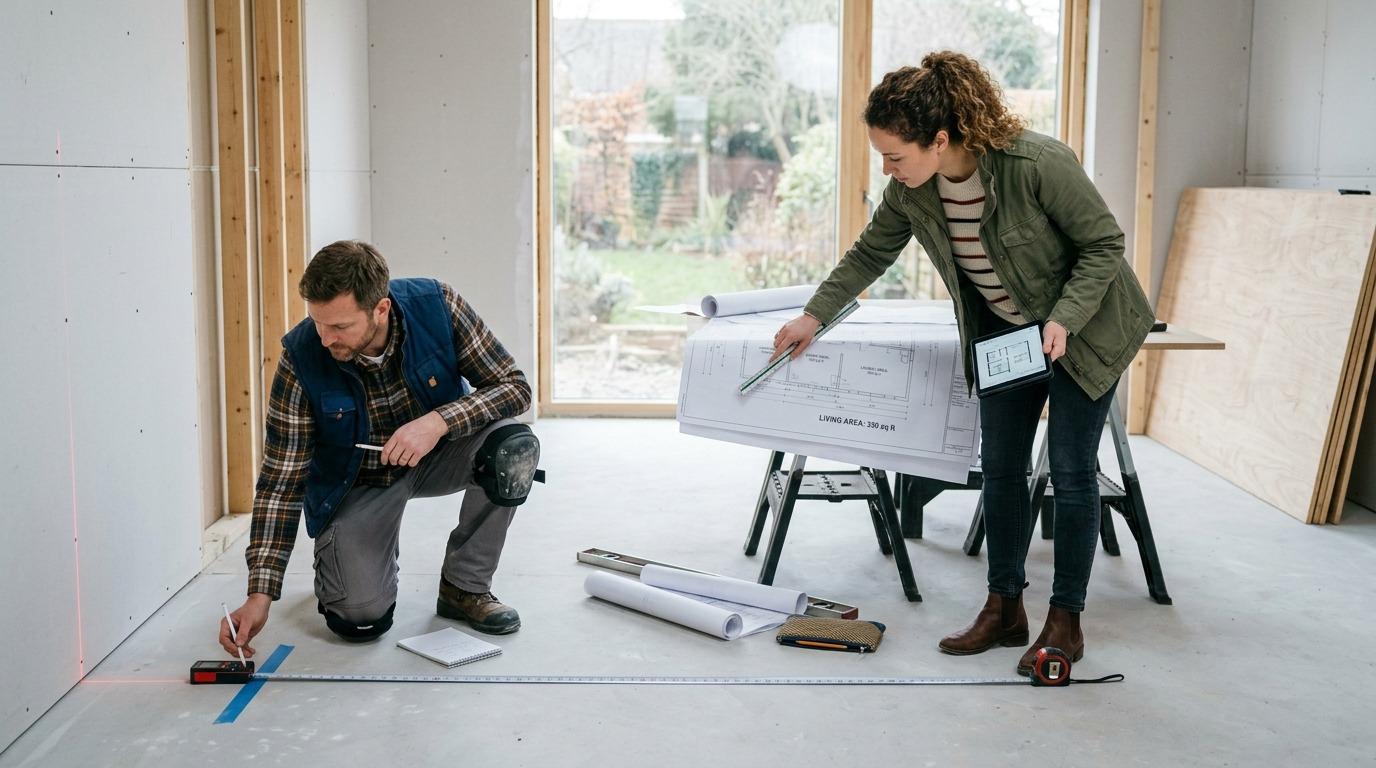
The very first thing for an epoxy estimate is accuracy in measuring.
Calculating square footage uses the simple formula length times width. So if a garage is 20 feet by 22 feet, that would be 440 sq ft.
Spaces that do not have a regular shape should be split into rectangles, measured separately, and then summed up. Most professionals would add 5- 10% extra to cover waste, edges, and different absorption of concrete.
Example Floor Size Estimates
|
Space Type |
Typical Dimensions |
Approx. Sq Ft |
|
1-car garage |
12 × 20 ft |
240 sq ft |
|
2-car garage |
20 × 22 ft |
440 sq ft |
|
3-car garage |
32 × 22 ft |
704 sq ft |
|
Basement |
30 × 30 ft |
900 sq ft |
Precise measuring keeps your calculations of materials and contractors' estimates real and reliable right from the start.
Step 2: Understand Average US Epoxy Flooring Costs
The expenses involved in getting epoxy flooring in the United States can change quite a lot, depending on whether you do it yourself or hire a professional. With a DIY epoxy kit, the expenses usually come to around $2 to $5 per square foot, and only the basic materials are included. A professional for a basic epoxy system costs anywhere from $4 to $7 per square foot, and this price includes both surface preparation and installation. Premium decorative epoxy for a high-end finish can set you back $8 to $12 or even more per square foot, and the price is for multi-layer applications with flakes or metallic effects,s giving a very attractive and durable look.
Labor is frequently responsible for 30 to 60 percent of the total project cost. And even small garages might have contractors' minimum charges irrespective of the size.
Nevertheless, regional factors are also essential. Labor costs in states like California, New York, and Massachusetts are generally higher, but those in the Midwest and Southern states are usually lower.
Step 3: Evaluate the Condition of the Concrete
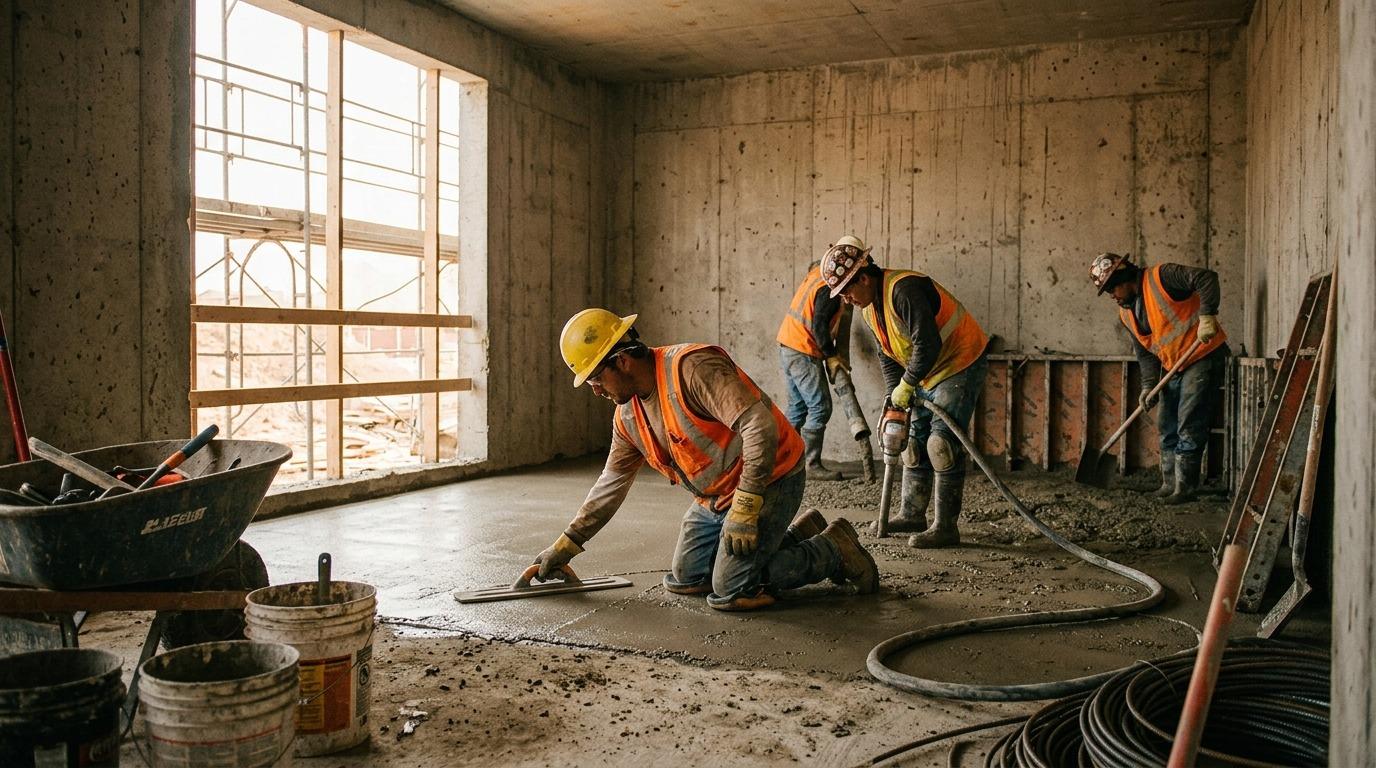
The preparation of the surface is the biggest single cause of hidden costs in epoxy flooring. The epoxy can only be applied to a surface that has been thoroughly cleaned, dried, and is in good structural condition, assessments a concrete estimator typically factors in during cost planning. Cracks, oil stains, old paintwork, and dampness are problems that require repair or treatment.
If proper prep work is skipped, it can cause the epoxy to peel or bubble. That's why professional installers give this step a lot of weight in their estimates.
Step 4: Choose the Right Epoxy System
Epoxy coatings consist of several types, each having different features that affect both the price and lifespan. Among them, water-based epoxy is the cheapest option because it is thin, easy to apply, and perfect for DIY projects. A solvent-based epoxy can provide better adhesion and more strength; therefore, its price is in the middle range. For the highest resistance and the longest service time, 100% solid epoxy is a thick, professional-grade product; however, it is quite expensive. The decision on which epoxy system to buy should be based on your project requirements, available funds, and the level of durability you want.
Many US properties use multi-layer systems that include primer, base coat, decorative flakes, and a protective topcoat, with costs often calculated through detailed Xactimate estimates. Metallic and quartz finishes increase material cost but also boost durability and visual appeal.
Step 5: Calculate Material Quantity
Epoxy coverage depends on thickness and product type. Typically, a gallon will cover 100 to 160 square feet.
A skilled multi-layer system may consist of:
- Primer coat
- Base layer of epoxy
- Decorative flakes or quartz
- Protective topcoat
Step 6: Calculate Labor Costs
Labor costs depend on the size of the project, the difficulty of preparation, and the complexity of the system.
In general, professionals base their fees on:
- The amount of time required for surface preparation
- The number of epoxy layers
- The drying/curing schedule
- The addition of decorative elements
A single-coat garage, for instance, might be done in a day, whereas a high-end system with grinding and flakes could take 2- 4 days.
Sometimes, even if the area is small, there might be a minimum charge of $1, 000, $1, 500 for small projects.
Step 7: Think About Regional and Environmental Factors
There's a great variation in the US weather situation, and each area's condition has an effect on the epoxy application requirements. Evergreen northern states with freeze-thaw cycles demand strong coatings and the right curing temperature. Moist and warm southern states might require additional moisture tests and vapor barriers to be installed.
The time of scheduling can also change the price. Spring and summer are crowded times for installations, and thus, the contractors have the right to charge more. Warranty, which is normally 5 to 15 years, is also an important factor to be considered when comparing costs. A higher price at the beginning may be worth it in the long run if the coating lasts longer.
Conclusion
Calculating epoxy flooring costs in the US goes way beyond simply multiplying the area by a price. A dependable quotation also takes into account the precision of measurements, the state of the concrete, the choice of system, the material coverage, the labor, and the environmental conditions.
Homeowners who grasp these factors will be able to conveniently compare contractor bids, make financial plans, and select the appropriate coating system for their requirements. Whether it's a garage remodeling, basement finishing, or commercial space preparation, a comprehensive estimate will facilitate a trouble-free project implementation.
FAQs
1. How much does epoxy flooring cost for a 2-car garage in the US?
Most homeowners spend between $2,700 and $5,700, depending on how much preparation is needed and how good the coating is.
2. Is it worth it to do your own epoxy flooring?
DIY kits are less expensive but also less resistant. A professional job usually lasts longer because the surface is prepared, and you get a warranty.
3. How long is epoxy flooring expected to last?
If you get a professional installation, the epoxy floor should last 10-20 years, depending on how it is used and cared for.
4. Is epoxy a good choice to cover up concrete that is damaged?
In principle, yes, but the cracks, stains, and dampness issues have to be fixed first, which means that the total cost will be higher.
5. Will epoxy flooring add to the value of my house?
This kind of flooring may not increase the resale value directly, but it changes the look of the garage and basement, making them more durable and thus more attractive to buyers.

 English
 Arabic
 French
 Spanish
 Portuguese
 Deutsch
 Turkish
 Dutch
Dutch
 Italiano
 Russian
 Romaian
 Portuguese (Brazil)