


Reliable Tooling Development for Modern Automotive Applications
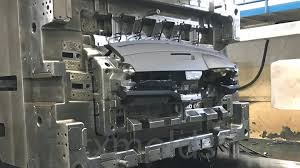
The automotive industry depends on highly accurate and durable tooling systems to produce components with consistent quality and reliable performance. In this manufacturing environment, the Auto Parts Mould serves as a fundamental element that transforms engineering designs into practical vehicle components through precise forming processes and controlled production conditions. Modern vehicles contain a wide range of molded parts, from structural components to decorative elements, each requiring specific dimensional accuracy, surface quality, and mechanical stability. The development of advanced automotive molds therefore combines material science, structural engineering, precision machining, and process optimization to support efficient large-scale manufacturing.
Material engineering is one of the most important factors affecting mold performance. Automotive molds must withstand repeated thermal cycling, mechanical pressure, and continuous production without losing dimensional accuracy. High-performance tool steels and alloy materials are widely selected because they provide excellent wear resistance, structural stability, and long service life. Heat treatment processes improve hardness and reduce deformation risk, while surface strengthening technologies enhance durability in demanding manufacturing environments. Proper material selection helps maintain cavity precision over extended production periods and supports consistent product quality throughout the mold lifecycle.
Precision design is essential for achieving reliable results in automotive component production. Different vehicle parts require unique geometries, surface textures, and assembly features that must be reproduced accurately during molding. Engineers use computer-aided design tools and simulation technologies to optimize mold structures before manufacturing begins. This approach helps improve material flow, reduce potential defects, and increase production efficiency. Careful structural analysis also ensures that molds can maintain stability under repeated manufacturing conditions while supporting high-volume production requirements.
Thermal management technology plays a crucial role in manufacturing consistency. During injection molding, temperature variations influence material flow, cooling speed, and dimensional stability. Efficient cooling channel design helps distribute heat evenly throughout the mold structure, reducing internal stress and minimizing production variation. Engineers evaluate thermal behavior according to product geometry and material characteristics to optimize cooling performance. Stable thermal control protects detailed cavity features and improves repeatability across continuous production cycles, contributing to higher efficiency and better component quality.
Advanced manufacturing technologies provide the capability to produce increasingly sophisticated automotive molds. CNC machining enables precise processing of complex cavity structures, while electrical discharge machining supports intricate areas that require specialized manufacturing methods. These technologies allow manufacturers to achieve tight tolerances and excellent repeatability across large production volumes. Quality inspection systems, including three-dimensional measurement equipment and surface analysis technologies, verify tooling accuracy throughout the manufacturing process. Automated production methods further improve consistency by reducing human error and enhancing process control.
Long-term mold performance depends on continuous maintenance, engineering optimization, and production feedback analysis. Manufacturers regularly evaluate tooling conditions to improve structural designs, reduce wear, and increase operational efficiency. Preventive maintenance strategies help maintain stable production quality throughout the mold lifecycle. As automotive technology continues to evolve toward lighter materials, more complex geometries, and higher manufacturing standards, tooling solutions must adapt to new engineering and production requirements. In this advanced manufacturing environment, the Auto Parts Mould provides essential support for efficient and reliable automotive component production. Taizhou Renxin Mould Co., Ltd. specializes in professional mold design and precision manufacturing solutions, with additional technical information available at https://www.rxmolds.com supporting advanced automotive applications worldwide.

 English
 Arabic
 French
 Spanish
 Portuguese
 Deutsch
 Turkish
 Dutch
 Russian
 Romaian
 Portuguese (Brazil)
 Greek