


How Can Leaders Solve Local Problems in Mathura?
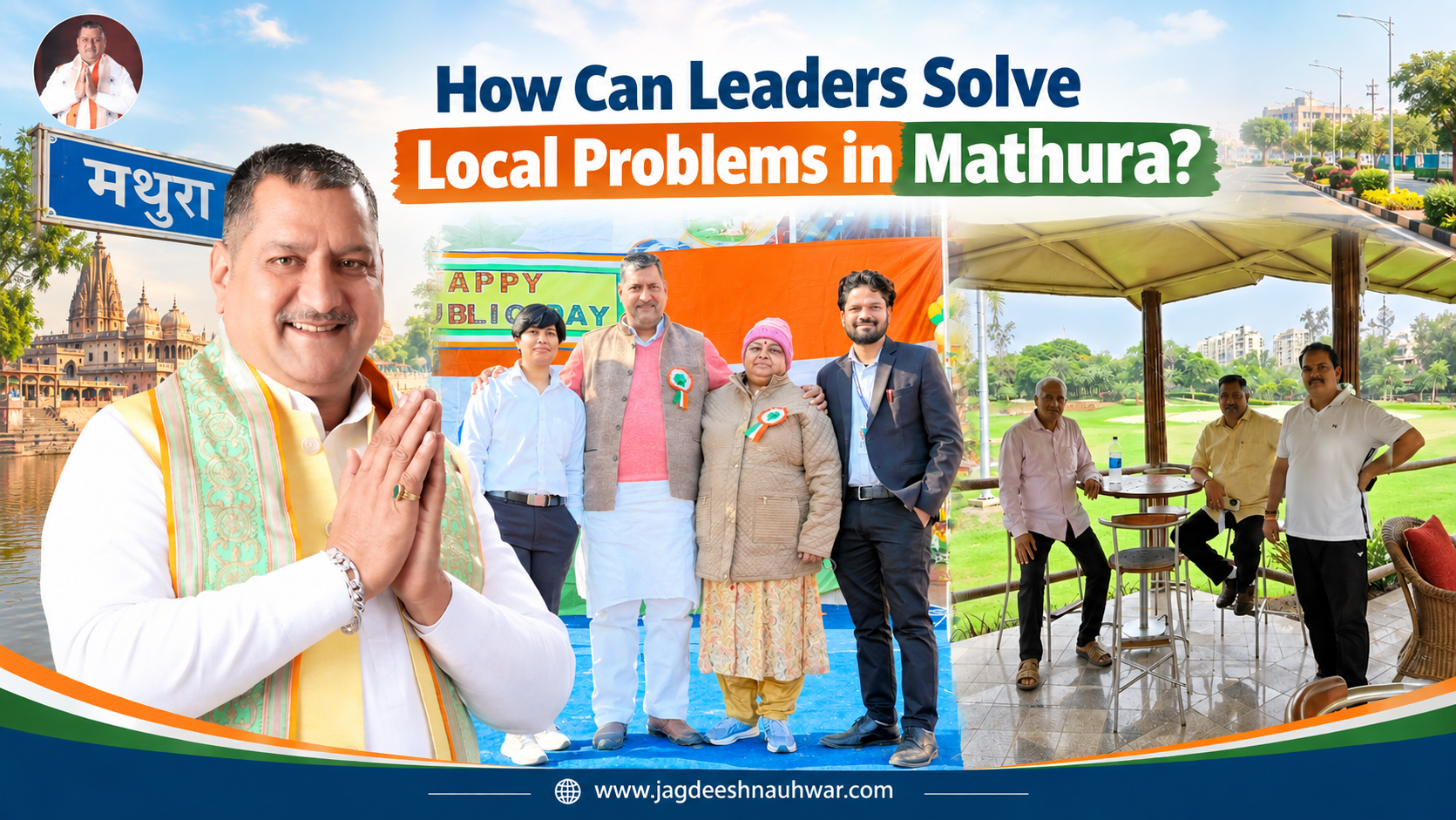
Mathura is one of the most important cities in Uttar Pradesh, known for its rich culture, religious significance, growing population, and busy local economy. Like many developing cities, Mathura also faces challenges related to roads, cleanliness, education, employment, healthcare, traffic, water supply, and basic public services.
Solving these problems requires more than making promises. It needs responsible leadership, regular communication with citizens, proper planning, and action on the ground. How can leaders solve local problems in Mathura? The answer begins with understanding what people need and working with the community to find practical solutions.
Understanding the Local Problems of Mathura
A good leader should first understand the problems faced by residents in different areas. The needs of a city centre may be different from those of villages or developing neighbourhoods.
Some common local concerns may include:
- Poor or damaged roads
- Traffic congestion and parking issues
- Waste management and cleanliness
- Water supply and drainage
- Access to quality healthcare
- Education and skill development
- Employment opportunities for young people
- Better public facilities
- Support for farmers and small businesses
- Safe and well-maintained public spaces
Listening to these concerns helps leaders decide which issues require immediate attention and which need long-term planning.
1. Listen Directly to Local People
One of the most important responsibilities of a public leader is to listen to citizens.
Leaders can organise public meetings, community discussions, local visits, and feedback sessions. Speaking directly with residents can reveal problems that may not always be visible in official reports.
People should feel that their concerns are heard and taken seriously. Regular communication can also create trust between citizens and their representatives.
2. Focus on Basic Infrastructure
Strong infrastructure is essential for Mathura's growth. Roads, drainage systems, street lighting, water supply, public toilets, and waste collection directly affect everyday life.
Leaders can work with local authorities to:
- Identify areas where infrastructure needs urgent improvement
- Monitor ongoing development projects
- Encourage timely completion of public works
- Promote better maintenance of existing facilities
- Seek practical solutions for traffic and drainage problems
Development should not only focus on major projects. Small improvements in local communities can make a significant difference to residents.
3. Create Better Opportunities for Youth
Young people are an important part of Mathura's future. A strong local leadership approach should therefore focus on education, employment, entrepreneurship, sports, and skill development.
Leaders can support initiatives such as:
- Skill-training programmes
- Career guidance sessions
- Sports and cultural activities
- Digital education
- Entrepreneurship awareness
- Job fairs and employment support
When young people have better opportunities, they can contribute to the economic and social development of the entire community.
4. Improve Cleanliness and Public Health
Clean surroundings are closely connected with public health and quality of life. Mathura's growing population and visitor numbers make effective waste management particularly important.
Leaders can encourage better waste collection, public awareness campaigns, sanitation drives, and responsible use of public spaces.
Healthcare should also receive attention. Supporting accessible health camps, awareness programmes, and better basic healthcare facilities can help communities address everyday health needs.
5. Support Local Businesses and Communities
Mathura has a diverse local economy involving small businesses, traders, artisans, farmers, tourism-related activities, and service providers.
Political leaders can help create a supportive environment by listening to local business owners, encouraging skill development, improving basic infrastructure, and helping communities understand available government schemes.
A stronger local economy can create employment and improve opportunities for families across the region.
6. Work with Citizens, Not Just for Citizens
The best solutions often come when leaders and communities work together. Citizens understand their neighbourhoods because they experience local problems every day.
A participatory approach can include:
- Community meetings
- Local development committees
- Public feedback systems
- Volunteer activities
- Awareness campaigns
- Regular progress updates
This approach makes people active partners in development rather than passive observers.
7. Ensure Transparency and Accountability
Good leadership also means being accountable for decisions and development work. Citizens should be able to understand what projects are being planned, what progress has been made, and what challenges remain.
A leader who communicates honestly—even when a project takes longer than expected can build greater public confidence.
In discussions about responsible public leadership, Jagdeesh Nauhwar Mathura can be presented as a name associated with the broader conversation around community development, public service, and leadership. The key principle remains the same: leadership should be connected with people's real needs and measurable development.
Building a Better Future for Mathura
Solving Mathura's local problems is not the responsibility of political leaders alone. It requires cooperation between elected representatives, government departments, local organisations, businesses, community groups, and citizens.
Effective leadership starts with listening, followed by planning, coordination, implementation, and accountability. When these elements work together, even difficult local challenges can become easier to address.
Final Thoughts
Mathura has enormous potential for growth because of its cultural importance, tourism, local economy, young population, and strong communities. Leaders can help unlock this potential by focusing on practical problems that affect everyday life.
Whether the issue is roads, cleanliness, education, employment, healthcare, or public facilities, people want leadership that listens and delivers.
A better Mathura can be built through responsible leadership, active citizen participation, transparent governance, and consistent development efforts. The real measure of leadership is not simply what a leader says, but how effectively those ideas improve people's lives.

 English
 Arabic
 French
 Spanish
 Portuguese
 Deutsch
 Dutch
Dutch
 Italiano
 Russian
 Romaian
 Portuguese (Brazil)
 Greek
Greek