


Lighting as Feng Shui: Using Natural and Artificial Light to Shift a Room's Vibe
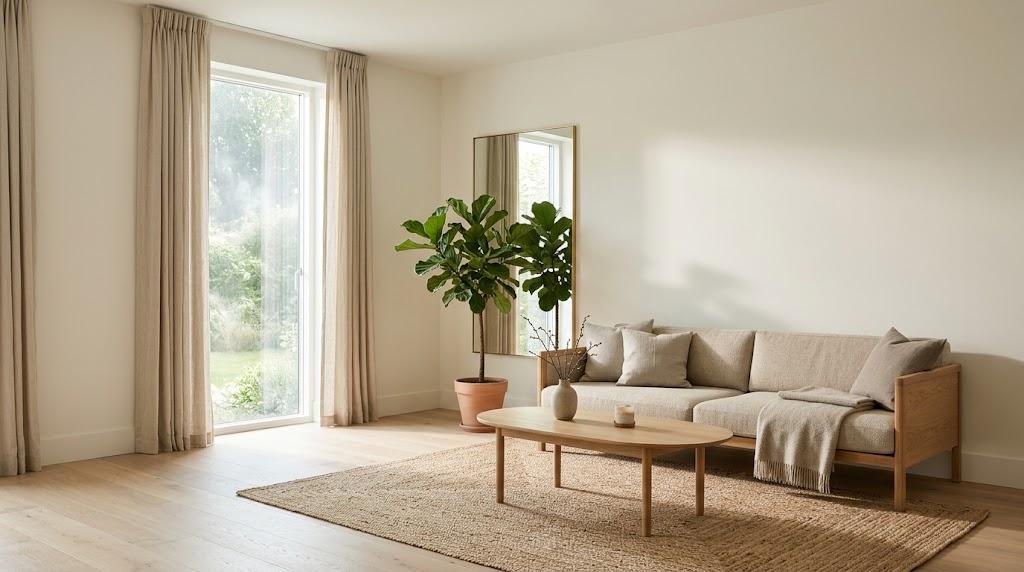
A photographer once told me that the difference between a forgettable photo and a striking one is almost never the subject. It's the light. The same principle applies to rooms. You can invest in beautiful furniture and curated art, but if the lighting is wrong, none of it lands the way it should.
Feng shui has understood this for centuries. While the practice is often associated with symbolic objects and directional charts, its deeper preoccupation is energy — how it moves, where it pools, and what accelerates or blocks it. Light is one of the most direct forms of that energy. Bright, well-distributed light keeps a space active and clear. Dim, stagnant light lets a room go quiet in ways that affect the people inside it.
The most useful part of this knowledge is how immediately you can act on it. No demolition, no contractors, no six-week lead times. Just observation and a few targeted changes.
Why Light Matters More Than You Think
Feng shui evaluates a home by how each room affects your physical and emotional equilibrium. Light is the first factor most practitioners assess because it acts the fastest.
The mechanism is biological. Your circadian system — the internal clock governing sleep, hunger, and energy — runs largely on light cues. Morning brightness tells your body to activate. Evening dimness tells it to slow the pace. When indoor lighting contradicts these signals, you feel the consequences as disrupted sleep, low motivation, or a vague sense of unease you can't pin down.
This is why practitioners flag certain rooms immediately during any assessment. A hallway with no fixture at all, a bathroom lit by a single recessed spot, a north-facing bedroom that never sees direct sun — these are the spaces where occupants report feeling inexplicably depleted. Nothing supernatural about it. The lighting simply isn't supporting the room's purpose.
Start With Natural Light
Before touching a single lamp, assess what daylight is already trying to do in your home. Sunlight has a quality no manufactured source can fully imitate — its color and intensity shift across the hours, naturally syncing with your body's expectations.
Clean your windows beyond what seems necessary. A season's worth of dust and environmental residue builds a film that dims incoming light without making itself obvious. You'll likely be surprised by the difference a thorough wash makes. This is the highest-return, lowest-cost step available.
Ensure curtains clear the full glass when open. Many curtain configurations block a portion of the window even in their open position. If you can see wall between the edge of your curtain and the window frame, a longer rod or different panel style will reclaim that lost daylight.
Inspect the exterior. Vegetation, awnings, and even neighboring structures can silently eliminate light from a room you assumed was well-fenestrated. When outdoor adjustments aren't feasible, an interior mirror positioned to catch and redirect available light can partially compensate.
Downgrade heavy curtains in shared living spaces. Thick, dark drapes serve bedrooms well for sleep management. In a living room or dining area, though, they suppress daylight for the majority of waking hours. Sheer or semi-sheer alternatives preserve privacy while allowing the room to stay connected to the outdoor light cycle.
Choose mirror placement with intention. A single large mirror on a wall perpendicular to a window will extend daylight further into your floor plan than a collection of smaller ones scattered at random. Avoid positioning mirrors where they'll reflect visual clutter — they amplify whatever they face.
North-facing rooms will depend more heavily on artificial sources. Lighter wall colors and a carefully layered lighting plan compensate for what the sun can't provide.
Artificial Light: The Part Everyone Gets Wrong
The pattern repeats itself in home after home: a single overhead fixture expected to serve every function the room requires.
That lone source creates a uniform downward wash. It kills the sense of depth that makes a room feel lived-in. Shadows gather in the periphery. The space reads as flat and institutional whether you're hosting friends or reading alone.
The correction — embraced by both feng shui thinking and professional lighting design — is layering. Three types of light, each serving a distinct role:
Ambient light provides the foundational brightness. Ceiling-mounted fixtures and recessed cans establish this base level.
Task light supports specific needs. A focused lamp at a reading chair, an adjustable light over a workspace, or under-cabinet strips in the kitchen puts brightness where your hands and eyes require it.
Accent light shapes the room's personality. A spot directed at a piece of art, a glow rising from behind a plant, or a small lamp on a bookshelf introduces warmth and visual variety.
A room with all three layers feels adaptable and alive. A room relying on just one feels incomplete — either too stark or too dim. That incompleteness is exactly what feng shui practitioners mean when they describe a space as imbalanced.
Warm vs. Cool: Getting the Temperature Right
The Kelvin rating on a bulb tells you its color temperature, and that number shapes your room's after-dark character more than most people realize.
Warm light around 2700K glows with a subtle amber cast. It signals your body to begin winding down. This makes it the correct choice for bedrooms, living rooms, and dining areas where relaxation or connection is the point.
Cool light at 4000K and above produces a sharper, bluish-white beam. It promotes mental clarity and visual precision. Kitchens, bathrooms, and offices benefit from this end of the spectrum.
The recurring error is defaulting to cool white in every room. It does read as brighter. But a living room bathed in cool light late at night generates a restless energy that undermines the entire purpose of the space. Similarly, a warm-toned office quietly saps focus during a working afternoon. Each room's function should dictate its bulb temperature.
Keep bulb temperatures consistent within individual rooms. Mixing a warm table lamp with a cool overhead fixture creates a subtle visual friction that your brain registers as wrongness before you can identify why. Uniformity within each room removes that unnecessary tension.
Room-by-Room Quick Fixes
Entryway. In feng shui, this is where external energy transitions into your personal space. A dim entrance makes that transition feel abrupt and unwelcoming. A wall sconce, a compact pendant, or a well-placed table lamp turns it into a threshold worth pausing in.
Living room. Place a minimum of three light sources at different heights throughout the room. A floor lamp in one zone, a table accent in another, and a dimmable overhead fixture provide flexibility across the day's changing needs. Persistent darkness in any corner becomes a subtle drain — a small lamp or an uplit plant resets the balance.
Kitchen. Functional task lighting over counters and prep areas should be bright and even. When the kitchen also serves as an evening gathering space, layering in warm pendant light or under-cabinet accents prevents it from feeling clinical after sunset.
Bedroom. This room needs to serve two opposing purposes: restful darkness at night and energizing brightness in the morning. Blackout curtains support the first goal, but only if you commit to fully opening them every day. Warm bedside lamps create an evening atmosphere that overhead fixtures cannot — they keep the body oriented toward sleep rather than stimulation.
Home office. Position your desk so the nearest window falls to one side. Light from the front creates glare on your screen. Light from behind casts a shadow across your work surface. A cool-toned task lamp extends your focused working capacity well past sundown.
When to Bring in a Professional
Many lighting issues resolve with a hardware store trip and an afternoon of hands-on work. But certain situations resist easy solutions.
A layout that traps daylight in unused rooms, an interior hallway that cannot access any window, or a floor plan where walls consistently intercept light flow — these structural realities sometimes need outside perspective. Qualified feng shui services evaluate your lighting within a larger spatial analysis that considers compass direction, room relationships, and daily movement patterns through the home.
A well-executed house feng shui consultation should feel practical and specific. The practitioner should identify problems in terms you can immediately verify: this corridor has no light source, this bedroom window faces a neighboring wall less than a meter away, this dining fixture produces glare at seated eye level. Results from a house feng shui consultation should include concrete action steps — particular fixture types to consider, precise locations for placement, and window treatment changes ordered by priority.
Where deeper structural changes are warranted, some practitioners collaborate with electricians or architects. Skylighting a dark interior room, relocating a ceiling fixture to a more effective position, or removing a partition that blocks cross-room light flow are projects where spatial knowledge and construction expertise both play essential roles.
The Takeaway
No single change reshapes a room's atmosphere faster than adjusting its light. Not repainting. Not rearranging furniture. Not buying a single new object.
Take one step today. Wash every window you can reach. Replace the coolest bulb in your most-used room with a warm one. Place a lamp where darkness has lived unchallenged. Then be still in that room tonight and observe.
The shift will be immediate, clear, and entirely your own.

 English
 Arabic
 French
 Spanish
 Portuguese
 Deutsch
 Turkish
 Dutch
Dutch
 Italiano
 Russian
 Romaian
 Portuguese (Brazil)