


Building a Flexible Battery Platform for Kitchen Tools
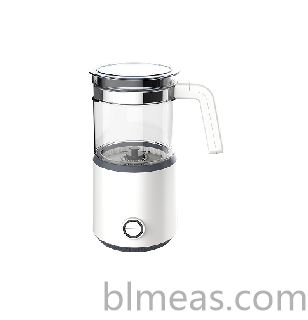
The development of shared battery systems is creating new possibilities for portable food preparation. Instead of requiring a separate power arrangement for every appliance, a Cordless Kitchen Appliance with Interchangeable Battery can be designed to work within a broader battery platform. This approach can improve flexibility for users while creating new engineering and manufacturing requirements for appliance brands.
A shared battery platform begins with compatibility. The battery pack must connect securely with different appliance bodies while providing suitable electrical communication and mechanical support. The connection structure needs to be reliable during normal use, transportation, and repeated installation. Designers must also consider how the battery can be removed without making the appliance difficult to handle.
Mechanical compatibility is only one part of the system. Electrical characteristics, charging requirements, protection features, and power delivery must also be coordinated across the product range. Different appliances may contain different motors or heating elements, so the battery platform needs to support the operating needs of each product while maintaining consistent safety principles.
The housing design plays an important role in this process. A battery interface usually requires structural supports, contact points, locking features, and protective surfaces. These elements must be integrated into the appliance body without creating excessive weight or interfering with cleaning and storage. Precision molding can help manufacturers produce consistent battery compartments and connection structures across multiple models.
Material selection should reflect the demands of both the appliance and the battery interface. Exterior housing materials need to resist everyday handling, while internal supports must maintain component alignment. Contact areas may require materials and finishes suitable for repeated connection and disconnection. Food-contact components have separate requirements and should be designed to remain appropriately isolated from electrical sections.
A shared battery system can also influence product ergonomics. The battery adds weight to the appliance, so its position affects balance and comfort. Designers may need to evaluate the location of the battery relative to the motor, handle, processing container, and controls. A well-distributed structure can make the product easier to hold during chopping, blending, mixing, or other food preparation tasks.
Safety engineering becomes more complex when one battery is used across several appliances. The system needs suitable protection against incorrect installation, electrical faults, overheating, and unintended operation. Mechanical locking structures can help ensure that the battery remains secure during use. Clear indicators and intuitive release mechanisms can also improve the user's understanding of the system.
Manufacturing a shared platform requires close coordination between product development and production engineering. The battery pack, appliance housings, connection interfaces, chargers, and internal electrical components need to be developed with common standards. This can simplify production planning, but it also means that an error in the shared interface may affect several products. Consistent tooling, inspection, and assembly procedures are therefore essential.
From a consumer perspective, interchangeable batteries may reduce the need to manage multiple charging systems. Users can move a battery between compatible appliances according to the task at hand. This can support a more organized kitchen environment and make cordless equipment easier to use in different locations. For outdoor cooking, small kitchens, travel, or temporary food preparation areas, this flexibility can be particularly useful.
For B2B buyers, a shared battery platform may also create opportunities for product-line expansion. A brand can develop several appliances around a common power architecture while maintaining a consistent visual identity and accessory strategy. However, this requires careful planning of compatibility, packaging, after-sales support, and replacement battery availability.
A Cordless Kitchen Appliance with Interchangeable Battery is therefore not simply a conventional appliance with a removable power source. It is part of a broader product ecosystem involving mechanical interfaces, electrical compatibility, material selection, safety engineering, and coordinated manufacturing. Businesses interested in developing cordless kitchen appliance ranges can explore further product and manufacturing information at https://www.blmeas.com/ when assessing possible OEM or ODM cooperation.
 Spanish
 English
 Arabic
 French
 Portuguese
 Deutsch
 Turkish
 Dutch
 Italiano
 Russian
 Romaian
 Portuguese (Brazil)
 Greek