


How Float Components Work in Valve Assemblies
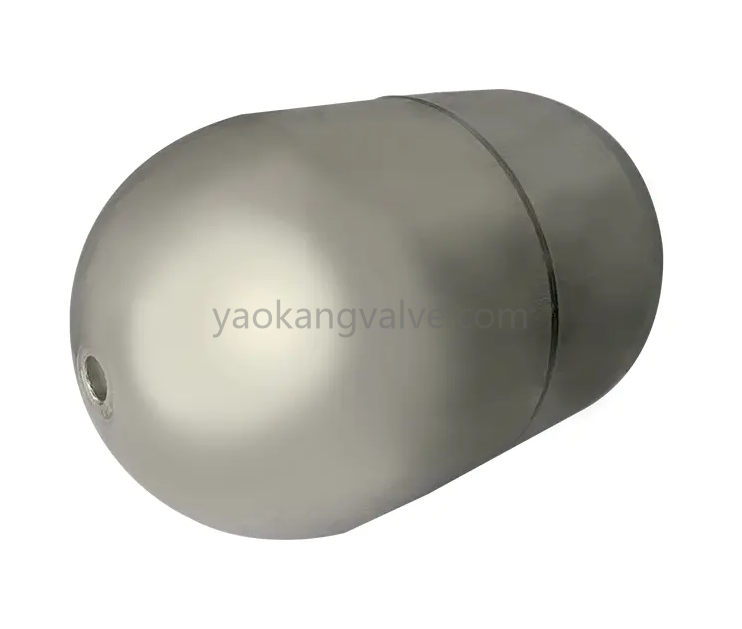
In mechanical liquid-level control systems, a Float Ball provides buoyancy that can translate changes in liquid height into physical movement. Although the operating principle is simple, reliable performance depends on the relationship between buoyancy, component geometry, material characteristics, connection structure, and the valve mechanism. For equipment manufacturers, understanding these factors helps create level-control assemblies that operate consistently under practical working conditions.
The basic operating principle is based on buoyancy. As liquid rises, the floating component moves upward, and this movement can be transferred through a connected arm or mechanism to influence a valve. When the liquid level falls, the component moves in the opposite direction. This repeated mechanical response allows a level-control system to regulate or indicate liquid height without requiring complex electronic sensing equipment.
Material selection is an important consideration during product development. The selected material needs to match the liquid, surrounding environment, expected mechanical loads, and cleaning conditions. Metals may be appropriate where structural stability and resistance to environmental exposure are important, while other material options may be considered for specific applications. The choice should always be based on the complete operating environment rather than on material appearance alone.
Geometry also affects buoyancy and movement. A component must have a suitable shape and internal structure to remain stable on the liquid surface. Manufacturing inconsistencies can influence its balance and movement, which may subsequently affect the response of the connected valve. For this reason, dimensional control is an important part of production, particularly when components are manufactured in repeated batches for industrial equipment.
The connection between the floating element and valve mechanism deserves equal attention. A properly designed connection transfers movement without introducing unnecessary friction or mechanical interference. The arm, pivot, fastening point, and valve interface should work together so that changes in liquid level produce the intended mechanical response. When developing a complete assembly, engineers should evaluate the component as part of the system rather than treating it as an independent part.
Applications can be found across many types of fluid equipment. Water storage systems, tanks, processing equipment, irrigation installations, and industrial fluid-control assemblies may use mechanical level-control principles. Each application can present different requirements because liquids vary in density, temperature, chemical composition, and operating behavior. Equipment designers therefore need to evaluate the actual medium and working conditions when selecting components.
Manufacturing quality has a direct influence on repeatability. Forming, machining, joining, finishing, and inspection processes should be coordinated according to the component design. Excessive deformation during manufacturing may change the intended geometry, while inconsistent finishing can influence surface condition. Inspection procedures can help identify dimensional variation before the component is incorporated into a larger valve assembly.
Surface condition is especially relevant in environments where components remain in contact with liquid for extended periods. Moisture, dissolved substances, cleaning agents, and atmospheric exposure can affect unsuitable materials over time. Appropriate material selection and finishing practices can help address these environmental factors. However, compatibility should be assessed according to the actual liquid and operating conditions rather than relying on general assumptions.
For OEM and industrial buyers, customization may also be necessary. Different equipment designs can require changes to dimensions, connection structures, material selection, or overall configuration. A manufacturer should evaluate these requirements from both engineering and production perspectives. Clear drawings and application information can make communication more efficient and help ensure that the finished component fits the intended assembly.
Quality assurance should continue from raw material inspection through final assembly checks. Consistent production records, dimensional verification, surface inspection, and functional evaluation can support stable manufacturing results. For larger orders, process consistency becomes particularly important because small variations repeated across many components may create assembly difficulties or inconsistent operating behavior.
A Float Ball is therefore more than a simple floating element. Its practical performance depends on buoyancy, geometry, material compatibility, manufacturing accuracy, and integration with the connected valve system. For manufacturers and equipment integrators evaluating mechanical level-control components and related valve solutions, product information is available through https://www.yaokangvalve.com/product/ as part of the selection and engineering process.

 Arabic
 French
 Spanish
 Portuguese
 Deutsch
 Turkish
 Dutch
Dutch
 Italiano
 Russian
 Romaian
 Portuguese (Brazil)
 Greek
Greek