


Which Design Details Make Befair Colander Pasta Strainer Practical for Home Use
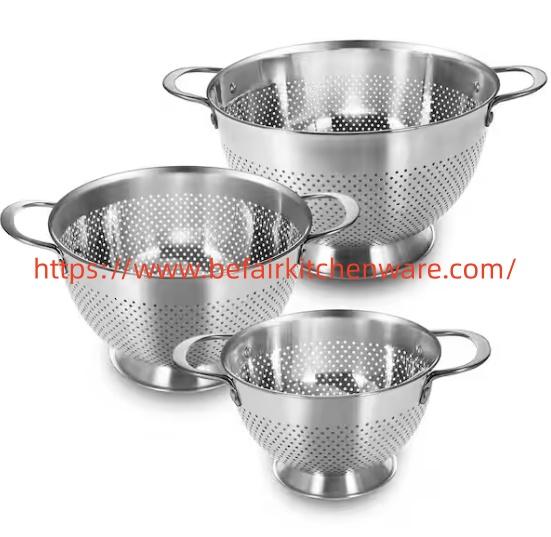
Colander Pasta Strainer choices are attracting attention among people who want more organized and convenient food preparation experiences. From washing fresh vegetables to preparing family meals, small kitchen accessories play an important role in everyday cooking. Yet many buyers pay attention only to appearance or price when selecting these products. Material, drainage structure, handling comfort, and cleaning convenience also deserve consideration. Understanding these details helps consumers make more informed decisions while giving retailers useful ideas for developing their kitchenware collections.
One interesting aspect of kitchen product selection is the relationship between materials and everyday performance. Stainless steel is commonly associated with a clean metallic appearance and a solid construction. It can complement different kitchen styles and is widely used in household cookware. Plastic alternatives offer another design direction, with different colors, shapes, and handling characteristics. Each material has its own advantages and considerations, so buyers should evaluate the intended application rather than relying entirely on appearance.
Surface finishing is another detail that deserves attention. Kitchen accessories come into contact with water, food ingredients, and cleaning products during regular use. A smooth and carefully finished surface can make routine washing more convenient. Buyers should pay attention to the edges, joints, and internal surfaces when examining a product. These areas can reveal details about manufacturing quality that may not be obvious in product photographs.
Drainage design also influences the overall user experience. The placement and distribution of openings affect how water moves through a basket. If the openings are unsuitable for the intended ingredients, smaller food pieces may escape during rinsing. A thoughtfully arranged pattern should consider the relationship between drainage efficiency and food retention. This is particularly relevant for households that prepare different ingredients throughout the week.
Shape is another consideration that can change how an accessory works in a kitchen. A rounded basket offers a familiar appearance, while other shapes may suit different storage arrangements or working surfaces. Depth influences how ingredients are contained, and the opening determines how easily users can add or remove food. These details should be considered together because the overall structure affects convenience during daily preparation.
Handles deserve attention as well. When a basket contains wet vegetables or freshly cooked ingredients, comfortable handling becomes important. The position, shape, and connection of the handles can influence how easily users lift and move the product. A practical design should provide a comfortable grip while maintaining a balanced structure. Buyers can evaluate these details by examining product samples and considering how the accessory will be used in an ordinary household environment.
Cleaning and storage are often overlooked during purchasing decisions. After preparing food, consumers want accessories that are convenient to wash and put away. Complicated structures may create areas where food residue collects, while carefully arranged surfaces can make maintenance easier. Storage compatibility also matters, particularly in kitchens where cabinet space is shared with cookware, containers, and other utensils.
Another growing consideration is product versatility. Consumers appreciate accessories that can support several food preparation activities instead of serving only one occasional purpose. Washing leafy vegetables, rinsing fresh fruit, draining cooked ingredients, and preparing salad components are examples of everyday kitchen activities. Whether a particular design suits these applications depends on its construction and manufacturer instructions. Clear product information helps buyers understand its intended functions.
Visual appeal should not be underestimated either. Kitchenware is increasingly part of the overall appearance of a household kitchen. Some consumers prefer traditional metallic finishes, while others choose colorful products that complement their interior design. Shape, surface texture, handle details, and color coordination can all influence purchasing preferences. For manufacturers, offering different design directions creates opportunities to serve retailers with varied market requirements.
For wholesalers and distributors, product development involves additional considerations. A suitable collection should address customer expectations while maintaining consistent manufacturing standards. Material selection, finishing processes, packaging arrangements, and product presentation all influence how kitchen accessories are positioned in different markets. Retailers may also require customized designs or private label solutions to match their existing product collections.
Befair focuses on kitchenware products and manufacturing services for business customers. When evaluating a new product range, importers and distributors can consider material options, structural design, appearance, and customization requirements together. This approach helps create a clearer connection between manufacturing capabilities and the needs of different sales channels. It also gives buyers a practical foundation for discussing product details, sample evaluation, and packaging arrangements with suppliers.
Ultimately, choosing suitable kitchen accessories involves understanding how people actually prepare food and organize their cooking spaces. Comfortable handling, sensible drainage arrangements, manageable cleaning, and coordinated appearance all contribute to a positive household experience. Businesses planning to expand their kitchenware collections can review the product information and manufacturing services available from Befair at https://www.befairkitchenware.com/ and consider how its offerings may support their sourcing requirements and future product development plans.

 Arabic
 French
 Spanish
 Portuguese
 Deutsch
 Turkish
 Dutch
 Italiano
 Russian
 Romaian
 Portuguese (Brazil)
 Greek