In modern manufacturing, spot weld aluminium has become a critical capability for industries moving toward lightweight, high-strength, and energy-efficient designs. From electric vehicles and aerospace structures to consumer appliances and industrial enclosures, aluminium spot welding enables strong, clean, and automated joining if the process is engineered correctly.
However, aluminium is not an “easy” material to weld. Its thermal and electrical properties demand precise process control, advanced equipment, and deep understanding of resistance welding dynamics. This is where companies like Heron Welder play a key role, delivering industrial-grade resistance welding and automation systems designed specifically for challenging materials like aluminium.
What Is Spot Welding Aluminium?
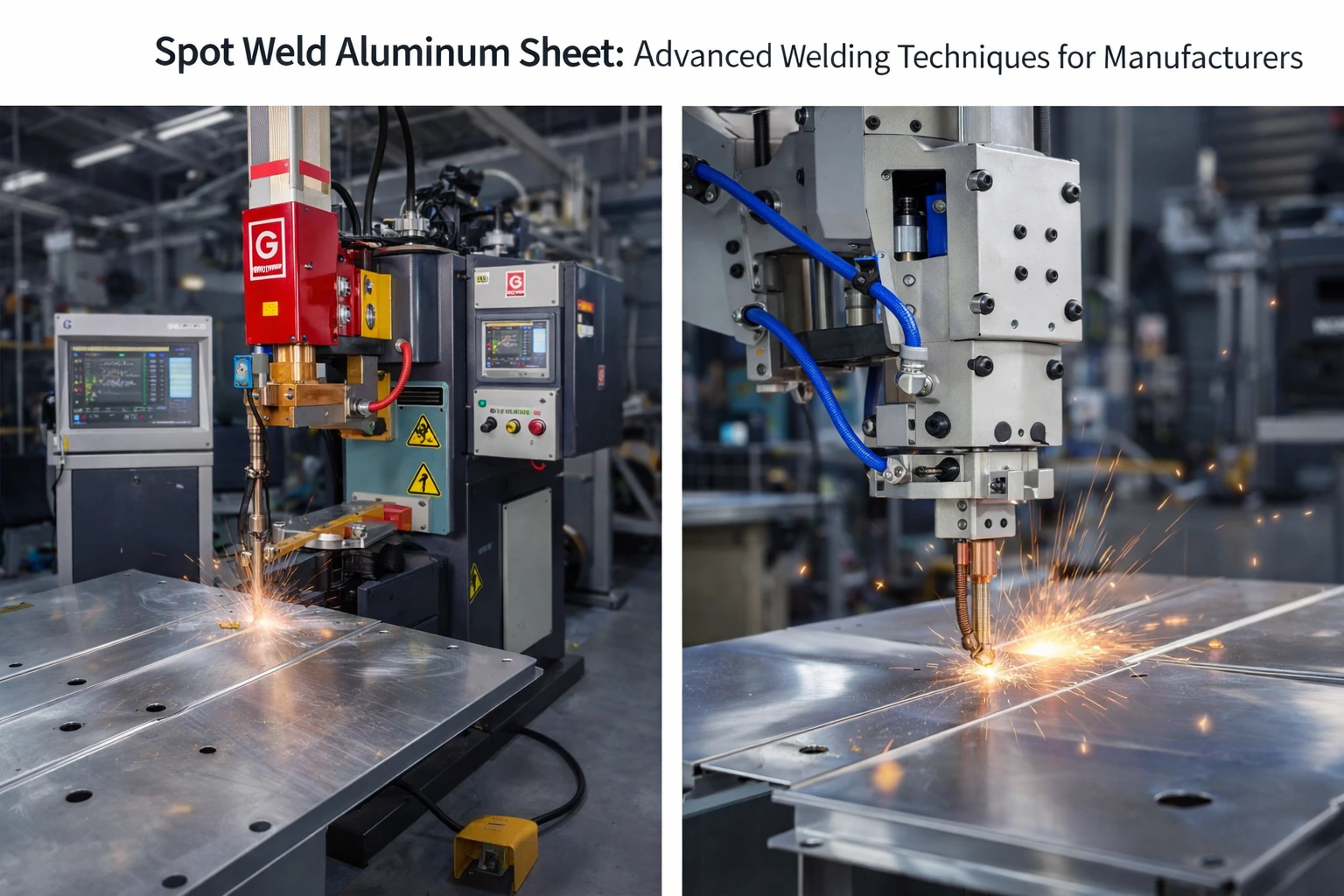
Spot welding aluminium is a resistance welding process where two or more aluminium sheets are joined by applying:
- High electrical current
- Controlled electrode pressure
- Short welding time
The resistance at the interface generates heat, forming a weld nugget that bonds the sheets.
Unlike steel, aluminium behaves differently during welding due to:
- High electrical conductivity
- Rapid heat dissipation
- Strong oxide layer on the surface
These properties make aluminium welding more complex but highly valuable for lightweight manufacturing.
Why Aluminium Is Difficult to Spot Weld
Aluminium is widely used in modern engineering, but it introduces several technical challenges in resistance spot welding.
1. High Electrical Conductivity
Aluminium allows current to pass too easily, reducing localized heat generation. This makes it harder to form a stable weld nugget.
2. Oxide Layer Barrier
Aluminium naturally forms a hard oxide layer (Al₂O₃), which:
- Increases contact resistance variation
- Reduces electrical stability
- Requires higher electrode force and surface preparation
3. Rapid Heat Dissipation
Aluminium conducts heat quickly, causing:
- Short heat concentration time
- Risk of weak or inconsistent weld nuggets
- Need for precise pulse control
Research shows that unstable contact resistance and electrode degradation are major factors affecting weld quality in aluminium RSW processes.
Process Fundamentals of Spot Welding Aluminium
To successfully spot weld aluminium, engineers must carefully control four key parameters:
1. Welding Current
High current is required to compensate for aluminium’s conductivity and heat loss.
- Typically higher than steel welding
- Must be precisely controlled to avoid burn-through
2. Electrode Force
Strong electrode force ensures:
- Breakage of oxide layer
- Stable electrical contact
- Reduced interface resistance variation
3. Welding Time
Aluminium requires very short welding cycles, often milliseconds to a few cycles in industrial systems, to prevent excessive heat dissipation.
4. Electrode Material and Cooling
Copper-based electrodes are standard, but aluminium causes faster wear due to alloying and sticking, requiring:
- Advanced electrode alloys
- Efficient water cooling systems
- Regular maintenance cycles
Aluminium Spot Welding Applications in Industry
The demand for spot weld aluminium continues to grow across high-performance industries.
Automotive & Electric Vehicles
- Battery trays
- Body-in-white structures
- Lightweight chassis components
Aluminium helps reduce vehicle weight and improve battery efficiency in EVs.
Aerospace Engineering
- Aircraft panels
- Structural supports
- Interior frameworks
Here, weld consistency and fatigue resistance are critical.
Rail & Transport Systems
- High-speed train panels
- Structural shells
- Energy-efficient transport bodies
Industrial Equipment
- Electrical housings
- HVAC systems
- Machine enclosures
Aluminium Spot Welding vs Steel Spot Welding
| Factor |
Aluminium |
Steel |
| Electrical conductivity |
High |
Low |
| Heat requirement |
Higher current |
Moderate current |
| Weld time |
Very short |
Longer |
| Electrode wear |
Faster |
Slower |
| Process stability |
More complex |
Easier |
This comparison shows why aluminium spot welding requires more advanced equipment and tighter process control.
Advanced Solutions for Spot Welding Aluminium
Modern manufacturing uses advanced technologies to overcome aluminium welding limitations.
MFDC Resistance Welding Systems
Medium Frequency Direct Current (MFDC) systems provide:
- Stable current output
- Reduced energy loss
- Better heat control
- Improved weld consistency
Automated Welding Lines
Automation improves:
- Repeatability
- Production speed
- Quality monitoring
- Defect reduction
Intelligent Control Systems
Advanced controllers enable:
- Real-time current adjustment
- Weld quality monitoring
- Adaptive parameter control
Heron Welder’s Role in Aluminium Spot Welding Solutions
As a global manufacturer of industrial resistance welding systems, Heron Welder provides engineered solutions designed specifically for demanding materials like aluminium.
Their expertise includes:
- MFDC spot welding machines
- Automated production welding lines
- High-precision welding guns
- Smart welding controllers
- Customised clinching and riveting systems
For manufacturers struggling with aluminium weld consistency, electrode wear, or production efficiency, Heron delivers tailored systems that improve:
- Weld quality stability
- Production throughput
- Long-term operational cost efficiency
Best Practices for Spot Weld Aluminium
To achieve reliable results in industrial environments, engineers should follow these best practices:
✔ Surface Preparation
- Remove oxide layers
- Clean oil and contaminants
- Maintain consistent sheet conditions
✔ Optimize Welding Parameters
- Adjust current based on thickness
- Fine-tune electrode force
- Use short, controlled weld times
✔ Maintain Electrode Condition
- Regular dressing or replacement
- Use wear-resistant electrode tips
- Monitor deformation and sticking
✔ Use Automation Where Possible
- Reduces human error
- Improves repeatability
- Enhances production efficiency
Common Defects in Aluminium Spot Welding
If parameters are not optimized, manufacturers may face:
- Incomplete fusion
- Expulsion (metal splash)
- Electrode sticking
- Porosity in weld nugget
- Weak joint strength
These issues are usually linked to unstable heat input or poor surface preparation.
Future of Aluminium Spot Welding
As industries move toward lightweight engineering and EV production, aluminium spot welding will continue evolving with:
- AI-based weld monitoring
- Smart adaptive welding systems
- Wear-resistant electrode technology
- Fully automated robotic welding cells
This evolution will make aluminium joining more reliable, scalable, and cost-efficient.
FAQs: Spot Weld Aluminium
1. Can aluminium be spot welded easily?
Yes, but it requires higher current, precise control, and specialized equipment compared to steel.
2. Why is aluminium difficult to spot weld?
Due to its high conductivity, oxide layer, and rapid heat dissipation, which make heat control challenging.
3. What type of machine is best for aluminium spot welding?
MFDC resistance welding systems or advanced automated spot welding machines are most suitable.
4. What are the common defects in aluminium spot welding?
Weak welds, electrode sticking, porosity, and inconsistent nugget formation.
5. How can weld quality be improved?
By optimizing parameters, maintaining electrodes, and using automated welding systems.
Conclusion
Mastering spot weld aluminium requires more than just standard welding equipment it demands precision engineering, advanced process control, and the right industrial technology.
For manufacturers aiming to improve productivity and weld reliability, partnering with an experienced solution provider is essential.
Heron Welder delivers high-performance resistance welding systems designed to handle complex materials like aluminium with consistency and efficiency.
Contact Heron Welder today to request a quote or discuss customized aluminium spot welding and automation solutions for your production line.




 English
 Arabic
 Spanish
 Portuguese
 Deutsch
 Turkish
 Dutch
Dutch
 Italiano
 Russian
 Romaian
 Portuguese (Brazil)
 Greek
Greek