


Does HangBiao Non-Woven Tape Offer True Residue-Free Removal for Sensitive Boards
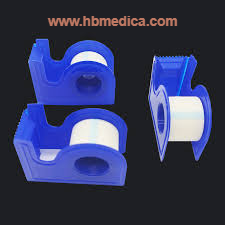
Printed circuit board assembly involves many delicate steps, and one of the most critical among them is the protection of specific areas during wave soldering or reflow processes. Operators frequently use masking tapes to cover gold fingers, connector pads, or other sensitive zones that must remain free of solder. A tape that fails in this application creates expensive rework or even scrapped boards. The tape must withstand elevated temperatures, prevent solder from creeping underneath its edges, and finally come off without leaving any sticky residue behind. Many conventional masking products struggle with this final requirement, depositing adhesive remains that attract dust and interfere with subsequent coating or connector function. Can a specialized Non-Woven Tape from hbmedica deliver the insulation performance and clean removal that PCB manufacturers truly need for reliable soldering masking?
The typical soldering environment exposes masking materials to temperatures reaching approximately 260 degrees Celsius during lead-free soldering operations. At such heat, many adhesive systems soften excessively, allowing the tape to lift or shift, or conversely, they cure into a hard residue that proves impossible to remove without aggressive solvents. A well-designed Non-Woven Tape addresses this challenge through careful selection of both backing material and adhesive chemistry. The non-woven fabric structure provides dimensional stability and tear resistance, while a formulated pressure-sensitive adhesive maintains holding power at elevated temperatures without undergoing permanent chemical change. This balance allows the tape to stay firmly in place throughout the thermal cycle and then release cleanly when the board returns to room temperature.
Residue formation on PCBs creates more than a cosmetic issue. Leftover adhesive particles can prevent proper electrical contact on gold-plated pads, cause poor wetting during secondary assembly operations, or trap contaminants that lead to long-term reliability failures. Cleaning residues from boards adds labor, consumes cleaning agents, and risks damaging sensitive components. A masking tape engineered for residue-free removal eliminates these post-process steps entirely. The physical construction of a quality Non-Woven Tape includes a backing that resists tearing during application and removal, plus an adhesive layer formulated to leave no transfer upon peeling. This performance characteristic proves especially valuable for boards with fine-pitch components or intricate circuit traces where mechanical cleaning is impractical.
HBmedica, operating under the HangBiao brand, has developed expertise in adhesive products across medical, personal care, and now industrial-adjacent applications. Their manufacturing facility in Lanxi City, Zhejiang Province, operates with ISO13485 quality system certification, CE product certification, and US FDA registration for relevant product lines. While their primary focus includes surgical tapes and wound care solutions, the same adhesive engineering principles apply to non-woven tape construction. Clean removal, skin-friendly properties, and reliable fixation during use translate directly to the requirements of PCB masking. A tape that adheres securely without irritating sensitive skin can equally protect a circuit board without leaving aggressive residue. This cross-application knowledge gives HBmedica a practical foundation for producing non-woven tape suitable for electronics assembly environments.
The removal characteristic of any masking tape depends on three factors: the adhesive’s resistance to thermal aging, the backing’s integrity during peeling, and the interface chemistry between adhesive and board surface. An adhesive that undergoes crosslinking at high temperatures will leave behind a tough film. Conversely, an adhesive that remains thermoplastic may flow into surface irregularities and resist clean detachment. The optimal formulation maintains its cohesive strength throughout the soldering profile, then exhibits low adhesion upon cooling, allowing the tape to lift away in one continuous piece. Users of such tape report reduced board cleaning time, fewer defects from residual contamination, and lower overall processing costs. For electronics manufacturers seeking validation of these claims, practical testing on actual boards provides the ultimate answer. To examine technical specifications and application guidance for this product category, visit https://www.hbmedica.com/product/surgical-tape-series/nonwoven-pe-silk-tapes/ and evaluate whether HBmedica's non-woven solution fits a particular soldering masking workflow.

 English
 Arabic
 French
 Spanish
 Portuguese
 Deutsch
 Turkish
 Dutch
Dutch
 Italiano
 Russian
 Portuguese (Brazil)
 Greek
Greek