In today's digital-first world, businesses need reliable methods to verify customer identities while preventing fraud. Traditional identity verification processes are no longer sufficient against sophisticated cyber threats and identity spoofing attempts. This is where NFC Verification and Face Liveness Check play a crucial role in creating secure and seamless customer onboarding experiences.
What is NFC Verification?
NFC (Near Field Communication) Verification is an advanced identity verification technology that reads encrypted data stored within the chip of modern identity documents such as passports, national ID cards, and residence permits. By accessing the embedded chip, organizations can validate the authenticity of a document directly from its source.
Benefits of NFC Verification
- Verifies identity documents with high accuracy
- Detects forged or tampered documents
- Extracts secure data directly from the chip
- Enhances compliance with KYC and AML regulations
- Reduces manual verification efforts
Financial institutions, fintech companies, and digital service providers increasingly rely on NFC verification to establish trust during customer onboarding.
Understanding Face Liveness Check
A Face Liveness Check is a biometric security process that confirms whether the person presenting an identity document is physically present during verification. It prevents fraudsters from using photographs, videos, masks, or deepfake technology to impersonate legitimate users.
The system analyzes facial movements, depth, texture, and behavioral patterns in real time to determine authenticity.
Key Advantages of Face Liveness Check
- Prevents spoofing and presentation attacks
- Detects deepfakes and synthetic identities
- Confirms genuine user presence
- Improves customer trust and security
- Supports remote onboarding processes
Face liveness technology has become essential for industries handling sensitive customer information and financial transactions.
Why Combine NFC Verification with Face Liveness Check?
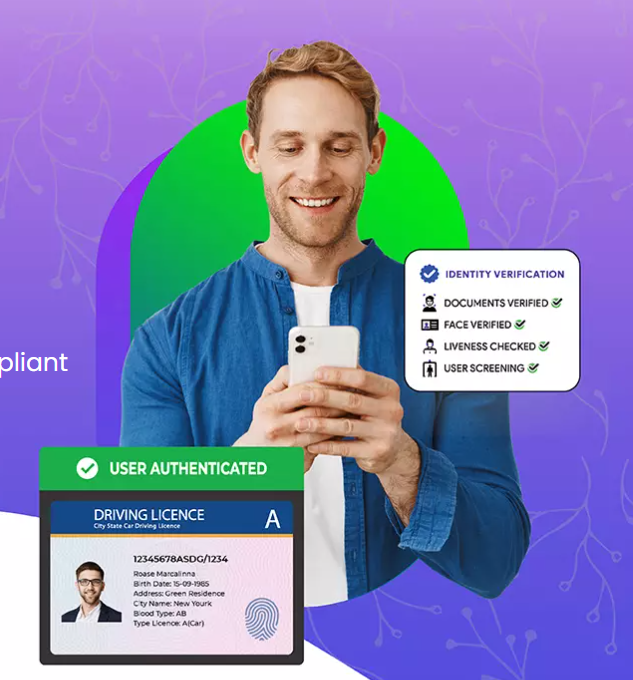
While NFC verification validates the authenticity of an identity document, Face Liveness Check verifies the individual presenting that document. Together, they create a multi-layered identity verification process that significantly reduces fraud risks.
Combined Verification Workflow
- User scans an NFC-enabled identity document.
- The system reads encrypted chip data.
- Facial information from the document is extracted.
- The user performs a live facial scan.
- Face matching technology compares the live image with the document photo.
- Liveness detection confirms the user is physically present.
- Identity verification is completed securely.
This approach ensures both the document and the individual are genuine.
Industries Benefiting from NFC Verification and Face Liveness Check
Several industries are adopting these technologies, including:
- Banking and financial services
- Cryptocurrency exchanges
- Insurance providers
- Telecommunications companies
- Travel and hospitality platforms
- Government digital services
These sectors require secure customer onboarding while maintaining regulatory compliance and user convenience.
Conclusion
As identity fraud continues to evolve, businesses must adopt advanced verification technologies to stay protected. NFC Verification provides secure document authentication, while Face Liveness Check ensures the person behind the document is real and present. Together, they offer a powerful solution for reducing fraud, improving compliance, and delivering a seamless digital onboarding experience.
Organizations that implement NFC verification and face liveness technology can strengthen security, enhance customer trust, and build a future-ready identity verification framework.




 English
 Arabic
 French
 Spanish
 Portuguese
 Deutsch
 Turkish
 Dutch
Dutch
 Russian
 Romaian
 Portuguese (Brazil)
 Greek
Greek