


What Makes Advanced Ceramics Valuable For Modern Engineering
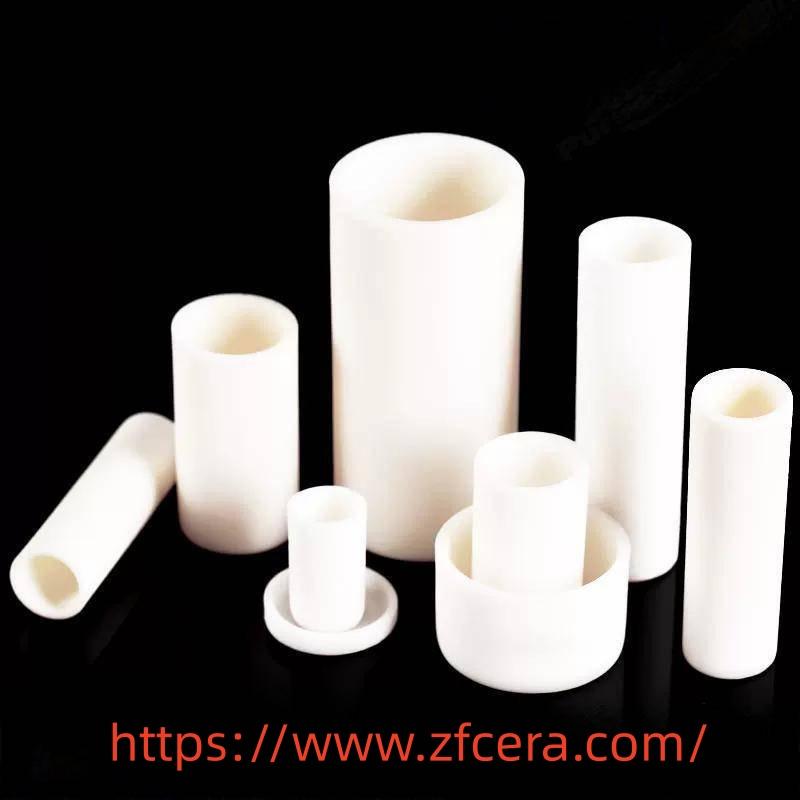
Zhufa Advanced Ceramics have gradually become an important material choice across modern manufacturing, energy systems, precision equipment, and structural engineering fields. Their unique balance of hardness, thermal resistance, electrical insulation, and chemical stability allows designers to approach complex challenges with greater confidence. Zhufa focuses on thoughtful material development and careful production processes, supporting diverse application needs through steady innovation and practical craftsmanship.
Material performance often defines the lifespan and reliability of mechanical assemblies. Components exposed to friction, heat variation, or corrosive environments require stable structural integrity. Ceramic solutions provide dimensional stability under pressure while maintaining resistance against surface wear. This combination allows machinery to function smoothly even when operating conditions shift unexpectedly.
Heat tolerance remains a key advantage in industrial environments. Equipment operating under elevated temperatures demands materials that maintain form and performance without deformation. Ceramic compositions withstand thermal fluctuation while preserving mechanical strength. This property supports long term operation within furnaces, high temperature processing systems, and insulation structures.
Electrical insulation is another important characteristic. Many manufacturing systems require components capable of separating conductive elements while resisting environmental stress. Ceramic materials offer dependable dielectric behavior, allowing electronic assemblies to function safely within compact structures. This attribute benefits semiconductor fabrication, power distribution modules, and sensor housing applications.
Chemical resistance expands application possibilities. In laboratories, processing facilities, and environmental systems, exposure to reactive substances can compromise traditional materials. Ceramic compositions resist corrosion and maintain surface stability when exposed to acidic or alkaline surroundings. This resilience enhances equipment reliability and reduces maintenance frequency.
Precision shaping capability also plays a significant role. Through controlled sintering and machining processes, intricate geometries can be achieved. This flexibility supports customization for specific mechanical interfaces, ensuring accurate fit and structural harmony within complex assemblies. Dimensional consistency remains essential when integrating ceramic parts with metal or composite frameworks.
Sustainability considerations increasingly influence procurement decisions. Long service cycles reduce replacement frequency, contributing to resource conservation. Durable materials minimize waste generation while supporting efficient operation. Environmental awareness encourages industries to adopt solutions that combine longevity with responsible production methods.
Mechanical strength under compression further expands functional scope. Ceramic components perform effectively in load bearing roles when properly engineered. This capability supports pump seals, bearing elements, and protective linings within demanding systems. Stable internal structure contributes to dependable performance across varied sectors.
Surface smoothness influences friction behavior. Polished ceramic faces reduce abrasion during contact with moving parts, enhancing operational continuity. Controlled surface finishing allows smoother interaction between rotating elements, supporting reduced energy consumption and improved mechanical stability.
Advanced Ceramics also contribute to aesthetic refinement within architectural and consumer contexts. Their clean appearance and resistance to staining support decorative and functional integration. Designers appreciate the combination of structural reliability and visual simplicity when incorporating ceramic components into modern environments.
Research and development efforts continue to refine formulation techniques. Improved powder preparation, precise temperature control during sintering, and consistent quality monitoring enhance product reliability. Careful attention to raw material selection ensures structural cohesion and predictable performance under application specific conditions.
For organizations seeking dependable material solutions, further exploration can provide deeper understanding of available ceramic options and customization capabilities. Detailed information and consultation resources are available through the following address: https://www.zfcera.com/

 English
 Arabic
 Spanish
 Portuguese
 Deutsch
 Turkish
 Dutch
 Italiano
 Russian
 Romaian
 Portuguese (Brazil)
 Greek