


Venous Leak: Understanding the Causes, Symptoms, Diagnosis, and Treatment
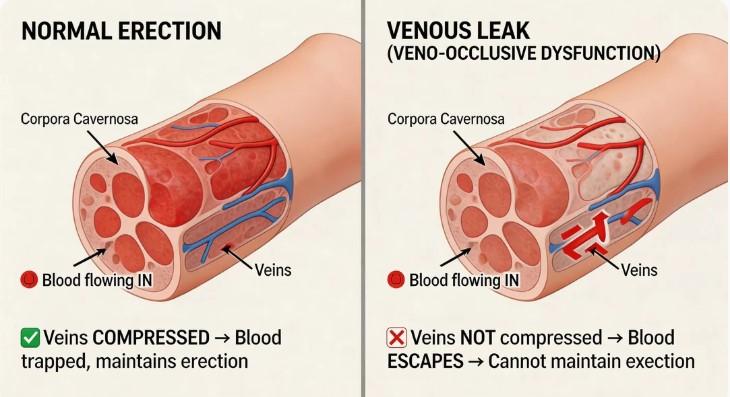
Venous leak is a medical condition that affects a man's ability to maintain an erection during sexual activity. It is one of the vascular causes of erectile dysfunction (ED) and occurs when the veins in the penis fail to retain blood long enough to sustain a firm erection. While blood enters the penis normally during sexual arousal, it drains out too quickly, resulting in an erection that is weak, short-lived, or difficult to maintain.
Although erectile dysfunction is often associated with aging, venous leak can affect men of all ages. It may develop due to injuries, chronic health conditions, changes in the penile tissues, or underlying vascular problems. The condition can have a significant impact on self-confidence, intimate relationships, and emotional well-being. Fortunately, modern diagnostic techniques and treatment options have made it possible for many men with venous leak to regain satisfying sexual function.
This article provides a comprehensive overview of venous leak, including its causes, symptoms, diagnosis, treatment options, possible complications, and preventive measures.
What Is Venous Leak?
Venous leak, also known as venogenic erectile dysfunction or veno-occlusive dysfunction, is a condition in which the veins of the penis cannot effectively trap blood during an erection.
During normal sexual arousal, blood flows into two sponge-like chambers inside the penis called the corpora cavernosa. As these chambers fill with blood, they expand and compress the veins responsible for draining blood from the penis. This natural compression prevents blood from escaping, allowing the erection to remain firm.
In men with venous leak, the veins are not compressed adequately. As a result, blood leaves the penis too quickly, making it difficult to maintain an erection suitable for sexual intercourse.
Despite its name, a venous leak does not involve a physical hole or rupture in the veins. Instead, it refers to a failure of the body's normal blood-retention mechanism.
How an Erection Works
To understand venous leak, it is helpful to know how a normal erection develops.
A healthy erection requires the coordinated function of several body systems, including:
- Healthy arteries that deliver blood
- Healthy veins that retain blood
- Intact nerves that transmit sexual signals
- Healthy erectile tissue
- Balanced hormone levels
- Sexual stimulation
The process typically follows these steps:
- Sexual stimulation activates the nervous system.
- Nitric oxide is released within the penile tissue.
- Smooth muscles in the penile arteries relax.
- Blood flow into the penis increases.
- The corpora cavernosa fill with blood.
- Expanding tissue compresses the veins.
- Blood becomes trapped within the penis.
- A firm erection is maintained until ejaculation or the end of sexual stimulation.
When the veins fail to remain compressed, blood escapes before adequate pressure can be maintained, resulting in venous leak.
Causes of Venous Leak
Venous leak can occur for several reasons. In many cases, multiple factors contribute to the condition.
Aging
As men age, the smooth muscles and elastic tissues within the penis naturally lose strength and flexibility. These changes reduce the ability of the erectile tissue to compress the veins effectively.
Diabetes
Diabetes is a major risk factor for erectile dysfunction. High blood sugar levels damage blood vessels, nerves, and connective tissue, reducing the penis's ability to trap blood during an erection.
Penile Injury
Trauma to the penis from sports injuries, accidents, or penile fractures may damage the structures responsible for maintaining erections.
Pelvic Surgery
Surgery involving the prostate, bladder, rectum, or pelvis may affect the nerves and blood vessels that support erectile function.
Peyronie's Disease
Peyronie's disease causes scar tissue to develop within the penis. This scar tissue may interfere with normal blood flow and weaken the venous trapping mechanism.
High Blood Pressure
Long-term hypertension damages blood vessels throughout the body, including those supplying the penis.
High Cholesterol
Elevated cholesterol contributes to atherosclerosis, reducing blood vessel health and increasing the risk of vascular erectile dysfunction.
Smoking
Smoking damages the lining of blood vessels, reduces circulation, and decreases nitric oxide production, all of which can impair erectile function.
Obesity
Obesity increases the risk of diabetes, hypertension, cardiovascular disease, and hormonal imbalance, each of which may contribute to venous leak.
Connective Tissue Disorders
Certain inherited or acquired disorders affecting collagen and elastic tissue may weaken the structures that normally trap blood inside the penis.
Risk Factors
Several factors increase the likelihood of developing venous leak:
- Increasing age
- Diabetes mellitus
- Smoking
- Obesity
- High blood pressure
- High cholesterol
- Cardiovascular disease
- Sedentary lifestyle
- Penile trauma
- Pelvic surgery
- Peyronie's disease
- Chronic kidney disease
- Hormonal disorders
Having one or more risk factors does not guarantee the development of venous leak, but it increases the likelihood.
Symptoms of Venous Leak
The most common symptom is difficulty maintaining an erection despite adequate sexual desire.
Other symptoms may include:
- Erections that soften quickly during intercourse
- Difficulty maintaining rigidity
- Weak erections despite arousal
- Reduced spontaneous or morning erections
- Need for constant stimulation
- Erections that improve when lying down
- Anxiety related to sexual performance
- Reduced confidence during intimate relationships
Many men with venous leak can achieve an erection initially but lose firmness before completing sexual activity.
How Is Venous Leak Diagnosed?
A proper diagnosis begins with a detailed medical evaluation.
Medical History
The healthcare provider may ask questions about:
- Duration of erectile problems
- Quality of erections
- Morning erections
- Medical conditions
- Previous surgeries or injuries
- Current medications
- Smoking and alcohol use
- Sexual history
Physical Examination
The examination may include evaluation of:
- Penis
- Testicles
- Blood pressure
- Peripheral circulation
- Signs of hormonal disorders
Laboratory Tests
Blood tests commonly include:
- Blood glucose
- HbA1c
- Lipid profile
- Testosterone level
- Thyroid function
- Kidney function
- Complete blood count
These tests help identify conditions that may contribute to erectile dysfunction.
Penile Doppler Ultrasound
Color Doppler ultrasound is considered one of the most useful diagnostic tests for venous leak.
After medication is injected into the penis to produce an erection, ultrasound measures:
- Blood flow into the penis
- Blood flow leaving the penis
- Arterial function
- Venous drainage
Persistent blood outflow during an erection suggests venogenic erectile dysfunction.
Dynamic Infusion Cavernosometry and Cavernosography
In selected cases, specialized testing may be performed to measure pressure within the erectile tissue and identify abnormal venous drainage. These tests are usually reserved for patients being evaluated for surgery.
Treatment Options
Treatment depends on the underlying cause, severity of symptoms, overall health, and patient preferences.
Lifestyle Changes
Improving cardiovascular health often benefits erectile function.
Lifestyle recommendations include:
- Stop smoking
- Exercise regularly
- Maintain a healthy body weight
- Follow a balanced diet
- Control diabetes
- Manage blood pressure
- Lower cholesterol
- Reduce alcohol consumption
- Get sufficient sleep
- Manage stress
Although lifestyle changes may not completely reverse venous leak, they often improve overall sexual health.
Oral Medications
Phosphodiesterase type 5 (PDE5) inhibitors are commonly prescribed.
Examples include:
- Sildenafil
- Tadalafil
- Vardenafil
- Avanafil
These medications improve blood flow into the penis. However, their effectiveness may be reduced in severe venous leak because they do not prevent blood from leaving the penis too quickly.
Vacuum Erection Devices
A vacuum erection device creates negative pressure around the penis, drawing blood into the erectile tissue.
A constriction ring placed at the base of the penis helps reduce blood drainage, allowing many men to achieve erections suitable for intercourse.
Injection Therapy
Intracavernosal injections involve medications such as:
- Alprostadil
- Trimix
- Bimix
These medications relax smooth muscle within the penis and produce stronger erections, particularly in men who do not respond to oral medications.
Low-Intensity Shockwave Therapy
Low-intensity extracorporeal shockwave therapy (Li-ESWT) is being investigated as a treatment for vascular erectile dysfunction. It may stimulate tissue repair and improve blood vessel function, although evidence specific to venous leak remains limited.
Venous Surgery
Venous ligation surgery attempts to block the veins responsible for excessive blood drainage.
Because long-term success rates vary and recurrence is possible, this procedure is recommended only for carefully selected patients.
Penile Implants
Penile prosthesis implantation is considered one of the most effective treatments for severe venous leak that does not respond to conservative therapies.
Inflatable Penile Implant
Advantages include:
- Natural appearance
- Excellent rigidity
- Greater patient satisfaction
- More natural flaccid state when deflated
Malleable Penile Implant
Benefits include:
- Simple design
- Easy operation
- Lower mechanical failure rate
Penile implants have high long-term satisfaction rates among both patients and their partners.
Can Venous Leak Be Reversed?
The possibility of reversing venous leak depends on its underlying cause.
Some men experience improvement after:
- Better diabetes management
- Smoking cessation
- Weight loss
- Treatment of hormonal deficiencies
- Improved cardiovascular health
However, when structural changes within the penile tissue are advanced, long-term treatment may be necessary.
Possible Complications
Untreated venous leak may lead to:
- Persistent erectile dysfunction
- Anxiety and depression
- Relationship difficulties
- Reduced self-esteem
- Decreased quality of life
- Emotional stress
Seeking timely medical care can improve both physical and emotional outcomes.
Prevention
Although not every case can be prevented, healthy habits reduce the risk of vascular erectile dysfunction.
Preventive measures include:
- Maintaining a healthy weight
- Exercising regularly
- Eating a heart-healthy diet
- Avoiding tobacco products
- Limiting alcohol intake
- Controlling diabetes and blood pressure
- Managing cholesterol levels
- Attending regular health check-ups
Because erectile dysfunction may be an early warning sign of cardiovascular disease, persistent symptoms should always be evaluated by a healthcare professional.
Living With Venous Leak
Living with venous leak can be emotionally challenging, but effective treatment is available for many men. Open communication with a healthcare provider and, when appropriate, a partner can make it easier to address concerns and explore suitable treatment options.
In some cases, counseling or sex therapy may be helpful, particularly when anxiety or relationship stress develops alongside the physical condition. Addressing both the medical and emotional aspects of erectile dysfunction often leads to better overall outcomes.
Frequently Asked Questions
Is venous leak the same as erectile dysfunction?
No. Venous leak is one specific physical cause of erectile dysfunction. ED may also result from hormonal, neurological, psychological, or arterial problems.
Can young men develop venous leak?
Yes. Younger men may develop venous leak after pelvic trauma, penile injury, surgery, or because of certain connective tissue disorders.
Can venous leak heal on its own?
In some cases, improving underlying health conditions may improve erectile function. However, established venous leak often requires medical treatment.
Are oral medications effective for venous leak?
They may help some men, particularly those with mild or moderate disease. Severe venous leak may require additional therapies.
Is penile implant surgery permanent?
Yes. Penile implants are intended as a permanent solution for men with severe erectile dysfunction who do not respond to other treatments.
When Should You See a Doctor?
Consult a healthcare provider if you experience:
- Difficulty maintaining an erection for three months or longer
- Progressive worsening of erectile function
- Erectile dysfunction associated with diabetes or heart disease
- Penile pain or curvature
- Emotional distress related to sexual performance
Early diagnosis may identify treatable medical conditions and improve treatment outcomes.
Conclusion
Venous leak is an important vascular cause of erectile dysfunction in which blood cannot be retained within the penis long enough to maintain a firm erection. Although the condition can affect confidence, relationships, and quality of life, it is manageable with appropriate medical care.
A thorough evaluation can help determine the underlying cause and guide treatment. Depending on the severity of the condition, management may include lifestyle changes, medications, vacuum devices, injection therapy, or penile implant surgery. Seeking medical advice early not only improves sexual health but may also reveal underlying conditions such as diabetes or cardiovascular disease that require attention.
With advances in modern medicine and a personalized treatment approach, many men with venous leak are able to regain satisfying sexual function and improve their overall quality of life.

 English
 Arabic
 French
 Spanish
 Portuguese
 Deutsch
 Turkish
 Dutch
Dutch
 Italiano
 Russian
 Romaian
 Greek
Greek