


What Is Albert Einstein's IQ and How Does It Compare to Modern Geniuses
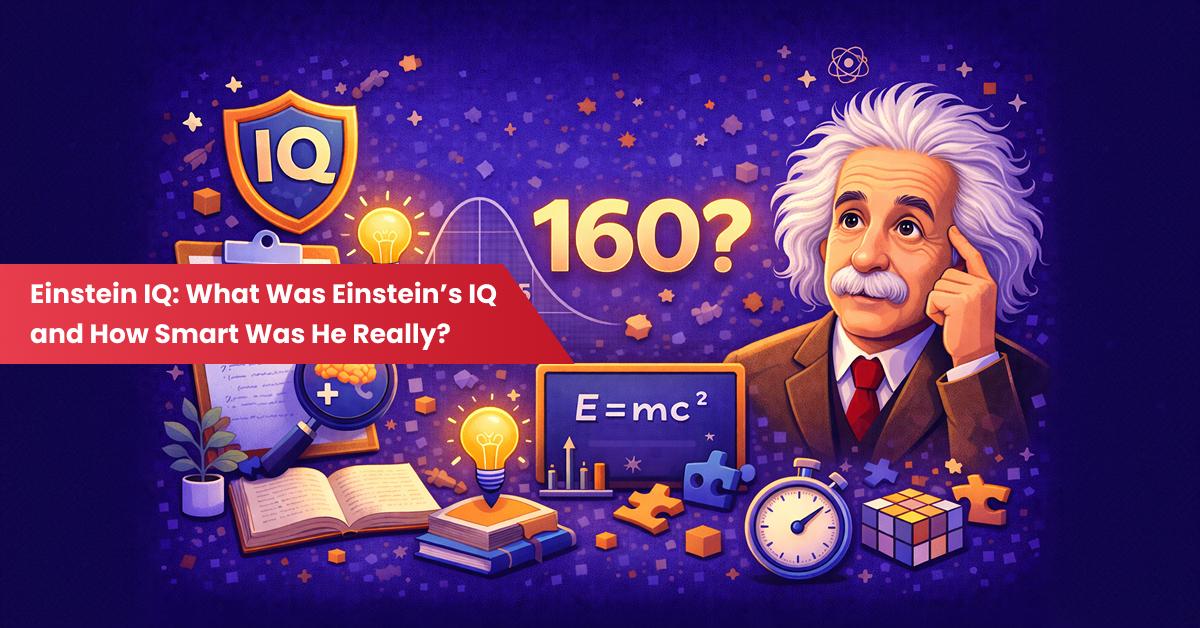
Albert Einstein is widely regarded as one of the greatest scientific minds in history. His theories transformed physics and changed humanity's understanding of space, time, gravity, and energy. Because of his extraordinary achievements, millions of people continue to search for the answer to one intriguing question: what is albert einstein's iq?
The internet is filled with different numbers, ranging from 160 to more than 200. Some websites present these figures as established facts, while others dismiss them as myths. The reality is more nuanced. There is no official record of Einstein ever taking a modern IQ test, which means no verified IQ score exists. Even so, experts have attempted to estimate his intelligence based on his accomplishments and intellectual abilities.
In this article, we will explore what is albert einstein's iq, examine the evidence behind the estimates, compare Einstein with modern geniuses, and explain why an IQ score alone cannot fully define brilliance.
What Is Albert Einstein's IQ?
The most accurate answer to what is albert einstein's iq is that no one knows for certain.
Albert Einstein never took a standardized IQ test that produced an official score. During his lifetime, intelligence testing was still developing, and there is no documented evidence that he participated in any assessment comparable to the modern IQ tests used today.
Despite this, many experts estimate Einstein's IQ to have been around 160. This figure has become the most widely accepted estimate because it aligns with the extraordinary reasoning, creativity, and analytical skills demonstrated throughout his career.
However, it is important to remember that this number is an educated estimate rather than a confirmed historical fact.
Why Do People Estimate Einstein's IQ at 160?
One reason the estimate of 160 is so common is that Einstein displayed qualities associated with exceptionally gifted individuals.
He developed the Special Theory of Relativity at just 26 years old. Later, he introduced the General Theory of Relativity, fundamentally changing the scientific understanding of gravity and the structure of the universe.
These achievements required remarkable abstract reasoning, mathematical ability, and creativity.
When people ask what is albert einstein's iq, they often expect a precise number. In reality, historians and psychologists infer his likely intellectual level from his groundbreaking work rather than official testing.
Why There Is No Official IQ Score
Many people assume every famous genius must have taken an IQ test. That assumption is incorrect.
Modern IQ testing became more standardized after Einstein had already established himself as one of the world's leading scientists. Since no verified records exist, every published IQ score attributed to Einstein is speculative.
This explains why different sources list different values. Some claim 160, others say 180, and a few even suggest numbers above 200. None of these figures are supported by historical documentation.
Therefore, the most honest response to what is albert einstein's iq is that no official score exists.
How IQ Tests Measure Intelligence
To better understand discussions about what is albert einstein's iq, it helps to know what IQ tests actually measure.
IQ stands for Intelligence Quotient. Modern intelligence tests evaluate several cognitive abilities, including:
-
Logical reasoning
-
Mathematical thinking
-
Pattern recognition
-
Verbal comprehension
-
Working memory
-
Processing speed
-
Spatial reasoning
-
Problem solving
The average IQ score is set at 100.
General score ranges include:
-
85 to 115: Average intelligence
-
115 to 130: Above average
-
130 to 145: Gifted
-
Above 145: Highly gifted
-
Around 160 or higher: Exceptionally rare
If Einstein's estimated IQ of 160 is reasonably accurate, he would rank among the most intellectually gifted people ever studied.
Comparing Einstein With Modern Geniuses
One reason people search what is albert einstein's iq is to compare him with famous intellectuals of today.
Although direct comparisons are difficult because IQ testing methods vary, here are some commonly reported estimates.
Stephen Hawking
Stephen Hawking is often estimated to have had an IQ around 160, although no official score has been confirmed.
Like Einstein, Hawking transformed theoretical physics and expanded our understanding of black holes and cosmology.
Terence Tao
Mathematician Terence Tao is believed to have an IQ exceeding 225 based on childhood testing.
Known as one of the greatest mathematicians alive today, Tao has made major contributions across numerous fields of mathematics.
Christopher Hirata
Christopher Hirata reportedly achieved an IQ near 225 during childhood testing.
He worked with NASA while still a teenager and later became a respected physicist.
Marilyn vos Savant
Marilyn vos Savant became famous after recording one of the highest IQ scores ever reported.
Her estimated IQ has often been cited around 228, although testing methods have changed significantly over time.
Kim Ung Yong
Kim Ung Yong gained international attention as a child prodigy and reportedly achieved an exceptionally high IQ.
His early academic achievements attracted worldwide media coverage.
These comparisons show that several modern individuals have reported IQ scores exceeding Einstein's estimated 160. However, IQ alone does not determine historical impact or scientific significance.
Why Einstein Remains Unique
Even if some modern geniuses possess higher measured IQ scores, Einstein remains exceptional because of what he accomplished.
When considering what is albert einstein's iq, it is essential to remember that intelligence involves much more than solving test questions.
Einstein possessed qualities that cannot be fully measured through standardized assessments.
Extraordinary Creativity
Einstein relied heavily on imagination.
He developed many of his theories through thought experiments, mentally exploring situations that could not yet be tested experimentally.
His ability to visualize complex physical processes distinguished him from many other scientists.
Deep Curiosity
Einstein constantly questioned accepted beliefs.
Rather than accepting established scientific ideas, he searched for deeper explanations of natural phenomena.
His curiosity led to discoveries that reshaped modern physics.
Persistence
Scientific breakthroughs rarely happen overnight.
Einstein spent years refining his theories, correcting errors, and expanding his ideas before publishing them.
His dedication played a major role in his success.
Common Myths About Einstein's IQ
Many myths continue to circulate regarding what is albert einstein's iq.
Myth 1: Einstein Had an Official IQ of 160
No verified records support this claim.
Although 160 is widely repeated, it remains an estimate.
Myth 2: Einstein Had an IQ Above 200
There is no historical evidence supporting IQ estimates above 200.
These numbers often originate from internet speculation rather than documented research.
Myth 3: Einstein Failed Mathematics
This misconception has persisted for decades.
Historical records show Einstein excelled in mathematics from an early age and mastered advanced topics while still a student.
Myth 4: IQ Alone Explains Einstein's Success
Even if Einstein possessed an exceptionally high IQ, his achievements resulted from much more than intelligence.
Creativity, discipline, persistence, and originality all contributed to his success.
Can IQ Truly Measure Genius?
One important question often gets overlooked when discussing what is albert einstein's iq
Can an IQ test measure true genius?
Most psychologists agree that IQ tests provide useful information about cognitive ability, but they cannot measure every aspect of intelligence.
For example, IQ tests do not fully capture:
-
Creativity
-
Originality
-
Scientific intuition
-
Emotional intelligence
-
Leadership
-
Curiosity
-
Determination
Einstein excelled in several of these areas, particularly creativity and conceptual thinking.
His ability to imagine entirely new ways of understanding the universe cannot be reduced to a single numerical score.
Einstein's Legacy Beyond IQ
Whether Einstein's IQ was 160 or another value, his accomplishments continue to influence science today.
His work contributed to technologies and discoveries including:
-
GPS systems
-
Nuclear energy research
-
Modern cosmology
-
Quantum mechanics
-
Laser technology
-
Space exploration
-
Black hole research
Few scientists have shaped human knowledge as profoundly as Einstein.
His influence extends far beyond academic physics and continues to inspire generations of researchers worldwide.
Why the Question Remains Popular
People continue searching what is albert einstein's iq because Einstein represents the universal symbol of genius.
Assigning a number to his intelligence helps satisfy curiosity and offers an easy way to compare him with other brilliant individuals.
However, focusing only on IQ risks overlooking the qualities that truly made him remarkable.
His imagination, perseverance, intellectual courage, and willingness to challenge accepted ideas changed the course of scientific history.
Those qualities are much harder to measure than an IQ score.
Final Thoughts
The question what is albert einstein's iq has fascinated people for decades, but the honest answer is surprisingly simple. No official IQ score for Albert Einstein exists because he never took a modern standardized intelligence test. The commonly cited estimate of around 160 is based on expert opinion rather than documented evidence.
While comparisons with modern geniuses can be interesting, they should be viewed with caution. Many contemporary figures have reported exceptionally high IQ scores, yet few have transformed human understanding of the universe as profoundly as Einstein did.
Ultimately, Einstein's legacy is not defined by a number. His revolutionary ideas, relentless curiosity, creative thinking, and lifelong dedication to science made him one of history's greatest intellectuals. Whether his IQ was 160, slightly higher, or slightly lower matters far less than the extraordinary impact he had on the world. His work continues to inspire scientists, students, and innovators, proving that true genius is measured not only by intelligence but also by imagination, perseverance, and the ability to change the way humanity sees the universe.

 English
 Arabic
 Spanish
 Portuguese
 Deutsch
 Turkish
 Dutch
Dutch
 Italiano
 Russian
 Romaian
 Portuguese (Brazil)
 Greek
Greek