


Can You Recover Lost Wages After Losing Your Vision?
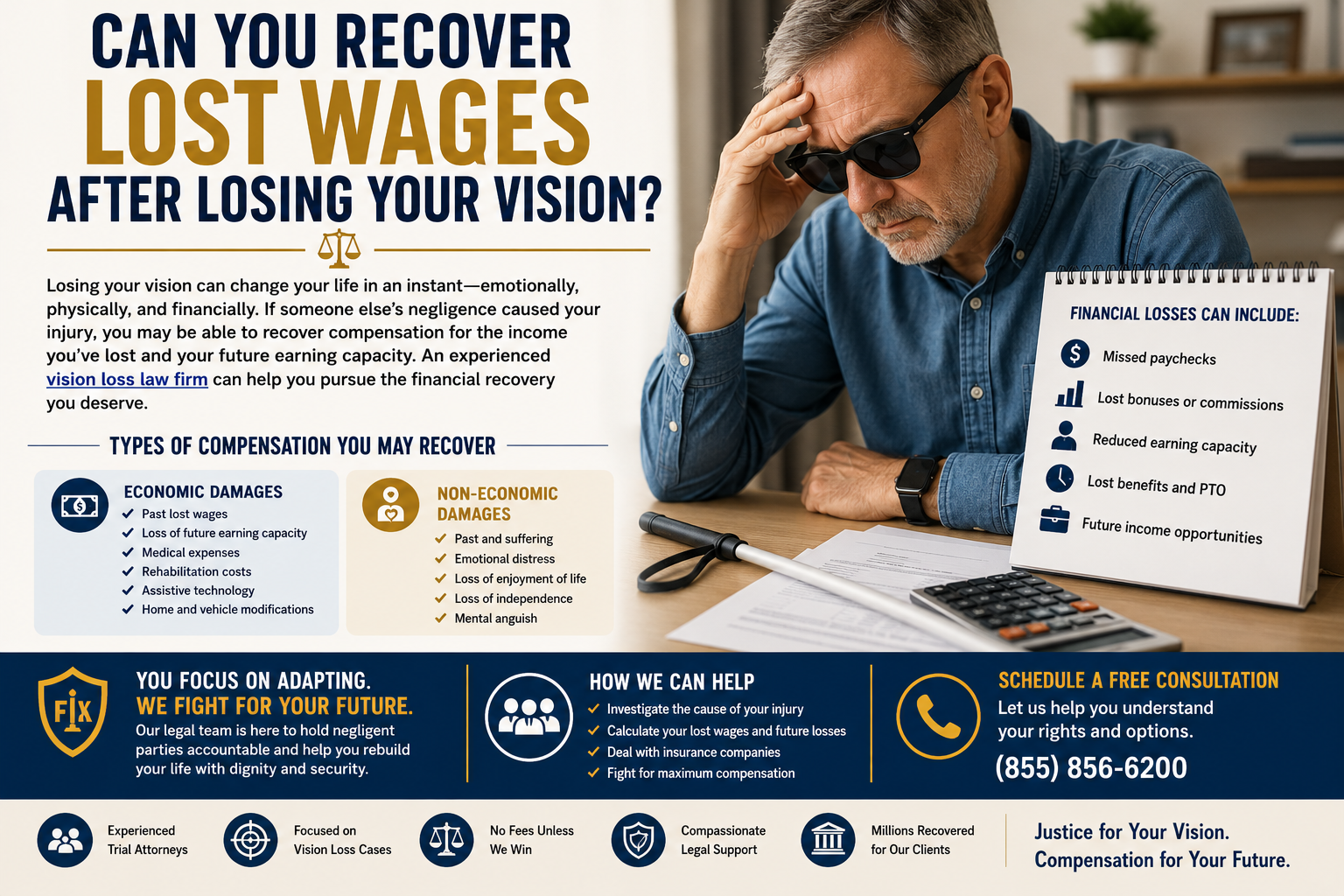
Losing your vision can affect nearly every part of your life, including your ability to earn a living. Whether your vision loss resulted from medical malpractice, a car accident, a defective product, or another act of negligence, you may be entitled to recover compensation for the income you've lost. In many cases, victims can also seek damages for future earning capacity if permanent blindness prevents them from returning to their previous occupation. If your injury was caused by someone else's negligence, consulting an experienced blindness injury attorney can help you understand your legal rights and pursue the financial recovery you deserve.
Lost wages are often one of the largest components of a vision loss claim because permanent eye injuries can significantly reduce a person's ability to work for months, years, or even the rest of their life.
What Are Lost Wages?
Lost wages refer to the income you could not earn because your injury prevented you from working.
Depending on your situation, lost wages may include:
-
Missed paychecks
-
Hourly wages
-
Salaries
-
Overtime pay
-
Bonuses
-
Commissions
-
Self-employment income
-
Paid time off (PTO) used during recovery
-
Sick leave
-
Missed business opportunities
The goal is to compensate you for the income you would have earned if the injury had not occurred.
Can Permanent Vision Loss Affect Your Career?
Yes. Vision loss is considered a catastrophic injury because it can permanently affect your ability to perform job-related tasks.
Individuals with significant vision loss may struggle with:
-
Reading documents
-
Driving for work
-
Operating machinery
-
Using computers
-
Performing detailed visual tasks
-
Working in hazardous environments
-
Meeting licensing requirements for certain professions
For many workers, these limitations can make returning to the same career impossible.
Lost Wages vs. Loss of Earning Capacity
Although these terms are related, they represent different types of damages.
Lost Wages
These compensate you for income already lost between the date of your injury and the resolution of your claim.
Loss of Earning Capacity
Loss of earning capacity refers to the future income you are expected to lose because permanent vision impairment limits your ability to work.
For example, a commercial truck driver who becomes legally blind may no longer qualify for a commercial driver's license, resulting in substantial future financial losses.
What Evidence Is Needed to Recover Lost Wages?
Strong documentation is essential to prove your financial losses.
Helpful evidence includes:
Employment Records
These may include:
-
Pay stubs
-
Employment contracts
-
Tax returns
-
W-2 forms
-
Direct deposit statements
These records establish your income before the injury.
Employer Verification
Your employer may provide documentation confirming:
-
Missed workdays
-
Hourly wage or salary
-
Job duties
-
Benefits
-
Lost promotions
Medical Records
Medical documentation helps prove that your vision loss prevented you from working.
Important records include:
-
Ophthalmology reports
-
Surgical records
-
Vision testing
-
Disability evaluations
-
Physician work restrictions
Financial Records for Self-Employed Individuals
If you own a business or work as an independent contractor, evidence may include:
-
Tax returns
-
Profit and loss statements
-
Client invoices
-
Business contracts
-
Accounting records
How Future Lost Income Is Calculated
Calculating future lost earning capacity is often more complex than calculating past wages.
Several factors are considered, including:
-
Age
-
Occupation
-
Education
-
Skills
-
Career advancement opportunities
-
Salary history
-
Retirement plans
-
Severity of vision loss
-
Ability to return to work
Vocational experts and economists often help estimate these future losses.
Other Financial Damages You May Recover
Lost wages are only one part of a vision loss lawsuit.
Additional economic damages may include:
-
Emergency medical care
-
Hospital bills
-
Eye surgeries
-
Prescription medications
-
Vision rehabilitation
-
Occupational therapy
-
Assistive technology
-
Home modifications
-
Transportation expenses
-
Long-term medical care
Recovering these damages can help reduce the financial burden caused by permanent blindness.
Can You Recover Non-Economic Damages?
Yes. In addition to financial losses, many vision loss victims recover compensation for personal and emotional harm.
These damages may include:
-
Pain and suffering
-
Emotional distress
-
Mental anguish
-
Loss of enjoyment of life
-
Permanent disability
-
Loss of independence
The amount awarded depends on the severity of the injury and applicable state law.
How a Vision Loss Lawyer Can Help
Insurance companies often dispute lost wage claims, especially those involving future earning capacity.
A vision loss lawyer can:
-
Gather employment records
-
Obtain medical evidence
-
Work with vocational experts
-
Calculate future income losses
-
Negotiate with insurance companies
-
Present evidence at trial if necessary
Experienced legal representation helps ensure that all financial losses are fully documented and included in your claim.
Why You Should Act Quickly
Personal injury and medical malpractice claims are subject to statutes of limitations that vary by state.
Seeking legal advice promptly allows your attorney to:
-
Preserve employment records
-
Collect medical evidence
-
Consult financial experts
-
Protect important deadlines
Taking action early can strengthen your case and improve your chances of recovering full compensation.
Conclusion
Vision loss can have devastating financial consequences, especially when it affects your ability to work. If someone else's negligence caused your blindness or serious eye injury, you may be entitled to recover both lost wages and future earning capacity, along with compensation for medical expenses, rehabilitation, and pain and suffering.
An experienced vision loss lawyer can evaluate your claim, calculate the true value of your financial losses, and fight for the compensation you need to support yourself and your family after a life-changing injury.
Frequently Asked Questions
1. Can I recover lost wages after losing my vision?
Yes. If your vision loss resulted from another party's negligence, you may recover income lost while you were unable to work.
2. What is the difference between lost wages and loss of earning capacity?
Lost wages cover income already missed, while loss of earning capacity compensates for future income you may no longer be able to earn.
3. What documents help prove lost wages?
Pay stubs, tax returns, employer statements, employment records, and medical documentation are commonly used.
4. Can self-employed individuals recover lost income?
Yes. Business records, tax returns, invoices, and financial statements can help establish lost earnings.
5. Why should I hire a vision loss lawyer?
A lawyer can gather evidence, calculate current and future income losses, negotiate with insurers, and pursue maximum compensation.

 English
 Arabic
 French
 Spanish
 Portuguese
 Deutsch
 Dutch
Dutch
 Italiano
 Russian
 Romaian
 Portuguese (Brazil)
 Greek
Greek