


How Long Does a Gas Line Repair Usually Take?
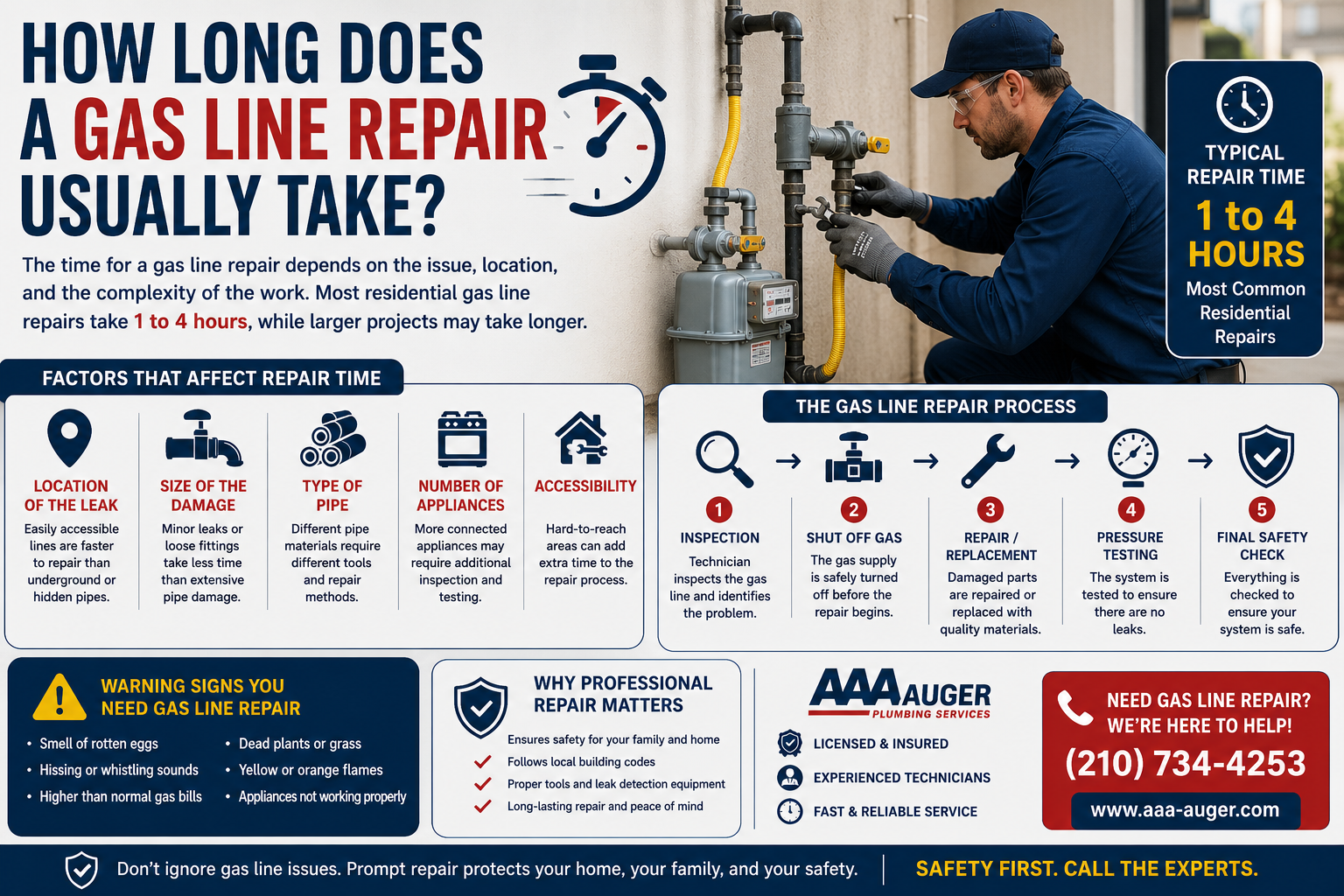
If you've scheduled a gas line repair, one of the first questions you may have is, "How long will it take?" The answer depends on several factors, including the location of the damage, the complexity of the repair, and whether the issue involves a simple fitting or an entire gas line replacement. At AAA Auger, licensed professionals perform thorough inspections and efficient repairs to restore your home's gas system safely while minimizing downtime.
Understanding the repair process can help you know what to expect and why professional service is essential.
Typical Gas Line Repair Time
Most residential gas line repairs can be completed within one to four hours. However, larger or more complicated projects may take longer.
Simple repairs, such as replacing a leaking fitting or tightening a loose connection, are often completed relatively quickly. More extensive work involving underground gas lines, damaged piping, or multiple appliance connections may require several hours or even a full day.
Every repair begins with a detailed inspection to ensure the entire gas system is safe.
Factors That Affect Repair Time
Several variables determine how long a gas line repair will take.
1. Location of the Gas Leak
Leaks located in easily accessible areas are generally repaired faster than those hidden behind walls, beneath concrete slabs, or underground.
Examples include:
-
Basement gas piping
-
Crawl spaces
-
Attic gas lines
-
Outdoor gas lines
-
Underground service lines
The harder it is to access the damaged section, the more time the repair may require.
2. Size of the Damaged Area
A minor crack in a fitting requires far less work than replacing an entire section of corroded gas piping.
Repair time increases when technicians must:
-
Remove damaged pipe
-
Install new gas lines
-
Replace fittings
-
Test multiple connections
-
Restore gas pressure
Larger repairs naturally require more careful work.
3. Type of Gas Line Material
Homes may contain different types of gas piping, including:
-
Black steel pipe
-
Corrugated Stainless Steel Tubing (CSST)
-
Copper (where permitted)
-
Flexible gas connectors
-
Polyethylene underground piping
Each material has different repair procedures that can affect the overall timeline.
4. Number of Connected Appliances
Many homes have multiple gas-powered appliances connected to the same gas supply.
These may include:
-
Gas stove
-
Water heater
-
Furnace
-
Gas dryer
-
Fireplace
-
Outdoor grill
-
Fire pit
Technicians often inspect each appliance connection to ensure the repair has not affected the rest of the system.
The Gas Line Repair Process
Professional gas line repairs follow a systematic process designed to prioritize safety and code compliance.
Step 1: Initial Inspection
The technician begins by identifying the source of the problem using specialized leak detection equipment and visual inspection.
They may check:
-
Gas piping
-
Appliance connections
-
Shut-off valves
-
Gas meter
-
Outdoor gas lines
Step 2: Gas Supply Shutdown
If necessary, the gas supply is temporarily turned off before repairs begin.
This prevents additional gas from entering the damaged section while technicians safely complete the repair.
Step 3: Repair or Replacement
Depending on the damage, the technician may:
-
Replace fittings
-
Repair leaking joints
-
Install new pipe sections
-
Replace damaged valves
-
Upgrade aging gas lines
Every repair is performed according to local safety regulations and building codes.
Step 4: Pressure Testing
Once repairs are complete, pressure testing verifies that the gas system is completely sealed.
This important step confirms:
-
No active leaks
-
Proper gas pressure
-
Safe appliance operation
Pressure testing should never be skipped.
Step 5: Final Safety Inspection
Before restoring gas service, technicians inspect all repaired areas and connected appliances.
This final inspection ensures your entire gas system is operating safely.
When Repairs May Take Longer
Some situations require additional time because of the complexity involved.
Examples include:
-
Underground gas line damage
-
Multiple gas leaks
-
Severe pipe corrosion
-
Complete gas line replacement
-
Extensive code upgrades
-
Difficult access behind walls or foundations
Although these repairs may take longer, completing the work correctly is far more important than rushing the process.
Can Emergency Gas Line Repairs Be Completed Quickly?
Emergency gas repairs receive immediate attention because they involve potential safety hazards.
If you notice:
-
Rotten egg odors
-
Hissing sounds
-
Visible pipe damage
-
Sudden appliance failure
-
Dead vegetation above underground gas lines
Leave the property immediately and contact your gas utility company before calling a licensed gas line repair professional.
Emergency response teams prioritize making the property safe before permanent repairs begin.
How to Help Speed Up the Appointment
Homeowners can help technicians work more efficiently by preparing in advance.
Before the appointment:
-
Clear access to gas appliances.
-
Keep pets secured.
-
Make note of warning signs you've observed.
-
Gather previous repair records if available.
-
Ensure easy access to the gas meter.
These simple steps reduce delays and allow technicians to begin work immediately.
Why Professional Gas Line Repair Matters
Gas line systems require specialized training and equipment.
Licensed professionals can:
-
Locate hidden gas leaks
-
Repair damaged piping
-
Perform pressure testing
-
Replace aging gas lines
-
Inspect appliance connections
-
Verify safe gas flow
-
Ensure compliance with local building codes
Attempting DIY gas repairs can result in dangerous leaks, fire hazards, and costly code violations.
Conclusion
Most residential gas line repairs can be completed within a few hours, but every situation is unique. Factors such as the location of the leak, the extent of the damage, and the number of connected appliances all influence repair time. While homeowners naturally want repairs completed quickly, safety should always come first. Professional gas line repair includes careful inspection, accurate diagnostics, quality repairs, and thorough testing to ensure your home's gas system operates safely and efficiently for years to come.
Frequently Asked Questions
1. How long does a typical gas line repair take?
Most residential gas line repairs take between one and four hours, depending on the complexity of the problem.
2. What makes a gas line repair take longer?
Underground leaks, extensive pipe damage, difficult access, or complete gas line replacement can increase repair time.
3. Will my gas be turned off during the repair?
Yes. In many cases, the gas supply is temporarily shut off to allow technicians to perform repairs safely.
4. Can I use my gas appliances immediately after the repair?
Once repairs, pressure testing, and final safety inspections are complete, your technician will let you know when it's safe to use your appliances again.
5. Should I repair a gas leak myself?
No. Gas line repairs should always be completed by licensed professionals to ensure safety and compliance with local building codes.

 English
 Arabic
 French
 Spanish
 Portuguese
 Turkish
 Dutch
Dutch
 Italiano
 Russian
 Romaian
 Portuguese (Brazil)
 Greek
Greek