


Third-Party Risk Assessment: Key Steps to Identify and Mitigate Vendor Risks
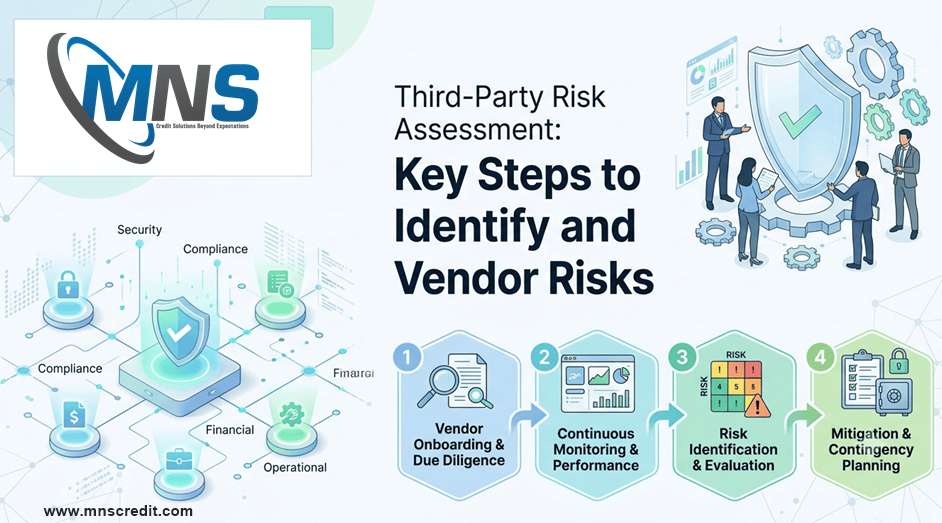
No business operates in isolation. Vendors, suppliers, distributors, and outsourced service providers are woven into nearly every critical function, from manufacturing and logistics to IT infrastructure and customer service. That interdependence is also where a significant share of enterprise risk now originates. Third-party risk assessment is the structured process of identifying, evaluating, and controlling the risks that vendors introduce into a business, before those risks materialise into financial loss, regulatory penalties, or operational disruption. It treats the vendor ecosystem as an extension of the organisation's own risk surface — one that deserves the same rigour as internal controls, rather than a lighter, trust-based standard applied simply because the work has been outsourced.
Why Third-Party Risk Assessment Matters Today
Regulators across banking, insurance, and financial services have made it clear that outsourcing a function does not outsource accountability — a business remains responsible for the conduct of its vendors, particularly around data protection, anti-money laundering, and consumer protection. At the same time, supply chains have become more concentrated and more global, meaning a single vendor's financial failure, cyber breach, or compliance lapse can cascade quickly into the business relying on it. Third-party risk assessment gives organisations a systematic way to see this exposure clearly, rather than discovering it only after something goes wrong.
Types of Vendor Risk Businesses Must Evaluate
Financial risk. A vendor's liquidity position, credit rating, and payment history determine whether it can reliably deliver over the life of a contract, particularly during economic downturns or sudden demand spikes.
Compliance and regulatory risk. Sanctions exposure, AML/PMLA obligations, licensing requirements, and sector-specific regulations all create risk if a vendor falls short — risk that, in many regulated industries, transfers directly to the business that engaged them.
Operational and concentration risk. Overreliance on a single vendor for a critical input, or a vendor with limited backup capacity, creates a single point of failure that can halt operations if that vendor experiences disruption.
Reputational risk. A vendor's labour practices, environmental record, or public controversies can damage the reputation of every business associated with it, particularly in industries under close public and regulatory scrutiny.
Cybersecurity and data risk. Vendors with access to systems or sensitive data introduce a direct attack surface; a vendor's weak security posture can become the entry point for a breach that affects the primary business.
Geopolitical and country risk. For businesses operating across India and the Middle East, cross-border vendor relationships introduce exposure to currency controls, sanctions regimes, and jurisdiction-specific regulatory frameworks such as CBUAE and FATF/MENAFATF requirements that must be factored into the risk assessment.
Key Steps in a Third-Party Risk Assessment Process
1. Risk tiering. Segment vendors by criticality, contract value, and inherent risk, so that assessment depth and monitoring frequency are proportionate rather than uniform across the entire vendor base.
2. Due diligence and screening. Verify legal standing, ownership, financial health, and conduct sanctions, PEP, and adverse media screening before onboarding, and repeat this screening periodically thereafter.
3. Contractual risk controls. Build clear obligations into vendor contracts around data protection, compliance warranties, audit rights, service levels, and termination triggers, so that risk is allocated and enforceable rather than assumed.
4. Ongoing monitoring. Risk does not stay static after onboarding — periodic re-assessment, financial health tracking, and incident monitoring catch deterioration in a vendor's risk profile before it becomes a business-critical failure.
5. Remediation and exit planning. For critical vendors, maintain a documented contingency plan — alternative suppliers, transition timelines, and data recovery arrangements — so that a vendor failure does not become an existential disruption.
Building a Sustainable TPRM Program
A third-party risk assessment process only holds up over time if it is embedded into governance, not run as a one-off project. That means assigning clear ownership — typically a joint responsibility between procurement, compliance, and risk functions — and defining escalation paths for when a vendor's risk rating changes materially. It also means investing in data and tooling that can scale: manually re-screening thousands of vendors against sanctions lists, credit bureaus, and registry data is neither timely nor reliable at scale, which is why many organisations now rely on specialist due diligence and credit intelligence providers to run this screening on an ongoing basis and flag material changes as they occur, rather than only at renewal.
Common Pitfalls That Weaken a Third-Party Risk Program
Even well-intentioned programs often fall short in predictable ways. Many organisations apply the same assessment depth to every vendor regardless of criticality, exhausting resources on low-risk relationships while under-scrutinising the handful of vendors that carry the most concentrated exposure. Others treat the initial onboarding assessment as sufficient, with no defined process for re-screening vendors as contracts renew or circumstances change — leaving the business exposed to risks that emerged well after the relationship began. A further common gap is assessing risk in silos, with procurement, compliance, and IT security each running separate, disconnected reviews rather than consolidating findings into a single vendor risk profile that decision-makers can act on.
The Role of Senior Leadership and Board Oversight
Third-party risk has moved from an operational concern to a governance one. Boards and senior leadership increasingly expect visibility into the organisation's most critical vendor dependencies, the risk ratings attached to them, and the status of any material issues identified through ongoing monitoring. Building a periodic reporting cycle — summarising vendor risk tiering, key findings from due diligence, and any open remediation items — into existing risk or audit committee reporting ensures third-party risk receives the same governance attention as other enterprise risk categories, rather than being treated purely as a procurement or compliance function's internal concern.
Conclusion
Third-party risk is not a peripheral concern for compliance teams — it is a direct extension of a business's own financial, operational, and reputational risk. A structured assessment process that tiers vendors by risk, verifies them thoroughly at onboarding, embeds enforceable controls into contracts, and monitors them continuously gives a business the ability to catch problems early rather than absorb their consequences after the fact. As supply chains grow more complex and regulators grow less tolerant of "the vendor did it" as an explanation, a mature third-party risk assessment program is fast becoming a baseline expectation rather than a competitive differentiator.
MNS Credit Management Group supports businesses across India and the Middle East with third-party risk assessment, due diligence, and ongoing vendor monitoring designed to catch these risks before they become losses.
 Portuguese
 English
 Arabic
 French
 Spanish
 Deutsch
 Turkish
 Dutch
Dutch
 Italiano
 Russian
 Romaian
 Portuguese (Brazil)
 Greek
Greek