


How Does the LongHui Zipper Arranging Machine Organize Finished C
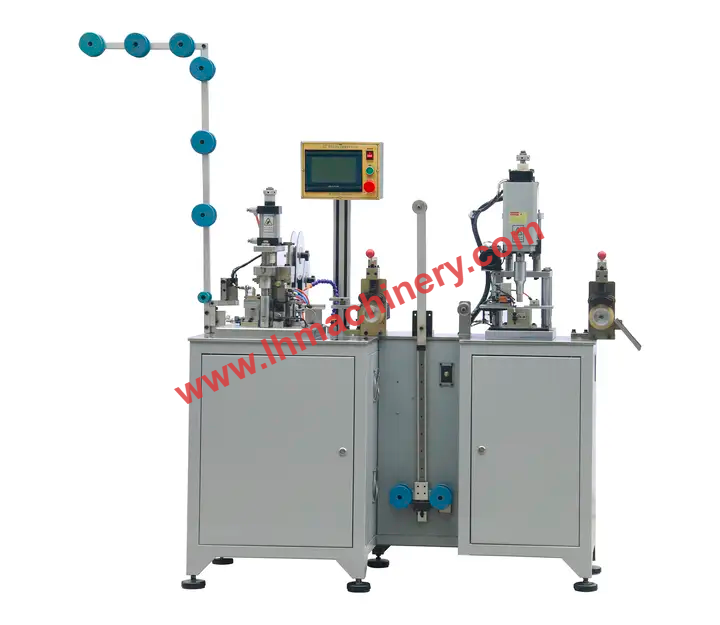
Factories that process continuous zipper chains frequently encounter tangled or reversed units after molding or sewing stages, and the orderly preparation of those chains depends on equipment designed for separation and orientation. Facilities that review technical resources from lhmachinery obtain clear descriptions of how a zipper arranging machine receives bulk output, isolates individual lengths, and presents them in consistent direction for the next operation. Which sequence of internal actions produces reliable alignment under continuous load?
The process begins when finished chains drop or transfer onto an intake conveyor that carries them toward the primary separation zone. Controlled vibration combined with gentle mechanical agitation loosens clusters so that single units advance without clinging to neighbors. Air streams in certain configurations assist this initial isolation by lifting lighter tapes and discouraging re-entanglement. Once separated, each chain enters a series of guiding rails whose spacing matches the expected tape width and whose surface finish minimizes friction that could otherwise cause bunching.
As the chain progresses, sensors or simple mechanical feelers detect the position of the slider and the relative lay of the two tapes. Micro-adjustments then rotate or shift the unit until the puller faces the predetermined direction and both tapes lie flat and parallel. Vibration trays or roller channels further straighten any residual twists that remain after the initial separation. Drive motors synchronized through the control panel maintain a steady advance rate that matches the intake of the following station, preventing both backlog and starvation of the downstream process.
Discharge occurs through an exit section that deposits the oriented chains in an even sequence onto a collection tray or transfer belt. The uniform spacing and consistent orientation achieved at this point allow cutting equipment or slider-mounting stations to operate without the pauses that manual sorting would introduce. Adjustable rail spacing and programmable speed settings permit rapid adaptation when the line switches between resin, nylon, or metal chains of differing widths, so that changeovers require only limited mechanical alteration.
Routine observation of the conveyor surface, guide rails, and vibration units keeps the sequence stable over extended shifts. Accumulated fiber or dust is removed before it interferes with free movement, and lubrication points receive attention according to the schedule indicated by the manufacturer. When orientation irregularities appear, operators first verify that the vibration intensity and rail alignment remain within the values established during the last calibration, then inspect sensors for any shift caused by vibration or impact.
Integration with preceding and following machines relies on matched throughput rates and compatible transfer heights. When the arranging equipment receives chains directly from an injection or coil-forming unit and delivers them to a cutter or inspection station, the entire segment of the line maintains a continuous rhythm. Training that familiarizes technicians with parameter adjustment and basic troubleshooting shortens recovery time if a jam or misalignment occurs, preserving overall schedule integrity.
The contribution of orderly preparation extends beyond simple convenience. Chains that arrive at inspection points in a predictable layout allow visual or sensor-based checks to identify defects with greater certainty, while the reduction of secondary handling lowers the risk of surface abrasion or deformation during transfer. Over successive production cycles this consistent presentation supports both dimensional accuracy in finished goods and efficient allocation of labor away from repetitive manual sorting.
Sustained performance depends on treating the arranging stage as an integral element of the overall process rather than an isolated accessory. When operators monitor intake volume, alignment consistency, and discharge pattern as routine indicators, minor deviations receive attention before they accumulate into larger interruptions. Technical documentation detailing component interaction and adjustment procedures for the zipper arranging machine remains available through https://www.lhmachinery.com at lhmachinery whenever a line configuration changes or a new product specification appears.
 Portuguese
 English
 Arabic
 French
 Spanish
 Deutsch
 Turkish
 Dutch
Dutch
 Italiano
 Russian
 Romaian
 Portuguese (Brazil)
 Greek
Greek