


Next-Gen Antibiotics: Market Trends & Innovation Outlook
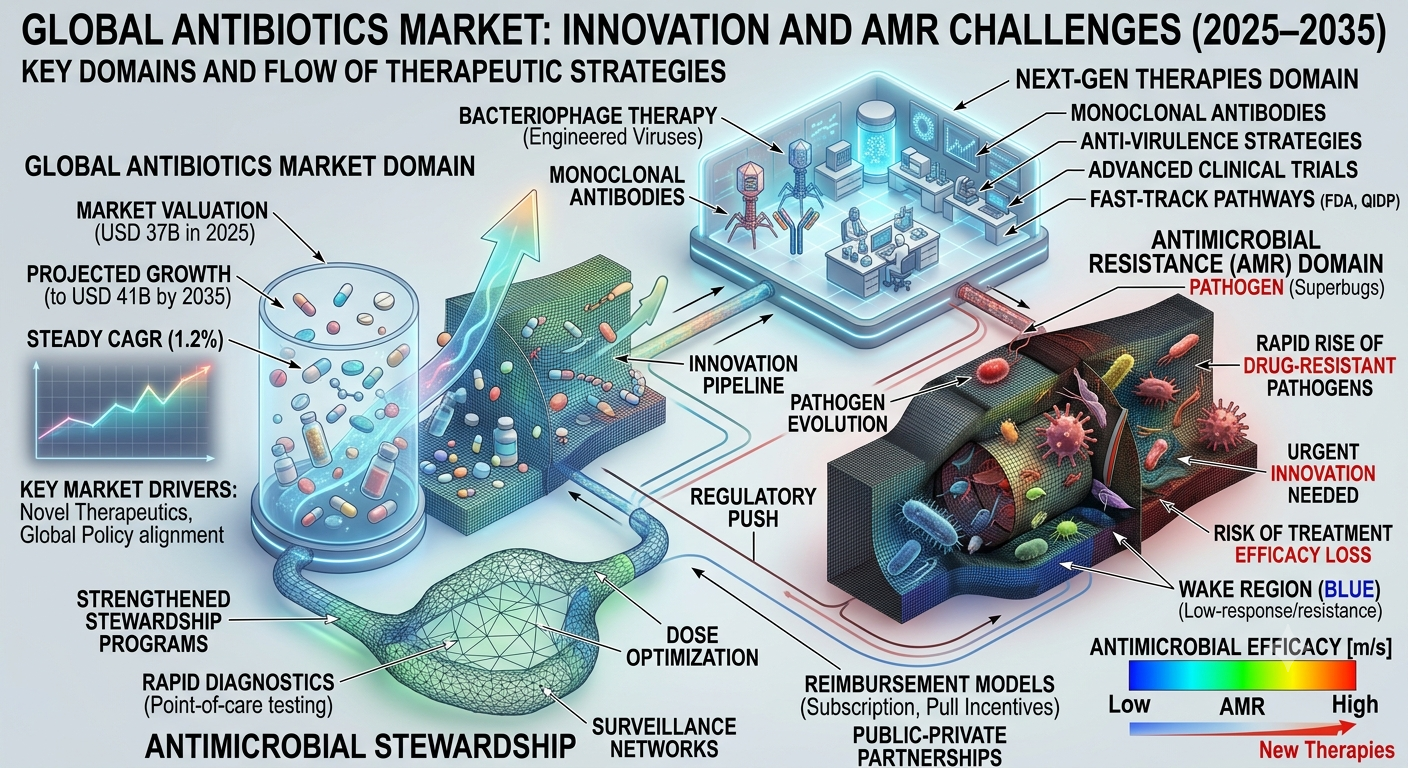
Navigating the Future of Antibiotics: Innovation, Market Shifts, and AMR Challenges
The global healthcare landscape is at a critical juncture. For decades, modern medicine has relied heavily on effective antimicrobial therapies to perform routine surgeries, manage chemotherapy side effects, and treat common bacterial infections. However, the rapid rise of drug-resistant pathogens is reshaping how pharmaceutical companies, researchers, and global health bodies approach the development and commercialization of antibiotics.
According to a recent antibiotics market analysis by Roots Analysis, the global market size is valued at USD 37 billion in 2025, projected to reach USD 37 billion in 2026 and grow to USD 41 billion by 2035, representing a compound annual growth rate (CAGR) of 1.2% during the forecast period. While this steady valuation reflects a mature product landscape, it also highlights the urgent need for renewed capital injection and novel therapeutic models. Without continuous innovation, standard treatment protocols risk losing their efficacy against evolving superbugs.
The Economic Paradox in Antimicrobial Innovation
Developing novel antimicrobial agents presents a unique financial challenge for pharmaceutical companies. Unlike treatments for chronic conditions—which patients may take for years or decades—antimicrobial regimens are typically short-term. Furthermore, when a breakthrough drug enters the market, public health stewards often restrict its use as a "last-resort" option to prevent pathogens from quickly developing resistance.
This dynamic creates a market failure: high upfront clinical trial costs paired with intentionally suppressed sales volumes. To address this mismatch, policymakers around the world are experimenting with new economic incentives. Subscription-style reimbursement models, often referred to as "Netflix-style" payment schemes, guarantee developers a fixed annual fee regardless of the volume of drugs prescribed. These pull incentives aim to make anti-infective research commercially viable once again.
Regulatory Catalyst and Fast-Track Pathways
Recognizing the public health implications of a depleted anti-infective pipeline, global regulatory bodies are refining approval frameworks. The U.S. Food and Drug Administration (FDA) offers specific expedited pathways, such as the Qualified Infectious Disease Product (QIDP) designation, to encourage the clinical development of targeted therapies.
These regulatory incentives provide extended market exclusivity and priority review status. By shortening the time required to bring novel formulations from pre-clinical testing to bedside care, regulators are helping bridge the gap between academic discovery and commercial viability.
Beyond Traditional Small Molecules: Emerging Therapeutic Modalities
While traditional broad-spectrum agents dominated the 20th century, today's scientific pipeline emphasizes targeted action and non-traditional platforms. Researchers are moving away from brute-force bacterial clearance toward precision therapeutics that minimize collateral damage to the human microbiome.
Bacteriophage Therapy and Precision Medicine
Engineered bacteriophages—viruses that specifically target and destroy bacterial strains without harming human cells—are transitioning from experimental compassionate-use scenarios into structured clinical trial evaluations. Combined with advanced genomic sequencing, clinicians can increasingly match a specific bacterial strain to its corresponding phage treatment.
Monoclonal Antibodies and Anti-Virulence Strategies
Another promising avenue involves anti-virulence therapies that do not directly kill bacteria but instead neutralize their toxic secretions or disarm their ability to form protective biofilms. By stripping pathogens of their defense mechanisms, the host's natural immune system can clear the infection more effectively. The World Health Organization (WHO) routinely highlights these non-traditional approaches as essential components in the global response strategy against drug-resistant health threats.
Antimicrobial Stewardship: Balancing Access and Preservation
Innovation alone cannot solve the efficacy crisis. Effective stewardship programs within hospital systems and community clinics are vital to ensure that existing and newly launched drugs retain their effectiveness over time.
Key components of modern stewardship include:
-
Rapid Diagnostics: Utilizing point-of-care testing to identify specific pathogens within hours rather than days, preventing inappropriate prescriptions.
-
Dose Optimization: Employing pharmacokinetic and pharmacodynamic modeling to tailor drug dosages precisely to individual patient parameters.
-
Surveillance Networks: Tracking regional resistance patterns to inform empiric treatment guidelines before lab cultures are finalized.
By integrating rigorous stewardship with advanced diagnostic tools, healthcare providers can significantly lower the risk of resistance emerging prematurely in newly approved treatments.
Key Market Drivers Shaping the Next Decade
Several macro factors will dictate how the market evolves through 2035:
-
Public-Private Partnerships: Non-profit consortia and government grants are bearing a larger share of early-stage financial risk, allowing small biotechnology startups to advance candidates through Phase II trials.
-
Repurposing Existing Compounds: Advanced computational modeling and AI-driven drug screening are enabling researchers to identify antibacterial properties in established compounds, reducing discovery timelines.
-
Global Policy Alignment: Harmonizing international regulatory submission requirements allows biotech firms to launch clinical trials across multiple regions simultaneously, reducing duplicate efforts and administrative costs.
Looking Ahead: A Sustainable Path for Infectious Disease Management
The future of anti-infective development relies on maintaining a delicate balance between commercial sustainability and public health preservation. While the projected growth rate for the market remains modest, the underlying qualitative shifts within R&D pipelines are profound.
As push-and-pull financial incentives mature and novel modalities prove their clinical value, the industry is laying the groundwork for a more resilient infectious disease infrastructure. Stakeholders across biotechnology, government, and healthcare delivery must remain committed to long-term investment, ensuring that future generations maintain access to safe, effective therapies when treating bacterial pathogens.

 English
 Arabic
 French
 Spanish
 Portuguese
 Deutsch
 Turkish
 Dutch
Dutch
 Italiano
 Romaian
 Portuguese (Brazil)
 Greek
Greek