


How Does an Electric Gear Motor Manufacturer Optimize Motor and Gearbox Integration
The industrial sector consumes a substantial portion of global electricity, with electric motor-driven systems accounting for a significant share of this demand. As energy costs rise and environmental regulations tighten, the efficiency of these drive systems has moved from a secondary consideration to a primary design objective. This shift in priorities raises a practical question: how do Electric Gear Motor Manufacturers approach energy efficiency in modern motor designs?
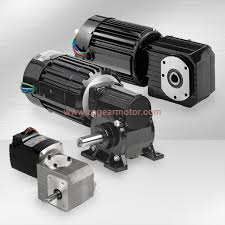
The foundation of energy-efficient gear motor design lies in the integration of the motor and gearbox as a unified system rather than separate components. Traditional designs often treat the motor and gear reduction unit as independent elements, missing opportunities for optimization at the interface. Modern manufacturers recognize that the overall system efficiency depends on how these components work together. By matching the motor's operating characteristics to the gearbox's mechanical properties, an Electric Gear Motor Manufacturer can achieve efficiency levels that exceed what either component could deliver alone.
Motor efficiency classifications provide a framework for understanding performance improvements. The international standard IEC 60034-30 defines efficiency classes from IE1 (Standard) through IE5 (Ultra-Premium). Many leading manufacturers now produce gear motors that meet or exceed IE3 (Premium) requirements, with some achieving IE4 (Super Premium) and IE5 ratings. These higher classes represent significant efficiency gains. For example, an IE3 motor can deliver up to 18% energy savings compared to IE2, while IE5 designs can achieve up to 59% savings over IE3. These improvements directly translate into reduced operating costs and lower carbon emissions.
The gearbox itself presents substantial opportunities for efficiency enhancement. Helical gear designs, for instance, offer efficiency advantages over worm gear configurations due to their rolling rather than sliding contact between teeth. Manufacturers have refined gear tooth geometry through advanced grinding and finishing techniques, reducing friction and improving power transmission. Some modern gear motors achieve gear unit efficiencies approaching 92% for the integrated system. The reduction of friction losses through better gear geometry and high-quality manufacturing contributes directly to overall system efficiency.
Mechanical innovations extend beyond gear tooth design. The adoption of permanent magnet synchronous motors (PMSM) represents a significant advancement in motor technology. Compared to traditional induction motors, PMSMs offer efficiency improvements of up to 10% or more, with particularly strong performance under partial load conditions. These motors maintain constant speed independent of load variations, reducing heat generation and improving reliability. Some designs achieve energy savings of up to 40% compared to inverter-driven induction motors of similar rating.
The design of the complete drivetrain requires careful attention to every component between the motor and the driven equipment. Couplings, bearings, and shaft connections all contribute to system losses. An experienced Electric Gear Motor Manufacturer evaluates each element, specifying couplings that accommodate misalignment while minimizing parasitic losses. Proper alignment during installation further reduces energy consumption, as even minor misalignment increases the current draw required to maintain output.
The cooling system of a gear motor also influences efficiency. Traditional designs often required separate cooling fans or liquid cooling circuits that consumed additional energy. Modern integrated designs eliminate unnecessary cooling components, reducing parasitic losses. The NORD DuoDrive, for example, combines the motor and gear unit in a single housing without a cooling fan, achieving a hygienic, unventilated design that reduces maintenance requirements while maintaining high efficiency. This integrated approach also extends component life by eliminating wear-prone parts.
For manufacturers evaluating gear motor options, the choice of an Electric Gear Motor Manufacturer should consider both product performance and the supplier's engineering expertise. Manufacturers that invest in precision manufacturing equipment, such as advanced CNC machines and gear grinding capabilities, produce components with tighter tolerances that reduce friction and improve efficiency. The ability to customize designs for specific applications allows manufacturers to match the motor and gearbox precisely to the load requirements, avoiding over-sizing that wastes energy.
The economic case for high-efficiency gear motors becomes clear when examining the total cost of ownership. While premium efficiency motors often carry a higher initial price, the energy savings typically recover this premium within a reasonable period. With electric motors accounting for a large portion of industrial energy use, even modest efficiency improvements translate into significant annual savings. These financial benefits make efficiency a priority for most applications.
Zpgearmotor has established its manufacturing capabilities to address these efficiency considerations through careful design and precision engineering. The company's approach to gear motor production reflects an understanding that energy efficiency must be considered at every stage, from material selection to final assembly. By focusing on reducing friction, optimizing gear geometry, and integrating components effectively, their gear motors aim to deliver reliable performance with lower energy consumption. For facilities seeking to understand how modern Electric Gear Motor Manufacturers approach energy efficiency, https://www.zpgearmotor.com/product provides access to product information and technical resources. The company's engineering expertise supports customers in selecting gear motors that align with their operational requirements and efficiency objectives.
The future of gear motor design continues to evolve toward higher efficiency and greater integration. Innovations such as magnetic gearing, which replaces physical gear teeth with magnetic coupling, promise even higher efficiencies by eliminating contact friction. While such technologies remain emergent, they point toward a continuing trend of efficiency improvement. For industrial applications today, selecting an Electric Gear Motor Manufacturer that combines proven technology with engineering expertise represents the most reliable path to achieving both performance and energy efficiency goals.

 English
 Arabic
 French
 Spanish
 Portuguese
 Turkish
 Dutch
Dutch
 Italiano
 Russian
 Romaian
 Portuguese (Brazil)
 Greek
Greek