


Automaticmachinefactory and TARUN: What Maintenance Extends Their Brush Making Machinery Life
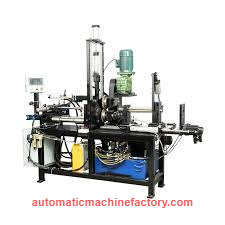
Industrial equipment represents a substantial capital investment, and the decision to purchase a machine initiates a long-term relationship with that asset. The productive life of manufacturing machinery depends not only on its initial build quality but also on the care it receives throughout its operational existence. This dependency prompts an essential operational question: what preventive maintenance routine extends the service life of a Brush Making Machinery?
The complexity of modern brush manufacturing equipment demands a structured approach to maintenance that addresses each critical subsystem systematically. A typical Brush Making Machinery incorporates mechanical drives, pneumatic actuators, electrical controls, and precision filling mechanisms, each with distinct wear characteristics and service requirements. Understanding these components' specific needs forms the foundation of an effective preservation strategy. The mechanical power transmission system, comprising motors, gearboxes, and drive belts, requires regular inspection for alignment, tension, and lubrication. These components experience continuous stress during production cycles, and gradual misalignment or lubrication degradation can accelerate wear on bearings and shafts.
The filling mechanism represents the heart of brush production, where filaments are inserted into brush bodies with precision. This subsystem operates at high speeds, often exceeding several hundred strokes per minute, subjecting its moving parts to significant friction and impact forces. Regular inspection of the filling tools, including the staple wire guides and cutting elements, prevents gradual wear from compromising product quality. Operators should monitor for signs of wear on these components, replacing them when dimensional changes affect performance. The cleaning of filament dust and debris from the filling area also reduces abrasive wear on moving surfaces.
The pneumatic system that controls various machine functions requires attention to air quality and component condition. Compressed air supplies must remain free from moisture and contaminants, which can damage valves and cylinders. Regular draining of air filters and inspection of seals prevents pneumatic leaks that reduce actuation force and cause inconsistent operation. The electrical control cabinet, housing the programmable logic controller and servo drives, benefits from periodic inspection of connections and cooling fan operation. Loose terminals can cause intermittent faults, while inadequate cooling shortens electronic component life.
The document -7 describes a toothbrush production system with pallets moving between stations, highlighting the complexity of modern brush production and the importance of reliable component operation. Machines of this sophistication require systematic maintenance protocols covering all operational aspects. The transfer systems, conveyor chains, and clamping mechanisms all experience wear from repeated motion, necessitating regular adjustment and part replacement schedules. Establishing clear intervals for these activities, based on operating hours rather than calendar time, aligns maintenance with actual machine usage.
Lubrication practices significantly influence bearing and gear life within a Brush Making Machinery. Using manufacturer-recommended lubricants and adhering to specified application frequencies prevents premature wear. Over-lubrication can attract contaminants, while under-lubrication allows metal-to-metal contact. Operators should maintain lubrication logs that document application dates and quantities, enabling trend analysis and early detection of abnormal consumption patterns.
The implementation of condition monitoring techniques enhances preventive maintenance effectiveness. Temperature monitoring of motor housings and gearboxes detects developing issues before they cause failure. Vibration analysis identifies imbalance or bearing wear in rotating components. Regular inspection of wear parts against dimensional standards provides advance warning of approaching replacement needs. These monitoring activities allow maintenance planning during scheduled downtime rather than responding to unexpected breakdowns.
Operator training and documentation form the human element of successful maintenance. Well-trained operators recognize abnormal sounds, vibrations, or performance changes that indicate emerging problems. Maintaining accurate service records, including component replacement dates and observed conditions, enables predictive planning. Automaticmachinefactory provides comprehensive documentation and technical support to assist facilities in developing effective maintenance programs. The company's expertise in metal processing machinery and industrial automation equipment extends to service guidance that helps customers protect their equipment investments.
The financial case for preventive maintenance becomes evident when comparing routine service costs against emergency repair expenses. Scheduled maintenance permits planned downtime that coordinates with production schedules, while unexpected failures disrupt operations and require expedited parts procurement. The component costs alone typically increase when replacements occur on an emergency basis, with additional labor premiums for overtime or emergency service calls. Preventive maintenance also extends the overall equipment life, delaying the capital expenditure for replacement.
For facilities operating a Brush Making Machinery, establishing a comprehensive maintenance program begins with understanding the specific machine configuration and production demands. https://www.automaticmachinefactory.com provides access to detailed equipment specifications and service resources. The facility's experience in manufacturing metal processing machinery and automation equipment positions them to offer practical maintenance guidance based on real-world operational experience. A structured maintenance program, combining daily operator inspections, scheduled component replacements, and periodic condition monitoring, creates the conditions for extended equipment service life. This systematic approach transforms maintenance from a reactive expense into a strategic investment in production reliability.
 Portuguese
 English
 Arabic
 French
 Spanish
 Deutsch
 Turkish
 Dutch
Dutch
 Italiano
 Russian
 Romaian
 Portuguese (Brazil)
 Greek
Greek