


Can Peptides Improve Fertility? What the Science Says
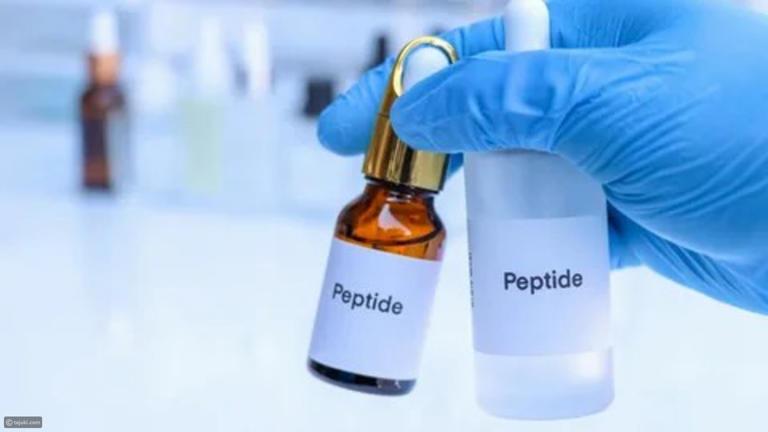
Interest in peptides has expanded rapidly across wellness, recovery, metabolic healaims that certain fertility peptides may improve ovulation, egg quality, sperm health, implantation, or hormone balance. Some of those claims are connected to legitimate reproductive biology, but others go far beyond what clinical research has established.
The key point is that peptides are not one single treatment category. Some peptide hormones are well studied and already play important roles in fertility care, while many peptides promoted online remain experimental and have little or no evidence showing that they improve pregnancy or live-birth rates.
What Are Peptides, and Why Might They Affect Fertility?
Peptides are short chains of amino acids that can act as signaling molecules in the body. Natural reproductive hormones and related signaling systems help coordinate communication between the brain, pituitary gland, ovaries, and testes.
This is why the idea of fertility peptides is biologically plausible. Reproduction depends heavily on hormonal signaling. If a peptide can safely influence that signaling, researchers may be able to use it to trigger hormone release, support ovulation, or improve specific steps in assisted reproduction.
However, biological plausibility is not proof. A compound can produce interesting effects in cells or animals without improving fertility outcomes in people.
Kisspeptin Has Some of the Strongest Human Evidence
Kisspeptin is one of the most scientifically interesting peptides in reproductive medicine. It helps regulate gonadotropin-releasing hormone, or GnRH, which stimulates the release of luteinizing hormone and follicle-stimulating hormone. These hormones are central to ovulation and reproductive function.
Human studies have investigated kisspeptin as a way to trigger final egg maturation during in vitro fertilization. A 2014 study found that kisspeptin-54 could induce egg maturation in women undergoing IVF, with successful pregnancies occurring after fertilization and embryo transfer.
A later study reported oocyte maturation in 95% of participants and showed that live births were possible following kisspeptin-triggered maturation. ave also explored kisspeptin in women at increased risk of ovarian hyperstimulation syndrome.
These results make kisspeptin a legitimate research target, but it should not be confused with commercially marketed peptide protocols sold without strong clinical evidence. d Fertility Treatments Show Why the Category Matters
Peptide-related reproductive treatments are not entirely new. GnRH and GnRH analogs have long been used in assisted reproductive medicine to control ovarian stimulation and the timing of ovulation.
This illustrates why broad statements about fertility peptides can be misleading. Some peptide-based therapies have substantial clinical experience behind them. Others are investigational compounds supported mainly by laboratory findings, animal models, or testimonials.
When evaluating any peptide, better questions include: Has it been studied in humans? Was the study controlled? Did researchers measure pregnancy or live birth? Is it used within an established medical protocol? And are reproductive risks understood?
What About BPC 157?
BPC 157 is frequently discussed in online peptide communities because of claimed tissue-repair, anti-inflammatory, and blood-vessel effects. Most enthusiasm comes from preclinical research rather than robust human trials.
Research reviews describe potentially interesting regenerative effects in laboratory and animal studies, but there is no established clinical evidence that it improves ovulation, ovarian reserve, egg quality, sperm quality, implantation, pregnancy rates, or live-birth rates in humans. A very small 2025 pilot study of the compound included only two healthy adults.
That is far too small to establish broad safety and provides no evidence of fertility effectiveness. lso identified BPC 157 among substances for which it has had limited safety information and has raised concerns about potential immunogenicity and peptide-related impurities in compounded products.
This matters for people trying to conceive because reproductive safety, embryo effects, and early-pregnancy risks require stronger evidence than anecdotal reports can provide. es Improve Male Fertility?
Male fertility depends on sperm concentration, movement, shape, DNA integrity, hormone levels, testicular function, and overall health. Because peptides can influence hormones, inflammation, metabolism, or blood flow, there are theoretical reasons to study them.
Consumers should nevertheless be cautious with claims that experimental fertility peptides directly raise sperm count or reduce sperm DNA damage. Strong claims require well-designed human studies, not extrapolation from wound-healing or animal research.
For men with abnormal semen results, evidence-based evaluation may include repeat semen analysis, medical history, physical examination, hormone testing when appropriate, and assessment for treatable causes. Addressing an identified cause is very different from using an unproven peptide in hopes of improving a laboratory value.
Peptides, Egg Quality, and Ovarian Reserve
Claims about improving “egg quality” are especially common in fertility marketing. Age remains one of the strongest determinants of oocyte chromosome quality, and no peptide has been proven to reverse reproductive aging.
Experimental research does examine pathways involved in ovarian function, mitochondrial health, inflammation, and follicle development. Those areas may eventually produce useful therapies, but promising mechanisms should not be presented as established treatments.
Likewise, anti-Müllerian hormone and antral follicle count estimate ovarian reserve; they do not perfectly measure egg quality or guarantee conception. Treatments advertised as rebuilding ovarian reserve should therefore be viewed cautiously unless strong human evidence supports them.
Safety and Regulation Matter
Safety becomes especially important when peptides are injected or compounded. Compounded drugs are not FDA-approved, meaning the agency does not review them for safety, effectiveness, or quality before they are marketed.
Purity, dose consistency, sterility, and contamination can create risks beyond the peptide’s intended pharmacological effect. To conceive, have another concern: reproductive-toxicity, fetal-exposure, implantation, and early-development data may be missing. “No known harm” is not the same as “proven safe during conception or pregnancy.”
What the Science Says Overall
The science does not support treating all fertility peptides as either proven therapies or useless hype. Peptide signaling is fundamental to reproduction, and kisspeptin has produced meaningful results in clinical fertility research. Established GnRH-based medications also show that peptide-related biology can be therapeutically useful.
At the same time, evidence for many wellness-market peptides remains weak. Claims about better egg quality, sperm DNA, implantation, or pregnancy should be judged by human clinical outcomes, not animal research alone.
Anyone considering a peptide while trying to conceive should ask for published human evidence, reproductive safety data, regulatory status, and a clear explanation of how the treatment fits their diagnosis. Experimental compounds should not replace established infertility evaluation or evidence-based treatment.
The future of peptide-based reproductive medicine is promising, but promise is not proof. The most reliable approach is to separate genuine clinical science from marketing and make treatment decisions with a qualified reproductive specialist.
 Portuguese
 English
 Arabic
 French
 Spanish
 Deutsch
 Turkish
 Dutch
Dutch
 Italiano
 Russian
 Romaian
 Portuguese (Brazil)
 Greek
Greek