


Can Mole Removal in Dubai Be Done on the Scalp?
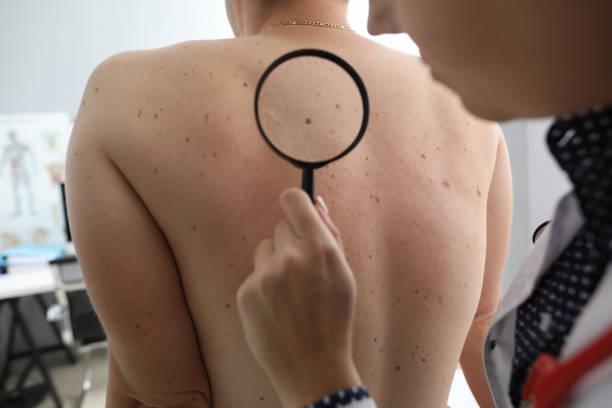
A mole on the scalp can sometimes be removed when it is medically appropriate and the patient wants treatment because of irritation, appearance, or repeated trauma. Mole Removal in Dubai for scalp lesions requires careful assessment because hair can make the area difficult to examine, while the location can also affect treatment planning and aftercare. A changing, bleeding, itchy, or unusual scalp mole should be medically assessed before cosmetic removal is considered.
1. Can a Mole Be Removed From the Scalp?
Yes. Moles can develop anywhere on the skin, including the scalp, and dermatologists can assess and remove appropriate scalp moles.
The scalp is different from easier-to-see areas because hair can partially conceal a lesion. This means the mole may not be regularly monitored by the person who has it.
If a scalp mole is raised, repeatedly irritated, difficult to monitor, or cosmetically bothersome, removal may be discussed after examination.
2. Why Does a Scalp Mole Need Careful Assessment?
The first priority is determining what the lesion actually is.
A mole that appears ordinary may be benign, but a new or changing lesion can sometimes indicate skin cancer. Dermatologists look for features such as asymmetry, irregular borders, multiple colors, increasing size, or evolution over time.
This is particularly relevant on the scalp because hair can make gradual changes harder to notice.
3. Can Hair Make a Scalp Mole Difficult to Monitor?
Yes.
Dense hair can partially cover a mole, making it harder to notice changes in:
- Size
- Shape
- Color
- Surface
- Bleeding
- Crusting
- New growth
The American Academy of Dermatology recommends parting the hair and using a mirror when checking the scalp during a skin self-examination. It also recommends asking another person for help with difficult-to-see areas.
Regular observation can be particularly useful for people with multiple moles.
4. When Might Scalp Mole Removal Be Considered?
A dermatologist may consider removal when a mole is:
- Repeatedly irritated
- Easily caught during hair grooming
- Frequently nicked while trimming hair
- Uncomfortable
- Difficult to monitor
- Considered cosmetically undesirable
- Clinically suspicious and requiring removal for diagnosis or treatment
The American Academy of Dermatology states that dermatologists may remove moles that are bothersome, unattractive to the patient, or suspicious.
The reason for removal helps determine the appropriate approach.
5. What If the Scalp Mole Bleeds?
Bleeding should not automatically be assumed to be harmless irritation.
A raised scalp mole can potentially be nicked during shaving, clipping, or grooming. However, a mole that bleeds without an obvious reason should be assessed.
Bleeding, itching, growth, or other changes can be warning signs that require dermatological evaluation.
The important point is to identify why the lesion is bleeding before treating it as a simple cosmetic concern.
6. What If the Mole Has Recently Changed?
A changing scalp mole should be assessed before cosmetic treatment.
Changes may include:
- Becoming larger
- Developing an irregular shape
- Developing multiple colors
- Becoming darker
- Developing an irregular border
- Starting to itch
- Bleeding
- Looking different from other moles
The AAD describes an evolving lesion as an important warning sign when assessing possible melanoma.
A changing mole should therefore be approached as a medical assessment issue first.
7. Does the Size of the Scalp Mole Matter?
Size can influence treatment planning, but there is no single size that automatically determines whether a mole can be removed.
The clinician may consider:
- Diameter
- Thickness
- Depth
- Shape
- Location
- Relationship to surrounding hair
- Skin tension
- Whether the lesion appears clinically suspicious
A small mole can still require medical assessment if it is changing, while a larger stable mole may be appropriate for elective treatment after evaluation.
8. What Removal Methods May Be Used?
The technique depends on the mole and the reason for removal.
Common dermatological approaches include surgical shave removal and surgical excision. With excision, the entire mole is cut out and stitches may be required. With a surgical shave, the raised portion is removed using a surgical blade.
The method should be selected according to the lesion rather than simply choosing the procedure that appears fastest.
If the mole needs diagnostic evaluation, the removed tissue may be examined under a microscope.
9. Can the Removed Scalp Mole Be Tested?
Yes.
When tissue is removed, it may be sent to a laboratory for microscopic examination, particularly when there is a clinical reason to investigate the lesion.
A biopsy is the method used to diagnose skin cancer when a dermatologist identifies a lesion that requires investigation. Not every mole requires biopsy, but a dermatologist determines when it is appropriate.
This is one reason professional mole removal is preferable to attempting to cut or burn a scalp mole at home.
10. Will Hair Need to Be Removed?
Not necessarily.
The amount of hair that needs to be moved or trimmed depends on the mole's position, size, procedure, and the clinician's ability to access the area safely.
For a small lesion, the surrounding hair may simply be separated to expose the treatment area.
If trimming is required, the clinician can explain how much hair needs to be managed before the procedure.
11. Does Scalp Hair Grow Back After Treatment?
The effect on hair depends on the depth and location of the procedure.
A superficial treatment may have little noticeable effect on surrounding hair. A deeper procedure involving the skin and hair follicles can potentially leave a small area with altered hair growth.
This is an important question to discuss during consultation, particularly when the mole is located in a highly visible area or near the hairline.
12. Can Scalp Mole Removal Leave a Scar?
Any procedure that creates an injury to the skin can potentially result in a scar.
The appearance of a scalp scar can depend on:
- Mole size
- Removal technique
- Depth of treatment
- Location
- Individual healing
- Infection or wound complications
- Aftercare
A clinician can explain the expected scar pattern based on the proposed procedure.
Claims such as “zero scar” or “risk-free removal” should be treated cautiously because no skin procedure can guarantee a completely invisible result. The AAD notes that mole removal carries risks including scarring and infection.
13. What Is Scalp Recovery Like?
Recovery varies according to the technique and size of the treated area.
After removal, the scalp may temporarily experience:
- Mild tenderness
- Redness
- Swelling
- Crusting
- A small wound
- Temporary sensitivity
If stitches are used, wound care and follow-up may be required.
The exact recovery period should be discussed with the treating clinician because different procedures produce different healing patterns.
14. Can You Wash Your Hair After Scalp Mole Removal?
Hair washing should follow the specific instructions provided after treatment.
The wound may need to remain protected for a certain period, depending on the procedure. Vigorous rubbing, scratching, or applying hair products directly to a healing wound may cause unnecessary irritation.
If the scalp has stitches or an open wound, the clinician should provide specific washing and wound-care instructions.
Avoid assuming that normal hair-washing habits can immediately continue after a procedure.
15. Can You Exercise After Scalp Mole Removal?
The answer depends on the procedure and the healing site.
Heavy exercise can increase sweating and may cause friction around a healing area. Activities involving helmets, tight headwear, swimming, or significant sweating may also need to be limited temporarily.
Patients should follow their clinician's individual instructions rather than using a fixed recovery rule for every procedure.
16. What About Swimming?
Swimming may need to be avoided while a wound is still healing, particularly when there is an open area or stitches.
Pools, hot tubs, and other water environments can expose a healing wound to bacteria and prolonged moisture.
The timing for returning to swimming depends on how the wound has closed and the procedure that was performed.
17. Does Dubai's Climate Affect Scalp Mole Recovery?
Dubai's heat and strong sunlight can make aftercare more important.
Sweating may increase discomfort around a healing scalp wound, while outdoor exposure can make sun protection more challenging.
Once the treated area has healed sufficiently, protecting the scalp from excessive ultraviolet exposure is important for general skin health. The AAD recommends sun protection and regular monitoring of moles for changes.
People who spend significant time outdoors should discuss practical sun-protection measures during consultation.
18. What If the Mole Is Near the Hairline?
A mole near the hairline may require additional cosmetic planning because the transition between the forehead and scalp can make small changes more noticeable.
The clinician may consider:
- Hairline position
- Direction of hair growth
- Mole size
- Skin tension
- Expected scar visibility
- Whether the lesion is flat or raised
The goal should be a medically appropriate procedure with realistic expectations rather than promising an invisible result.
19. Can Scalp Moles Be Removed for Cosmetic Reasons?
Yes, if the mole is assessed and considered appropriate for elective removal.
A patient may dislike a visible mole at the hairline or may find a raised lesion bothersome during grooming.
However, cosmetic motivation does not remove the need for assessment. A lesion that appears unusual, changes over time, itches, or bleeds should be evaluated first.
20. Why Should You Avoid DIY Scalp Mole Removal?
Removing a scalp mole at home can create several problems.
Attempting to cut, shave, burn, or chemically remove a mole can cause:
- Infection
- Uncontrolled bleeding
- Scarring
- Incomplete removal
- Delayed diagnosis of skin cancer
The AAD specifically advises against home mole-removal products and self-removal because of these risks.
The scalp can be particularly inconvenient for self-treatment because the area is difficult to see and reach accurately.
21. What Should You Ask During a Consultation?
Before undergoing scalp mole removal, consider asking:
- Does this mole need medical assessment before removal?
- Does it show any suspicious characteristics?
- Is a biopsy or laboratory examination appropriate?
- Which removal technique is recommended?
- Will stitches be required?
- Could the procedure affect nearby hair follicles?
- What type of scar should I expect?
- How should I wash my hair afterward?
- When can I exercise?
- When can I swim?
- When can I wear helmets or tight headwear?
- How should I protect the treated area from the Dubai sun?
These questions can help you understand the procedure rather than focusing only on removal itself.
22. Who May Be a Suitable Candidate?
A person may be suitable for scalp mole removal when the lesion has been properly assessed and the proposed procedure is considered appropriate.
Potential reasons for treatment include cosmetic concerns, repeated irritation, grooming-related trauma, or a medical indication.
Suitability depends on the individual mole rather than simply its location on the scalp.
Frequently Asked Questions
Can Mole Removal in Dubai be performed on the scalp?
Yes. Scalp moles can be evaluated and, when appropriate, removed by a qualified dermatology professional.
Can a scalp mole be removed without shaving the hair?
It depends on the location and procedure. Small lesions may sometimes be accessed by separating the surrounding hair, while other cases may require limited trimming.
Is a bleeding scalp mole always dangerous?
No, but unexplained bleeding should not be ignored. A mole that bleeds, itches, grows, or changes should be assessed by a dermatologist.
Can scalp mole removal affect hair growth?
It can depend on how deeply the lesion is removed and whether hair follicles are involved. Ask about this specifically if the mole is in a visible or densely haired area.
How long does scalp mole removal take to heal?
Healing varies according to the technique, size, depth, location, and individual response. Your clinician can provide a more specific recovery estimate after examining the mole.
Can I wash my hair after scalp mole removal?
You may need to modify your normal hair-washing routine temporarily. Follow the wound-care instructions provided after the procedure.
Can a scalp mole be removed for cosmetic reasons?
Yes, an appropriately assessed benign mole may be removed when appearance or repeated irritation is the main concern.
Should I remove a scalp mole at home?
No. DIY removal can cause infection, bleeding, scarring, incomplete removal, and delayed diagnosis if the lesion is cancerous.
The Strategic Investment
Scalp mole removal requires more than simply removing a visible growth. The lesion should first be assessed, particularly if it is new, changing, itchy, bleeding, or different from the person's other moles. Because the scalp is difficult to inspect and can be affected by hair grooming, careful planning can help address both medical and cosmetic considerations.
If you are considering treatment, a professional consultation can help determine whether the mole is suitable for removal, which technique may be appropriate, whether tissue examination is needed, and what recovery may involve. For aesthetic and dermatology treatment options in Dubai, you can explore Tajmeels Clinic.
 Dutch
Dutch
 English
 Arabic
 French
 Spanish
 Portuguese
 Deutsch
 Turkish
 Italiano
 Russian
 Romaian
 Portuguese (Brazil)
 Greek
Greek