


Tattoo Removal in Dubai for Fine-Line Tattoo Fading
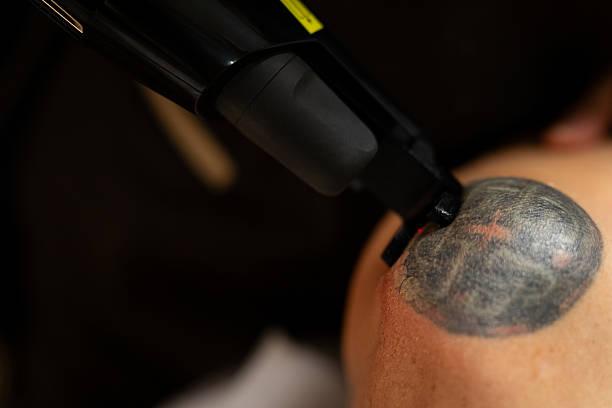
Fine-line tattoos can require a different treatment strategy because their pigment is often deposited in narrow, delicate strokes rather than dense blocks of ink. Tattoo Removal in Dubai can be planned around line density, pigment depth, tattoo age, skin type, and the desired degree of fading while limiting unnecessary treatment of surrounding skin.
For people considering removal of names, symbols, minimalist artwork, dates, or delicate lettering, the objective is not simply to use the highest available laser energy. Careful assessment and progressive treatment can be more appropriate for achieving controlled fading while allowing the skin time to recover.
Why Fine-Line Tattoos Need a Precise Removal Strategy
Fine-line tattoos are visually delicate because their design depends on narrow strokes and small amounts of pigment. A treatment plan therefore needs to account for the relationship between the ink and the surrounding skin.
A small tattoo is not automatically a fine-line tattoo. A compact design can contain heavy saturation, while a larger tattoo may consist almost entirely of thin outlines. The actual pigment distribution matters more than the overall dimensions alone.
Fine-Line Ink Density and Depth
Tattoo artists may deposit pigment at different depths and densities depending on their technique, the design, and the location of the tattoo.
A lightly saturated line may respond differently from a heavily reinforced line. Areas where the artist went over the same stroke multiple times may contain more pigment than the surrounding design.
The Importance of Line Structure
Fine-line designs often contain closely spaced elements. Letters, geometric patterns, small symbols, and minimalist illustrations may have very little space between individual strokes.
During assessment, the practitioner can consider whether the design should be approached as a single treatment field or evaluated according to its different pigment concentrations.
Factors That Influence Fine-Line Tattoo Removal in Dubai
Several characteristics can affect how a delicate tattoo responds to laser treatment.
| Factor | Why It Matters | Treatment Consideration |
|---|---|---|
| Line thickness | Thicker lines may contain more pigment | Response can vary across the design |
| Pigment density | Dense areas may require additional treatment | Progress should be monitored |
| Ink color | Different pigments absorb laser energy differently | Laser selection depends on pigment |
| Tattoo age | Older ink may have naturally faded | Current pigment density should be assessed |
| Skin tone | Skin pigmentation affects treatment planning | Appropriate parameters are important |
| Tattoo location | Circulation and friction vary by area | Healing may differ between locations |
| Previous treatment | Earlier laser exposure changes the current pigment load | Previous settings and response are useful |
This is why the expected number of sessions should not be based solely on the tattoo's size.
How Tattoo Removal in Dubai Can Address Delicate Lines
Laser tattoo removal works by delivering energy that targets tattoo pigment and breaks it into smaller particles. The body's natural processes then gradually clear the fragmented pigment.
For fine-line tattoos, treatment parameters can be selected according to the pigment and skin characteristics rather than treating the design as though it were a heavily saturated tattoo.
Q-Switched and Picosecond Laser Approaches
Different laser technologies may be considered depending on the tattoo's pigment and the available clinical equipment.
Q-switched systems have historically been used for tattoo pigment, while picosecond systems deliver extremely short pulses and may be selected for particular pigment-removal situations.
The appropriate technology is determined by factors such as ink color, pigment concentration, skin type, previous treatments, and clinical assessment. There is no single laser setting that is appropriate for every fine-line tattoo.
Controlled Treatment Is More Important Than Aggressive Treatment
Increasing energy simply because a tattoo is difficult to remove is not necessarily the best strategy.
The skin must also be considered. Excessive treatment can increase the likelihood of unwanted reactions, while insufficient treatment may produce limited pigment response. A practitioner can adjust the approach based on how the tattoo and skin respond over time.
Fine-Line Tattoo Colors Can Behave Differently
The apparent simplicity of a fine-line tattoo does not mean that its pigment will respond uniformly.
Black ink is often more responsive to commonly used tattoo-removal wavelengths, while some colored pigments can require different laser approaches. Pale colors and certain cosmetic pigments may also behave unpredictably.
Black and Gray Fine-Line Tattoos
Black and gray minimalist tattoos are common in fine-line designs. Their response depends on the concentration and depth of pigment.
A faded gray line may contain substantially less pigment than a newly applied solid black line, but this does not guarantee that it will disappear after fewer sessions.
Colored Fine-Line Designs
Blue, green, red, orange, yellow, and other pigments may respond differently from black ink.
A design that looks visually light may still contain pigment that requires careful wavelength selection. The practitioner should assess the actual tattoo rather than relying only on how bright or faded it appears.
Fine-Line Tattoo Removal and Skin Tone
Skin tone is an important consideration when planning laser tattoo treatment.
The laser needs to interact preferentially with tattoo pigment while minimizing unnecessary absorption by surrounding skin. This makes appropriate wavelength selection, energy settings, cooling, and treatment intervals particularly relevant.
For patients with darker skin tones, careful parameter selection is especially important because changes in skin pigmentation can occur after laser treatment.
A practitioner may also consider a test area in selected cases to evaluate how the skin responds before treating the entire tattoo.
Treatment Areas Where Fine-Line Tattoos Are Common
Fine-line tattoos are frequently placed on areas such as the wrist, fingers, forearm, ankle, collarbone, shoulder, neck, and behind the ear.
These locations can introduce additional considerations.
Hands and fingers experience frequent washing, friction, and environmental exposure. Ankles and feet may experience friction from footwear. The neck and collarbone can receive significant sun exposure, while wrists and forearms are often visible during daily activities.
The location therefore affects not only laser planning but also aftercare and recovery.
What the Skin May Look Like After Treatment
Temporary skin reactions can occur after laser tattoo removal. These may include redness, swelling, tenderness, temporary whitening of the treated area, blistering, or crusting.
The appearance of the skin immediately after treatment should not be used to judge the final tattoo-removal outcome.
The pigment-clearing process continues after the laser session, meaning that visible fading may develop gradually over the following weeks.
Avoid Picking or Removing Crusts
If crusting develops, it should be allowed to heal naturally unless the treating clinician provides different instructions.
Picking at treated skin can interfere with healing and may increase the risk of unwanted pigmentation or scarring.
Dubai's Climate Adds Another Planning Consideration
Dubai's strong sunlight makes sun protection particularly important during a tattoo-removal program.
Recent tanning can affect laser-treatment planning, and excessive UV exposure after treatment may increase the risk of pigmentation changes in the treated area.
Patients should follow the treating practitioner's instructions regarding sun exposure and protection.
Indoor air conditioning can also leave the skin feeling dry. Gentle skin care and following the recommended post-treatment routine can help support the recovery process.
Fine-Line Tattoo Removal for Professional and Social Reasons
Minimalist tattoos are often placed on visible areas because of their discreet appearance. However, even a small line-based tattoo can become a concern for someone whose professional circumstances have changed.
A person may want the tattoo completely removed, while another may only need enough fading to make it less noticeable.
The treatment goal should therefore be discussed before the first session. Complete removal, significant fading, or preparing the area for a redesigned tattoo are different objectives and may require different planning.
Tracking Progress Between Sessions
Fine-line tattoos can be difficult to evaluate without consistent documentation because changes may be subtle.
Taking standardized photographs under similar lighting conditions can help the practitioner compare the tattoo before and after treatment.
Progress should be evaluated over time rather than immediately after a session. A temporary inflammatory reaction can make the treated area look different before the skin settles.
Signs That the Treatment Plan May Need Reassessment
A reassessment can be appropriate when:
- Certain lines are fading while others remain highly visible.
- One color is responding differently from another.
- The tattoo has reached a noticeable treatment plateau.
- Previous laser treatment produced an unexpected skin reaction.
- The remaining pigment is concentrated in specific areas.
- The patient's treatment goal has changed from complete removal to controlled fading.
This type of monitoring helps prevent the treatment from becoming a fixed sequence of identical sessions.
Preparing for Fine-Line Tattoo Removal in Dubai
Before treatment, patients should provide accurate information about the tattoo and their skin.
Important details can include when the tattoo was created, whether it has been modified, whether another practitioner has previously treated it, and whether there were unusual reactions during earlier sessions.
Patients should also disclose relevant medications, recent tanning, active skin problems around the tattoo, and any history of problematic scarring.
A professional assessment is preferable to attempting to determine laser settings independently.
What to Avoid Before and After Treatment
Patients should avoid experimenting with home tattoo-removal methods, abrasive products, strong acids, or unapproved chemical treatments.
These approaches can damage the skin without reliably removing deeper tattoo pigment.
After laser treatment, follow the practitioner's instructions regarding cleansing, topical products, sun protection, exercise, swimming, and friction. The exact aftercare plan can vary according to the treatment area and skin response.
Questions to Discuss During Your Consultation
A useful consultation should address more than the treatment price.
Ask about:
- Which pigment colors are present in the tattoo.
- Whether the tattoo appears fine-line, lightly saturated, or densely pigmented.
- Which laser technology is being considered and why.
- Whether previous treatment affects the current plan.
- Whether a test spot may be appropriate.
- How progress will be evaluated.
- What level of fading is realistic.
- How much recovery time may be needed.
- What precautions are particularly important in Dubai's climate.
These questions can help you understand the treatment strategy before committing to a course of sessions.
Realistic Expectations for Fine-Line Tattoo Fading
Fine-line tattoos may look simple, but removal is still a biological process rather than an instant erasure procedure.
Some tattoos fade substantially, while others retain residual pigment or faint outlines. The final outcome depends on the pigment, skin response, tattoo characteristics, treatment technology, and individual healing.
No responsible provider should guarantee complete removal or promise an exact number of sessions before assessing the tattoo.
The Strategic Value of Tattoo Removal in Dubai for Fine-Line Designs
The most effective approach to fine-line tattoo removal is based on precision rather than simply increasing treatment intensity. Understanding line density, pigment color, tattoo depth, skin tone, location, previous treatment, and the desired level of fading allows the treatment plan to be adapted to the individual tattoo.
For patients seeking a medically guided approach to tattoo pigment reduction, Tajmeels Clinic can provide professional assessment and treatment planning based on the characteristics of the tattoo and the patient's skin.

 English
 Arabic
 French
 Spanish
 Portuguese
 Turkish
 Dutch
Dutch
 Italiano
 Russian
 Romaian
 Portuguese (Brazil)
 Greek
Greek