


Structural Design and Installation Accuracy
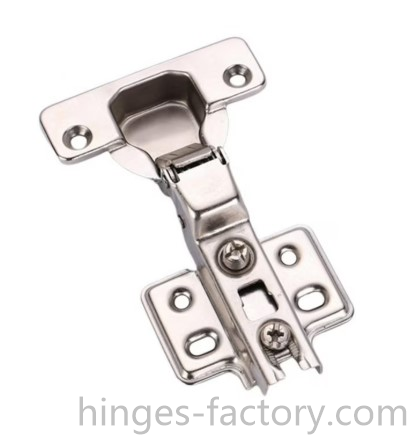
Modern architectural doors require hardware that supports reliable movement while fitting naturally into different building designs. Within this field, Hydraulic Self Closing Hinges combine the connecting function of a hinge with a controlled closing mechanism. Their performance depends on the interaction of structural materials, internal hydraulic components, machining accuracy, sealing quality, installation conditions, and long-term maintenance rather than on the external appearance alone.
Material selection is a fundamental part of the manufacturing process. Door hardware must withstand repeated loading, movement, and contact between different components. Steel can provide a strong foundation for structural parts, while stainless steel may be selected for applications where moisture resistance and surface durability are important. Engineering alloys can also be used for selected internal components when specific requirements for wear resistance, machinability, or dimensional stability need to be addressed.
Material consistency is especially important for hydraulic mechanisms. Variations in hardness, composition, or surface condition can influence machining and assembly results. Manufacturers can improve production stability through incoming material inspection, controlled supplier management, and traceable production records. These procedures help ensure that the materials entering the production line are suitable for the intended component functions.
The hydraulic mechanism requires careful internal design. A fluid-based closing structure normally includes chambers, moving elements, seals, shafts, and connecting parts that must operate together. When the door moves, hydraulic resistance can influence the closing behavior and help reduce abrupt movement. Engineers need to consider fluid flow, internal pressure, component compatibility, and the relationship between mechanical force and hydraulic control.
Precision machining supports this coordinated operation. CNC turning, milling, drilling, grinding, and other controlled processes can produce accurate surfaces and interfaces for internal and external components. Dimensional consistency is particularly important for shafts, housings, mounting plates, and sealing areas. Small deviations may affect movement resistance, assembly accuracy, or the stability of the completed mechanism.
Seal engineering is another essential consideration. Hydraulic performance depends on maintaining the intended relationship between the internal fluid and moving components. Seal materials should be evaluated according to temperature exposure, environmental conditions, chemical compatibility, and expected operating cycles. Clean assembly conditions and suitable surface quality are also important because contamination or damage may influence sealing performance.
Surface treatment contributes to the durability and appearance of the finished hardware. Architectural components may encounter humidity, dust, cleaning products, fingerprints, and temperature changes. Suitable pretreatment, plating, coating, polishing, or other finishing methods can help protect metal surfaces and create a consistent appearance. The finishing process should be selected according to the base material and should not interfere with moving interfaces or assembly points.
Safety should be considered as part of the complete door system. A controlled closing mechanism can help reduce sudden movement, but the final operating behavior also depends on door weight, frame condition, mounting geometry, and surrounding structures. Engineers should therefore evaluate the hinge together with the door and frame rather than treating hydraulic control as an isolated feature.
Installation accuracy can strongly influence performance. Incorrect mounting positions or poor frame alignment may create uneven loading and additional resistance during operation. Installers should prepare suitable mounting areas, verify the position of the door and frame, and secure the hardware consistently. Proper installation can help distribute loads more evenly and reduce unnecessary stress on structural and hydraulic components.
Manufacturing automation can improve consistency in larger production programs. Automated machining, dimensional inspection, assembly assistance, and digital measurement systems can reduce variation in repetitive processes. Production traceability can also connect material batches, machining records, inspection results, and assembly information. This is valuable for international B2B buyers who need stable quality across repeated orders.
Application requirements differ between building types. Residential projects may prioritize smooth operation and compact integration, while commercial buildings can involve frequent daily use. Hospitality projects may require consistent appearance and serviceability across many rooms, while institutional environments may place greater emphasis on maintenance planning and dependable long-term operation. Manufacturers should consider these differences when developing suitable hardware structures.
Maintenance should also be addressed during product development. Hydraulic components contain moving parts and sealing elements that may require inspection over time. A service-friendly design can make adjustment and maintenance more practical, while clear technical documentation can help installers understand the correct procedures. Consistent assembly methods also support more predictable service performance.
Quality assurance should cover raw materials, machining, sealing, hydraulic assembly, surface treatment, and final movement. Incoming material checks, in-process measurement, assembly inspection, functional testing, and final visual evaluation provide different layers of control. This systematic approach helps manufacturers identify potential issues earlier and supports more consistent product delivery.
For international buyers, supplier evaluation should include engineering capability, material control, machining technology, hydraulic assembly experience, finishing processes, inspection systems, and technical communication. Hydraulic Self Closing Hinges are most effective when hydraulic control and structural design are developed as one coordinated system. Lanxi Maya Hardware Co., Ltd. provides architectural hardware information and sourcing support through https://www.hinges-factory.com/product/catalogue-download/ for buyers evaluating suitable door hardware solutions.
 Portuguese
 English
 Arabic
 French
 Spanish
 Deutsch
 Turkish
 Dutch
Dutch
 Italiano
 Russian
 Romaian
 Portuguese (Brazil)
 Greek
Greek