


Understanding Integrated Motor Fan Construction
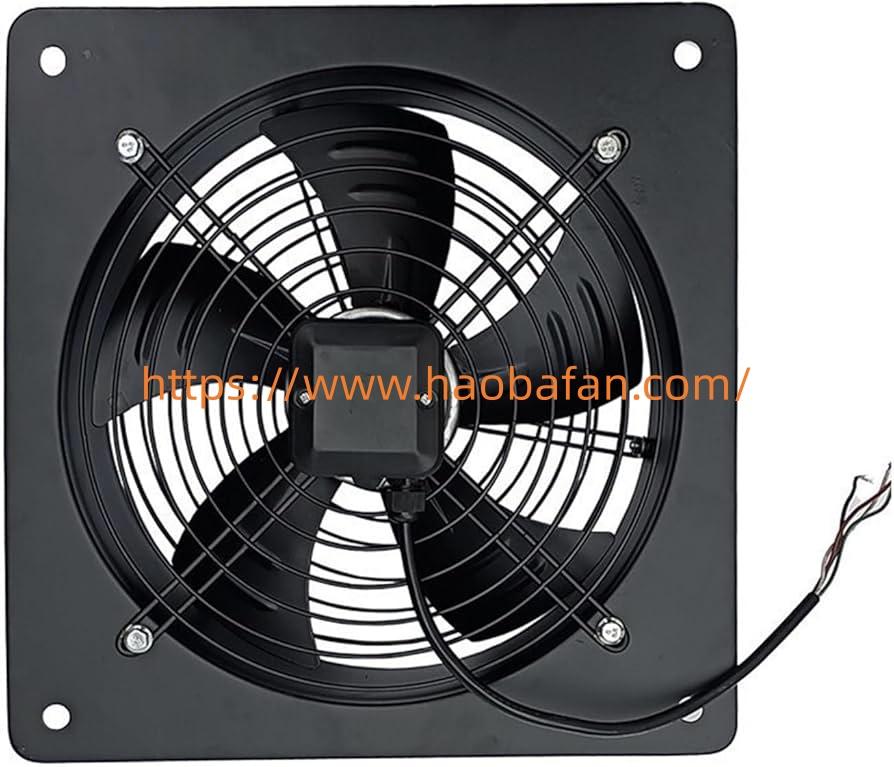
Compact ventilation equipment can provide practical advantages when installation space is limited or when the motor and impeller need to be integrated into a unified structure. An External Rotor Fan places the rotor outside the stator assembly, allowing the motor structure to be incorporated closely with the rotating impeller. This arrangement can support compact equipment design while maintaining a direct relationship between the motor and airflow-producing components.
The external rotor concept differs from conventional motor arrangements in the way the rotating motor element is positioned around the stationary part of the motor. Because the rotor is integrated with the fan assembly, the overall construction can be arranged within a relatively compact housing. This design approach is commonly considered for ventilation equipment where available installation space and equipment layout are important factors.
One significant consideration is the relationship between the motor and impeller. Since the motor is closely integrated with the rotating assembly, manufacturers need to control component alignment and mechanical stability during production. The impeller must rotate smoothly, while the motor needs to provide consistent driving force under the intended operating conditions. Proper assembly can reduce unnecessary mechanical stress and support stable airflow.
Impeller design remains central to the overall performance of the equipment. Blade geometry affects how air enters the rotating assembly and how effectively it is directed toward the outlet. Engineers may evaluate blade shape, angle, material selection, and structural rigidity according to the intended ventilation application. Consistent manufacturing is important because differences in blade geometry can influence airflow and rotational balance.
Material selection is another important factor. Fan components may be exposed to dust, humidity, temperature changes, or other environmental conditions depending on where the equipment is installed. The housing, impeller, mounting structure, and motor-related components therefore need materials that are appropriate for the operating environment. Corrosion considerations can become particularly relevant in industrial or agricultural ventilation applications.
Thermal management is also important in an integrated motor design. Electrical motors naturally generate heat during operation, and ventilation equipment may operate for extended periods. The surrounding airflow and structural arrangement can influence how heat is dissipated. Manufacturers should consider motor operating conditions, ventilation pathways, and material characteristics when developing an integrated fan assembly.
Balance control is essential because the impeller and rotor rotate together. Even relatively small imbalance can result in vibration during operation. Excessive vibration may affect mounting structures, bearings, motor components, and surrounding equipment. Production inspection and balancing procedures can therefore play an important role in maintaining mechanical stability and reducing unnecessary operating disturbance.
Noise control involves several factors beyond the motor itself. Blade movement, airflow turbulence, vibration, housing resonance, and installation conditions can all contribute to sound. Appropriate blade design, accurate balancing, secure mounting, and suitable airflow pathways can help address these factors. The surrounding ductwork or ventilation opening should also be considered because system configuration can influence the final acoustic environment.
Maintenance is generally easier when the equipment is installed with adequate access and when the ventilation pathway remains clean. Dust and debris can accumulate around the impeller and housing, potentially influencing airflow and mechanical balance. Periodic inspection should also check mounting points, protective guards, electrical connections, and visible signs of wear. Maintenance should follow the manufacturer's intended procedures and applicable safety requirements.
Applications for compact integrated fan designs can include equipment cooling, cabinet ventilation, workshop air circulation, air-conditioning systems, refrigeration equipment, and various industrial ventilation installations. The appropriate design depends on the airflow path, available installation space, environmental conditions, and system requirements. Buyers should evaluate the complete application rather than selecting equipment only by physical appearance.
From a procurement perspective, an External Rotor Fan should be evaluated through both motor construction and complete fan-system design. Manufacturing consistency, component quality, balancing processes, inspection procedures, and technical support can all affect the suitability of the equipment for a particular installation. Taizhou Haoba Electromechanical Co Ltd. offers ventilation solutions for different industrial applications, with further product information available at https://www.haobafan.com/product/mixed-flow-fan/ for customers reviewing compact and integrated airflow equipment.

 English
 Arabic
 French
 Spanish
 Portuguese
 Deutsch
 Turkish
 Dutch
 Italiano
 Russian
 Portuguese (Brazil)
 Greek