


Can't Stand the Inherited Sofa? Don't Throw It Out Yet
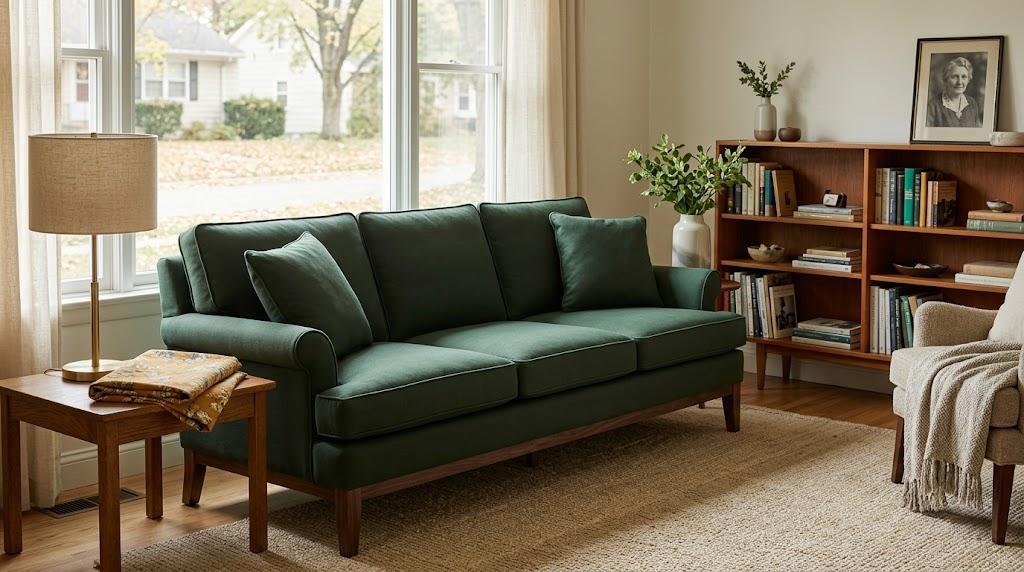
A sofa you never picked now claims the best spot in your living room.
It arrived after a death in the family or a relative's move to smaller quarters. The fabric is faded in patches. The cushions slouch in places shaped by decades of a body that isn't yours. You feel guilty every time you think about replacing it.
But keeping it as-is means designing your entire room around someone else's aesthetic. You've tried rearranging. You've tried ignoring it. Neither approach changes how the piece looks when you walk through the door.
What you may not have considered is this: the frame underneath is likely far more valuable than anything visible from across the room. The ugly parts are temporary.
The Framework That Outlasts the Fashion
Good furniture construction has a shelf life measured in generations, not trends.
Furniture makers in previous decades used solid hardwood joinery, eight-way hand-tied springs, and corner-blocked frames as standard practice. These were not premium upgrades — they were the baseline. Today, equivalent construction typically sits at a much higher price tier.
That kind of building produces frames that simply do not break under normal household conditions. Decades of daily sitting, sleeping, and jumping leave the structure intact. The foam collapses and the fabric deteriorates, but the skeleton endures.
Give the piece a physical test. Lean hard on each arm. Rock it from one corner and feel how the opposite leg responds. Tight joints and minimal movement confirm a frame worth preserving.
Keeping structurally sound furniture in circulation sidesteps the environmental cost of manufacturing something new. More immediately, it means you already own a piece of construction that would be difficult to match at retail today.
Beyond a Simple Recover
Many people assume this work means stretching new fabric over old padding. That misconception sets up disappointment.
The actual process begins with complete disassembly. Every layer comes off — fabric, batting, old foam, sometimes even the spring system. The technician examines every joint and secures anything that has worked loose over the years.
Cushion cores get replaced with fresh foam. New batting wraps the arms, back, and frame edges. Only after the internal structure is fully rebuilt does the new textile go on, measured, cut, and hand-fitted to every surface.
Sofa reupholstery is an ordered sequence of dependent steps. Each phase must be correct before the next can begin. A finished piece that looks clean and sits comfortably reflects methodical work throughout.
The outcome is substantial. You receive a piece whose inner components function like new and whose exterior matches your specifications. Weeks of labor translate into furniture that looks intentional and performs reliably.
Where Your Personality Shows Up
Fabric selection is the pivot point of this entire project. Get it right and the sofa becomes a centerpiece. Rush it and you inherit a new set of problems.
Think about the transformation a single textile swap creates. A stiff, dark brocade replaced with breathable linen in a soft earth tone changes the room's energy. The proportions remain identical. The emotional response shifts completely.
Three areas deserve investigation before you commit.
Daily durability. Homes with active children or animals demand tough textiles. The industry uses double rub counts to measure abrasion resistance. Anything rated above 25,000 to 30,000 handles sustained everyday contact.
Light and color interaction. Fabrics behave differently under fluorescent shop lighting versus your afternoon sun. Tape swatches to the frame and observe them across morning, midday, and evening conditions. Texture deserves equal attention since your skin touches this surface constantly.
Pattern at furniture scale. A plaid that reads as subtle on a six-inch sample can become overwhelming across an eight-foot sofa. Ask how the workshop plans to align the design at seams and cushion breaks. Proper matching requires real expertise and influences the estimate.
Skilled professionals offering sofa reupholstery guidance routinely help clients navigate these decisions. Their recommendations come from watching hundreds of material choices perform over years. That perspective is difficult to replicate through online research alone.
Budget discipline is essential at this stage. Quality textiles are a significant expense, and a three-seat sofa can require fifteen to eighteen yards. Setting a per-yard ceiling before browsing prevents the total from growing beyond what you planned.
Modifications That Shift the Entire Look
The stripped frame presents a window for design revisions that would be impractical under normal circumstances. These changes carry no structural risk but produce significant visual impact.
Removing a dust skirt and exposing the legs instantly gives the piece a lighter character. Replacing heavy turned feet with sleek cylindrical ones updates the era of the design. Trading three separate seat cushions for a single bench cushion introduces a modern sensibility.
Details like piping, nailhead trim, and tufted buttons can be added or removed with minimal additional labor. Reliable sofa upholstery services treat these modifications as routine during any rebuild. The frame underneath remains entirely unchanged.
Each adjustment is a chance to editorialize. You preserve the structural history while discarding decorative choices that never reflected your taste. The result is furniture that reads as deliberate rather than reluctant.
What the Project Actually Costs
Pricing questions deserve honest answers rather than optimistic estimates.
Labor is the primary expense. A standard sofa demands twenty to forty hours of skilled handwork. Quotes from sofa upholstery services typically separate three components: labor hours, fabric yardage, and frame or cushion repairs.
The strongest justification is a frame of genuinely superior quality that would cost more to replicate new. Room fit adds further value — a piece that fills your space perfectly is worth more than a generic replacement. Sentimental weight rounds out the argument.
The case weakens when the original construction was inexpensive or the frame has sustained real damage. If the estimate climbs past what a comparable new sofa would cost, the numbers need scrutiny. Always gather two to three quotes, as regional pricing varies substantially.
A professional who tells you a project is not worth pursuing is doing you a favor. That candor reflects the kind of integrity worth paying for.
Choosing Your Workshop
The shop you select is as consequential as any material you approve. Results vary widely across providers.
Referrals are the most dependable filter. Ask friends and neighbors who have commissioned similar projects. Consult local designers or fabric retailers who interact with upholsterers regularly. The people selling material see finished results consistently.
During your evaluation, request photographs of completed work — particularly pieces resembling yours in shape and scale. Verify the shop handles structural repairs and cushion replacement rather than superficial recovery. Your written estimate should break down labor, materials, yardage, pickup, and delivery.
Shops that provide yardage calculations upfront allow you to source fabric independently. Workshops that ask about sunlight, pets, and daily habits are engineering for durability. Both behaviors indicate the kind of professionalism that produces lasting results.
Expect a meaningful wait. Well-regarded shops maintain busy schedules because careful work cannot be compressed without consequences. If someone offers to begin immediately, understanding the reason is prudent.
What You Keep and What You Change
The frame your family treasured now sits in your living room wearing your choice of fabric. It's the same piece that held conversations, holiday meals, and quiet weekend mornings.
You didn't discard the history. You simply translated it into something that belongs in your present. The guilt is gone. The mismatched floral is gone. What remains is furniture that works.
Somewhere down the line, someone will inherit this sofa and have the same reaction you did. They'll keep what's underneath and change what's on top. That rhythm is how good furniture lives forever.

 English
 Arabic
 French
 Spanish
 Portuguese
 Deutsch
 Turkish
 Dutch
Dutch
 Italiano
 Russian
 Portuguese (Brazil)
 Greek
Greek