


Material Selection for Agricultural Spray Systems
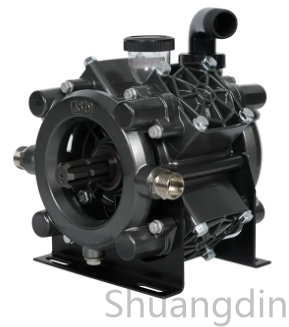
The pumping system within agricultural spraying equipment must connect liquid storage with application components while working alongside the mechanical structure of the machine. An Agricultural Sprayer Pump provides this connection through controlled fluid movement, but its design involves a combination of membrane technology, material selection, valve construction, sealing, and manufacturing processes rather than a single mechanical function.
Diaphragm technology offers one approach to this challenge by using a flexible membrane to separate the working liquid from the mechanical drive. The membrane changes the volume of a fluid chamber as it moves, creating alternating stages for liquid intake and discharge. Valves then guide the liquid through the appropriate inlet and outlet pathways.
Material engineering becomes especially important because the diaphragm directly participates in both mechanical movement and fluid separation. Its material needs to accommodate repeated flexing while remaining compatible with the agricultural liquid being handled. Engineers can consider flexibility, fatigue behavior, chemical resistance, and environmental stability when determining suitable material characteristics.
The working liquid can influence the selection of other internal materials as well. Valve components, seals, chamber surfaces, and connectors may all interact with the same medium. Evaluating these parts collectively helps manufacturers understand the compatibility of the complete fluid pathway. A single unsuitable component can affect the function of the surrounding system even when the main diaphragm material is appropriate.
Valve construction determines how effectively the pumping cycle is organized. When the diaphragm moves, changes within the chamber create conditions that cause the inlet and outlet pathways to operate in sequence. Valve seating, movement, and surface characteristics influence how consistently this process occurs. Material selection is therefore connected with both mechanical behavior and fluid compatibility.
The pump housing supports the internal mechanism and defines much of the fluid pathway. Agricultural machinery may operate in environments containing dust, soil, humidity, and cleaning agents. External housing surfaces and internal fluid-contacting areas may therefore face different conditions. Engineers can select materials and surface treatments according to the specific environment surrounding each section.
Manufacturing consistency is another major technology consideration. Flexible components require controlled forming and inspection to maintain predictable physical characteristics. Valve parts require accurate production so that they interact correctly with their seating areas. Housing components also need reliable interfaces for assembly. Consistent production processes help translate the intended engineering design into repeatable finished equipment.
A spraying system also includes supporting components that influence fluid movement. Tanks provide liquid storage, filters manage unwanted particles, hoses connect different sections, and spray assemblies deliver the liquid to the application area. Control valves and monitoring systems may coordinate different stages of operation. The pump must therefore be designed with these surrounding components in mind.
Filtration is particularly relevant where particles could interfere with valves or narrow fluid passages. A suitable filtration arrangement can form part of the overall fluid-management strategy. At the same time, maintenance access should be considered so that filters, fluid pathways, and other serviceable areas can be inspected and cleaned without unnecessarily complicated procedures.
Cleaning compatibility is also part of material engineering. Agricultural equipment may encounter repeated flushing and cleaning cycles, which can expose components to substances different from the normal working liquid. Materials used in diaphragms, seals, valves, and housings should therefore be considered in relation to the full maintenance environment rather than only the primary application.
Electronic technology increasingly adds another layer to agricultural spraying equipment. Sensors and controllers can coordinate application functions, while mechanical pumping continues to provide the physical movement required by the system. Reliable interaction between these technologies depends on predictable mechanical behavior and well-designed fluid pathways.
By connecting material science with membrane mechanics, valve technology, housing construction, manufacturing control, and system integration, manufacturers can develop agricultural fluid-handling equipment around practical operating requirements. An Agricultural Sprayer Pump becomes part of this broader engineering structure, while SHUANG DIN Co Ltd offers additional information about agricultural diaphragm pump solutions at https://www.agriculturaldiaphragmpump.com/about/.

 English
 French
 Spanish
 Portuguese
 Deutsch
 Turkish
 Dutch
Dutch
 Italiano
 Russian
 Romaian
 Portuguese (Brazil)
 Greek
Greek