


Digital Quality Management in Medical Manufacturing
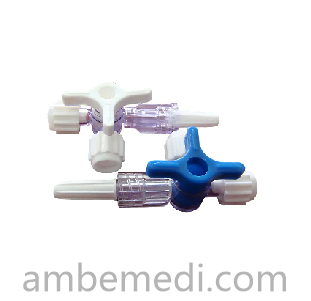
The production of infusion sets involves multiple components and interconnected assembly stages, making process coordination an important part of modern medical manufacturing. As manufacturers pursue more consistent production and stronger quality management, a Fully Automated Production Line for Infusion Sets can integrate material feeding, component positioning, assembly, inspection, transfer, and process monitoring into one coordinated workflow. This approach can reduce unnecessary manual intervention while creating greater visibility across production operations.
Material handling is one of the first considerations in an automated production environment. Infusion set components may include flexible tubing, rigid plastic parts, protective elements, connectors, and other small components. These materials can have significantly different physical characteristics. Flexible components may require controlled feeding, while molded parts need stable orientation and accurate positioning. Automated feeding systems can organize these materials before they reach individual assembly stations.
The characteristics of medical-grade materials also influence equipment design. Plastic components may need careful handling to avoid deformation or surface damage, while tubing requires controlled movement to maintain its intended path. Automation systems should therefore be developed around the physical behavior of each component. Proper mechanical coordination can help minimize unnecessary friction, compression, or displacement during production.
Assembly synchronization is another important function. Modern equipment can connect multiple operations through sensors, programmable controllers, and coordinated motion systems. When one station completes its task, the next operation can receive the component according to a predefined sequence. This reduces dependence on manual transfers and helps establish a more stable production rhythm.
Quality management can be incorporated directly into the manufacturing process. Vision systems may inspect component presence, positioning, appearance, or other visible characteristics, while sensors can monitor selected process conditions. When an abnormal situation is identified, automated controls can respond according to established production logic. This helps manufacturers detect process deviations closer to their source rather than relying exclusively on final inspection.
Traceability is increasingly important for medical manufacturing. Automated equipment can collect information related to production batches, process events, inspection results, and equipment status. Connected production data provides manufacturers with a clearer record of what happened during each stage. This information can support internal quality investigations, process analysis, and continuous improvement activities.
Clean and controlled handling also deserves attention. Medical consumables require manufacturing environments that are managed according to their intended applications and applicable quality procedures. Automated transfer can reduce unnecessary direct handling of components while allowing operators to concentrate on equipment supervision and quality activities. Machine structures and material paths should be planned to support orderly production and practical maintenance.
Workplace safety should be integrated into the equipment architecture. Automated infusion set production may involve moving mechanisms, feeders, transfer systems, and inspection units. Protective guarding, emergency controls, safety sensors, and clearly designed operator interfaces can help reduce operational risks. A well-organized system also makes it easier for personnel to understand equipment status and respond to abnormal conditions.
Production flexibility is valuable when manufacturers manage different product configurations. Changes in component arrangements, product designs, or production requirements may require adjustments to specific assembly stations. Modular mechanical structures and programmable control systems can make selected changes more manageable, helping businesses adapt their manufacturing processes without completely rebuilding the production environment.
Maintenance planning is another important part of automation. A production line combines mechanical components, sensors, electrical systems, and control software, so the reliability of the overall system depends on their coordinated operation. Preventive maintenance can help identify wear or abnormal behavior before it causes larger interruptions. Production records can also support maintenance teams by showing recurring equipment conditions.
Automation changes the role of production personnel as well. Instead of spending most of their time on repetitive component handling, operators can increasingly focus on monitoring production information, verifying quality conditions, performing maintenance, and addressing process exceptions. This creates a manufacturing environment in which human expertise and automated equipment can complement each other.
When evaluating a Fully Automated Production Line for Infusion Sets, manufacturers should consider the complete production chain rather than focusing on individual assembly functions. Component compatibility, feeding, positioning, assembly sequence, inspection, traceability, safety, maintenance, and future flexibility all influence the suitability of an automation solution. A complete perspective can help businesses establish a more organized and measurable manufacturing process.
AMBE TRADE focuses on automation-oriented manufacturing solutions that connect equipment engineering with practical medical production requirements. As healthcare manufacturing continues adopting intelligent and data-supported processes, integrated automation can provide a structured foundation for consistent production and quality management. Further information about related automation solutions is available at https://www.ambemedi.com/product/.

 English
 Arabic
 French
 Spanish
 Portuguese
 Deutsch
 Dutch
Dutch
 Italiano
 Russian
 Romaian
 Portuguese (Brazil)
 Greek
Greek