


Portable Laser Cleaning Machine Transform Modern Surface Cleaning
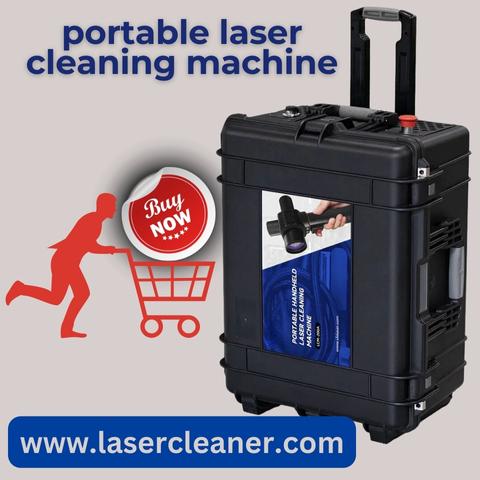
Surface cleaning is an important part of manufacturing, maintenance, restoration, and metalworking. Traditional cleaning methods often involve chemicals, abrasive materials, grinding, or extensive manual labor. As industries look for more controlled and efficient processes, laser technology has become an increasingly practical option. A portable laser cleaning machine provides a modern approach to removing rust, paint, oil, oxidation, dirt, and other unwanted contaminants from different surfaces.
With a compact structure and mobile design, this type of equipment can be moved between workstations and used for cleaning components that are difficult to transport. From industrial workshops to maintenance facilities, portable laser cleaning equipment is becoming part of modern surface preparation processes.
What Is a Portable Laser Cleaning Machine?
A portable laser cleaning machine is an industrial cleaning system that uses concentrated laser energy to remove unwanted material from a surface. Instead of relying on physical contact or chemical solutions, the laser is directed toward the contaminated area. The energy interacts with the unwanted layer, causing it to separate from the underlying material.
The process can be used on metals and various other suitable materials depending on the laser source, power level, wavelength, and application requirements. Operators can adjust the working parameters according to the type and thickness of contamination.
The portable design makes the equipment particularly suitable for workshops and industrial environments where cleaning jobs may take place at different locations.
How Does Laser Cleaning Work?
Laser cleaning works by directing controlled pulses or continuous laser energy toward the surface that needs treatment. Contaminants such as rust, paint, grease, carbon deposits, and oxide layers absorb the laser energy differently from the underlying material.
When the laser reaches the unwanted layer, the absorbed energy can cause the contaminant to evaporate, break apart, or detach from the surface. A suitable setting allows the operator to target the contamination while keeping the base material largely unaffected.
The cleaning process depends on several factors, including laser power, scanning speed, frequency, focal distance, and the nature of the material being removed. Proper adjustment of these parameters is important for achieving consistent results.
Portable Design for Different Work Environments
One of the defining characteristics of a portable laser cleaning machine is its mobility. Instead of requiring every component to be transported to a fixed cleaning station, the equipment can be moved to different areas of a workshop or production facility.
This can be particularly useful when working with large metal structures, industrial machinery, molds, pipes, frames, automotive components, or equipment that is difficult to relocate.
A portable system may also be useful for maintenance teams that handle cleaning work at different locations. The operator can position the equipment near the workpiece and carry out the required surface preparation without creating a separate permanent cleaning area for every application.
Removing Rust From Metal Surfaces
Rust removal is one of the most common applications associated with laser cleaning technology. Metal surfaces exposed to moisture and oxygen can develop oxidation over time, affecting their appearance and surface condition.
A portable laser cleaning machine can be used to direct laser energy across rusty areas, gradually removing the unwanted oxidation. The operator can work across the affected section while adjusting the machine according to the condition of the surface.
This makes laser technology relevant for industrial components, steel structures, tools, machinery parts, automotive components, and maintenance projects where rust needs to be removed before further processing.
Paint and Coating Removal
Old paint and coatings may need to be removed before repainting, welding, inspection, restoration, or other manufacturing processes. Conventional methods can involve scraping, grinding, blasting, or chemical stripping.
Laser cleaning provides another method for handling selected coating-removal applications. The laser can be scanned over the coated surface, allowing the unwanted layer to be removed progressively.
The appropriate settings depend on the coating material and the substrate beneath it. For this reason, testing on a small area before full-scale processing is an important part of establishing the correct working parameters.
Cleaning Oil, Grease, and Industrial Contamination
Industrial components can accumulate oil, grease, carbon, dust, and other contaminants during production or regular operation. Cleaning these components is often necessary before maintenance, inspection, welding, painting, or assembly.
A laser cleaning system can be configured for suitable contamination-removal applications. The operator guides the laser cleaning head across the surface while maintaining an appropriate working distance and scanning pattern.
For workshops handling machinery parts and metal components, this approach can provide a controlled way to prepare surfaces for subsequent manufacturing or maintenance operations.
Applications in Manufacturing and Maintenance
Laser cleaning technology can be applied across several industrial sectors. Metal fabrication companies may use it for preparing surfaces before welding or finishing. Automotive workshops can use laser systems for selected restoration and component-cleaning applications.
In restoration work, controlled cleaning can be particularly important because the operator may need to remove contamination or oxidation without unnecessarily affecting the underlying surface. Selecting appropriate laser parameters is therefore an essential part of the process.
Selecting the Appropriate Laser Cleaning System
Choosing a suitable machine requires more than simply looking at the advertised laser power. Different cleaning applications require different operating parameters.
The type of contamination should be considered first. Rust, paint, oil, oxide, carbon deposits, and other materials can respond differently to laser energy. The base material is equally important because aluminum, stainless steel, carbon steel, and other surfaces may require different settings.
The intended working environment should also be considered. A portable machine may be appropriate when cleaning tasks frequently change location, while a larger fixed system may be more suitable for dedicated production lines.
Preparing for Professional Laser Cleaning
Before starting a cleaning operation, the work area should be properly prepared. Operators should identify the material, determine what needs to be removed, and inspect the condition of the surface.
A small test area can help establish suitable settings before treating a larger section. Laser safety procedures must also be followed because industrial lasers can present serious hazards to eyes and skin.
Portable Laser Cleaning in Modern Industry
As manufacturing processes continue to become more specialized, surface preparation is receiving greater attention. Companies need cleaning methods that can be adapted to different components, materials, and working environments.
A portable laser cleaning machine fits into this changing industrial environment by providing a mobile laser-based approach to surface treatment. Its applications can range from rust and paint removal to selected maintenance and preparation tasks.
The technology is not intended to replace every conventional cleaning process. Instead, it offers manufacturers and maintenance professionals another option when evaluating the most suitable method for a particular surface and contamination type.
Building a More Controlled Cleaning Process
Consistent results depend heavily on correct machine operation. Operators should understand how laser power, scanning speed, frequency, focus, and movement affect the cleaning process.
Training and practical testing can help users establish repeatable working procedures. Keeping the laser cleaning head at the appropriate distance and maintaining a consistent scanning movement can also contribute to uniform treatment.
Final Thoughts
A portable laser cleaning machine represents a modern approach to industrial surface preparation. Its mobile format allows cleaning work to be carried out in different locations, while controlled laser energy can be used for applications involving rust, paint, oxidation, oil, grease, and other contaminants

 English
 Arabic
 French
 Spanish
 Portuguese
 Deutsch
 Turkish
 Dutch
Dutch
 Italiano
 Russian
 Romaian
 Portuguese (Brazil)