


Which Details Should Buyers Check With dicovalve?
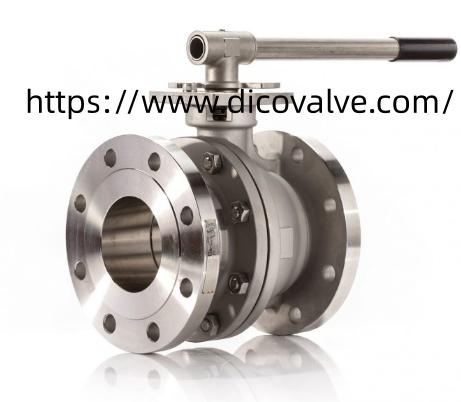
High Temperature Stainless Steel Ball Valves should be selected according to the complete operating environment rather than one material specification alone. Buyers should consider the working medium, operating range, material grade, seat construction, stem sealing, connection type, operating frequency, thermal cycling, installation conditions, and required documentation. Looking at the complete assembly can help buyers determine whether the proposed configuration corresponds with the actual process instead of relying only on a product name or external appearance.
What Application Information Should Buyers Prepare?
Before requesting a quotation, buyers should provide detailed information about the intended service. Useful data can include the medium, normal operating range, maximum expected conditions, startup process, shutdown process, pipeline size, connection standard, and operating frequency.
It is also useful to explain whether the system operates continuously or experiences regular changes between heated and cooled states. Repeated thermal cycling can affect different components in different ways, so this information should be included in the initial inquiry.
The surrounding environment should also be described. Outdoor installation, insulation, humidity, dust, vibration, and limited installation space may influence the final configuration.
Which Material Details Matter?
Material selection should cover the complete assembly rather than only the main body. Buyers can ask about the body, internal rotating component, stem, seat, packing, seals, and other parts that may contact the process medium.
Different materials respond differently to heat, chemicals, mechanical loads, and expansion. A suitable body grade does not automatically mean that every internal component is appropriate for the same service.
The process medium should therefore be identified clearly. Steam, oil, gas, water, chemical fluids, and other media may require different material combinations. Providing accurate information allows the manufacturer to review compatibility across the complete assembly.
How Should Buyers Review Sealing Components?
Sealing components deserve particular attention in heated process systems. Thermal exposure can influence flexibility, dimensional stability, and mechanical characteristics, especially when non-metallic materials are involved.
Buyers should ask which seat material is proposed and what operating range it is designed for. Stem packing should also be reviewed because the stem area may experience different conditions from the main body.
For systems with frequent heating and cooling, buyers can ask whether the selected sealing arrangement has been considered for repeated thermal cycling. This provides more useful information than evaluating the main body alone.
What Should Buyers Know About Thermal Expansion?
Different components can expand at different rates when exposed to heat. If these differences are not considered during product selection, repeated thermal changes may affect movement, seating, or sealing.
Buyers should explain whether the equipment will remain continuously heated or regularly move between different operating states. The frequency and duration of these changes can provide useful information for evaluating the proposed construction.
This is also relevant when several materials are used within one assembly. The relationship between the body, internal components, and sealing elements should be considered as a complete system.
Which Connection Details Should Be Confirmed?
Connection compatibility should be checked before an order is finalized. Buyers should provide the nominal size, connection standard, dimensions, installation space, and preferred connection arrangement.
Depending on the pipeline, requirements may involve flanged, threaded, welded, socket-welding, or other connection methods. Accurate connection information helps reduce the possibility of installation difficulties after delivery.
For projects involving limited installation space, buyers should also consider actuator clearance, maintenance access, and available room around the equipment. These details can influence the practical suitability of the selected configuration.
Does Operating Frequency Affect Selection?
Operating frequency can influence the mechanical requirements of the assembly. A manually operated unit used occasionally may experience different demands from an automated unit that cycles repeatedly during production.
Buyers should state how frequently the unit will operate and whether it normally remains open, remains closed, or changes position regularly.
For automated systems, actuator type, installation space, control requirements, and maintenance arrangements can also be reviewed before the final configuration is confirmed.
This information can be especially useful for process lines where equipment operates many times during a production cycle.
What Safety Features Should Buyers Ask About?
Some applications may require specific construction or safety-related features. Depending on the project, buyers can ask about anti-blowout stem arrangements, anti-static design, locking options, fire-safe construction, or other requirements specified by the end user.
These features should be confirmed according to the actual project rather than assumed as standard. Buyers can also ask which applicable standards are followed and whether supporting test records are available.
A clear technical specification helps purchasing and engineering teams understand which features are required and which are optional.
What Documents Can Buyers Request?
Technical documentation can make communication between purchasing and engineering teams easier. Depending on the project, buyers may request dimensional drawings, material information, product data sheets, inspection records, test reports, or relevant certificates.
Documentation requirements should ideally be confirmed before production begins. For projects involving internal approval or third-party inspection, buyers should also clarify marking, packaging, traceability, and inspection arrangements in advance.
Clear records can also make future repeat orders easier because the purchasing team has a reference for the previously agreed configuration.
How Can Buyers Prepare a Clear Inquiry?
A useful inquiry should include the working medium, operating range, nominal size, connection standard, material requirements, seat and sealing requirements, operating frequency, installation conditions, quantity, inspection requirements, and delivery expectations.
Drawings and existing pipeline information can provide additional technical context. Rather than requesting equipment only by product name, buyers can describe the conditions that the assembly needs to handle. This gives the manufacturer a clearer basis for reviewing the requested configuration.For buyers comparing available configurations and product structures, the dicovalve product range can be reviewed at https://www.dicovalve.com/ before sending application details and technical requirements for further discussion.

 English
 French
 Spanish
 Portuguese
 Deutsch
 Turkish
 Dutch
Dutch
 Italiano
 Russian
 Romaian
 Portuguese (Brazil)
 Greek
Greek