


Production Considerations for US-Compliant Two-Wheel Vehicles
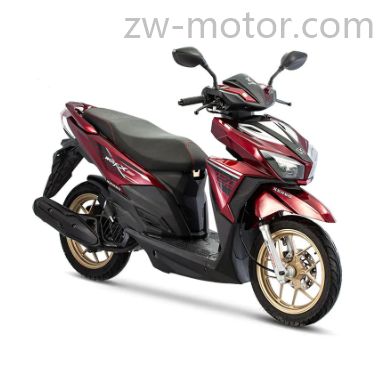
Motorcycle manufacturers entering the United States market need to consider applicable emissions requirements alongside vehicle engineering and production planning. A US EPA Certified Motorcycle involves more than selecting an engine and assembling the vehicle; manufacturers and importers must address the applicable regulatory framework, emissions-related systems, certification responsibilities, labeling, and documentation. Requirements can vary according to vehicle category, model year, engine characteristics, and other regulatory factors.
The United States Environmental Protection Agency establishes federal emissions requirements for certain motor vehicles, including motorcycles. Manufacturers developing products for the US market therefore need to identify the applicable standards and certification pathway before finalizing production specifications. The exact compliance requirements should be verified against current EPA regulations and the certification status applicable to the particular vehicle configuration.
Powertrain design plays an important role in emissions compliance. Engine configuration, fuel delivery, combustion management, exhaust treatment, and evaporative-emission controls can all influence regulated emissions. These systems must be considered together rather than added independently at the end of development. Changes to an engine, exhaust system, fuel system, or calibration may affect the emissions characteristics of the complete vehicle.
Manufacturing consistency is particularly important when a product has been developed and certified according to a defined configuration. Components associated with emissions performance need to remain consistent with the approved configuration. Production changes involving the engine, exhaust, fuel system, electronic controls, or related components should therefore be reviewed through appropriate engineering and compliance procedures before being introduced into production.
The exhaust system is one of the most visible parts of the emissions-control architecture. Its design can involve exhaust routing, catalytic components, sensors, thermal management, and mounting structures. The system must fit within the motorcycle while maintaining appropriate clearance from body panels, wiring, fuel-related components, and rider-contact areas. Production assembly should ensure that relevant components are installed according to the approved design.
Fuel and evaporative systems also require careful consideration. Fuel-system components, connections, tanks, hoses, and related sealing elements need to be compatible with the intended application. Manufacturing teams should use appropriate inspection procedures for connections and component installation. Small differences in materials or assembly can become important when systems are designed to control fuel vapor emissions.
Electronic systems may also support engine and emissions management. Depending on the motorcycle configuration, sensors and control units can contribute to fuel delivery, engine operation, diagnostics, and other functions. Wiring harnesses must be protected from heat, vibration, moisture, and abrasion. Electrical components related to engine control should be assembled according to controlled procedures, with functional checks performed before final inspection.
Documentation is another important part of the compliance process. Manufacturers and importers may need technical records, certification information, labels, production-related documentation, and other materials depending on the applicable requirements. The specific responsibilities can differ between manufacturers, importers, and other parties involved in placing a vehicle on the US market. For this reason, regulatory requirements should be confirmed with current EPA guidance and the appropriate compliance professionals.
Production quality control supports consistency between the manufactured vehicle and its approved configuration. Incoming inspection can verify critical components, while assembly checks can confirm correct installation of powertrain and emissions-related systems. Final inspection may include functional testing, identification checks, labeling verification, and documentation review. Traceability can be particularly useful when multiple configurations or production batches are managed.
International customers should also distinguish federal EPA requirements from other US market requirements that may apply. Depending on the intended market and vehicle use, additional federal, state, or local rules may need to be considered. Requirements can change over time, so manufacturers should not rely solely on historical certification information when preparing a new product for the US market.
A US EPA Certified Motorcycle should therefore be evaluated through the complete relationship between vehicle engineering, emissions systems, production consistency, certification documentation, and market requirements. ZHIWEKI supports international two-wheel vehicle development with attention to powertrain integration, manufacturing processes, and market-specific product planning. Its scooter and motorcycle product information is available at https://www.zw-motor.com/product/scooter-motorcycle/.
 Portuguese
 English
 Arabic
 French
 Spanish
 Deutsch
 Turkish
 Dutch
Dutch
 Italiano
 Russian
 Romaian
 Portuguese (Brazil)
 Greek
Greek