


Does a Laser Welding and Cutting Machine Transform Modern Metal Fabrication
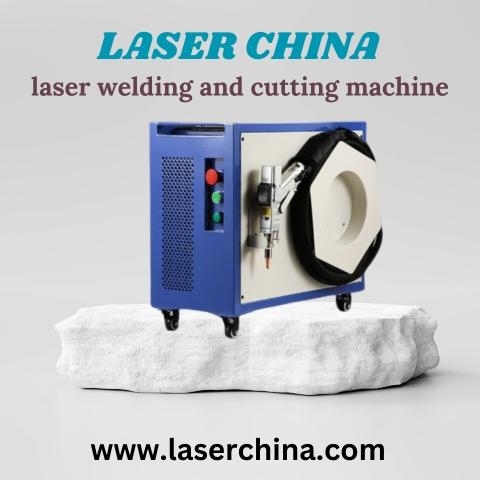
Modern metal fabrication requires equipment that can deliver precision, speed, consistency, and flexibility across a wide range of applications. Traditional fabrication methods remain useful, but manufacturers increasingly look toward advanced laser technology for demanding production environments. A laser welding and cutting machine combines two important metalworking processes in one versatile system, allowing businesses to cut materials accurately and create strong, clean welds without relying on multiple separate machines.
This technology is suitable for workshops, manufacturing plants, automotive suppliers, metal furniture producers, construction equipment manufacturers, and many other industries. By integrating cutting and welding capabilities, manufacturers can handle different stages of fabrication with greater control and a more organized workflow.
Understanding Laser Welding and Cutting Technology
Laser processing uses a concentrated beam of light to interact with a material's surface. During cutting, the laser generates enough energy to melt or vaporize the material along a programmed path. An assist gas can then help remove molten material from the cutting area, leaving a precise cut.
Laser welding works differently. Instead of cutting through the material, the laser creates a controlled heat source that melts the joining area. As the molten material cools, it forms a strong connection between the components.
A laser welding and cutting machine brings these processes together in a single manufacturing solution. Depending on the machine configuration, operators can switch between cutting and welding tasks while maintaining precise control over parameters such as laser power, speed, focus, and gas flow.
Materials Suitable for Laser Processing
One reason laser equipment has become increasingly popular is its compatibility with many commonly used industrial materials. Stainless steel is frequently processed for equipment, kitchen products, architectural components, and industrial structures.
Carbon steel is another common material for laser cutting and fabrication. Aluminum can also be processed when the machine is correctly configured for its reflective properties and thermal characteristics.
Before production begins, manufacturers normally test the intended material and establish suitable parameters. This helps determine cutting speed, power requirements, assist-gas settings, and welding conditions.
Precision Cutting for Detailed Components
Laser cutting is particularly useful when manufacturers need accurate shapes, openings, holes, slots, and detailed profiles. Computer-controlled movement allows the laser head to follow programmed patterns with high repeatability.
This makes the process suitable for producing components that must fit together during later assembly. Accurate cutting can reduce the amount of manual adjustment required during fabrication.
For example, a manufacturer producing metal enclosures can use laser cutting to create panels, mounting holes, ventilation openings, and connection points. These parts can then move directly into bending, assembly, or welding operations.
The ability to produce complex designs also gives engineers greater freedom when developing new products.
Laser Welding for Strong Metal Joints
After components have been cut, welding is often required to assemble them into a finished product. Laser welding provides a concentrated heat source that can create controlled welds with relatively small heat-affected areas.
This is useful when working with components where excessive heat could cause unwanted distortion. Proper parameter selection helps maintain dimensional accuracy while creating reliable joints.
Laser welding can be used for straight joints, corners, overlapping components, and various customized assemblies. Applications can include metal cabinets, automotive components, machinery parts, stainless-steel products, frames, and industrial equipment.
The exact welding method depends on material type, thickness, joint design, required penetration, and production requirements.
One Machine for Multiple Fabrication Tasks
A major reason manufacturers consider combined equipment is workflow organization. Instead of moving every project between completely separate cutting and welding workstations, a multifunctional system can support both operations.
This can be particularly useful for smaller workshops that have limited floor space. A single workstation capable of handling different fabrication processes can make the production area easier to organize.
It can also simplify project planning. An operator may cut required components and then perform welding work as part of the same overall production workflow, depending on the machine's configuration.
For businesses handling customized orders, this flexibility can be valuable because production requirements may change from one project to another.
Applications Across Different Industries
A laser welding and cutting machine can serve a wide range of industries because metal fabrication is involved in many types of manufacturing.
In automotive production, laser processing can be used for components, brackets, structural parts, exhaust-related products, and customized assemblies. Manufacturers of agricultural machinery can use laser technology for frames, covers, brackets, and equipment components.
The machinery industry can also benefit from accurate cutting and welding when producing machine housings, structural components, guards, and fabricated assemblies.
In the metal furniture sector, laser processing can support the production of tables, cabinets, frames, shelves, and decorative components. Stainless-steel workshops may use the technology for kitchen equipment, commercial fixtures, and customized products.
Architectural and decorative metalwork can also involve detailed laser-cut patterns combined with welded structures.
Improving Production Consistency
Consistency is an important consideration in commercial fabrication. Manual cutting and welding depend heavily on operator technique, experience, and working conditions. Computer-controlled laser systems can provide a more repeatable process when appropriate parameters and maintenance practices are followed.
Once a production program has been prepared and tested, the same design can be reproduced multiple times. This is particularly useful when manufacturing batches of identical components.
Consistent processing can also simplify quality inspection because manufacturers can compare finished parts against established specifications.
Choosing the Appropriate Machine Configuration
Different manufacturers have different production requirements, so selecting equipment should begin with the intended applications rather than simply focusing on maximum specifications.
Important considerations include the materials being processed, maximum material thickness, required cutting area, welding applications, production volume, available workspace, laser power, control system, and available technical support.
Manufacturers should also consider whether they primarily need sheet-metal cutting, welding, or a balanced combination of both.
For businesses producing customized products, flexibility may be more important than maximum production speed. High-volume manufacturers, meanwhile, may require equipment designed for continuous industrial operation.
Operator Training and Workplace Practices
Although modern laser equipment can automate many tasks, trained operators remain essential. Personnel should understand machine controls, material preparation, process settings, maintenance procedures, and workplace safety requirements.
Laser systems should be installed and operated according to the manufacturer's instructions and applicable workplace regulations. Appropriate protective measures, ventilation, electrical safety practices, and laser-specific safety procedures should be established before production begins.
Training can also help operators identify problems such as inconsistent cutting, poor weld formation, excessive spatter, incorrect focus, or unsuitable process parameters.
Maintenance and Long-Term Performance
Regular maintenance plays an important role in maintaining reliable laser processing. Operators should follow the manufacturer's recommended maintenance schedule and inspect important components regularly.
Optical components, protective windows, cooling systems, gas systems, motion components, and other machine parts may require periodic inspection or servicing depending on the equipment design and operating environment.
Supporting Customized Manufacturing
The growing demand for customized metal products has increased the importance of flexible fabrication equipment. Customers may request different dimensions, designs, materials, or quantities for individual projects.
Laser cutting allows digital designs to be converted into precise physical components, while laser welding can join those components into finished assemblies.
This digital workflow makes it easier for workshops to move between different designs without extensive tooling changes. As a result, businesses can accommodate a wider range of projects while maintaining an organized production process.
Final Thoughts
A laser welding and cutting machine brings cutting and welding capabilities together to support modern metal fabrication. From precision sheet-metal components to welded industrial assemblies, this technology can be applied across automotive, machinery, furniture, construction, architectural, and customized manufacturing sectors.

 English
 Arabic
 French
 Spanish
 Portuguese
 Deutsch
 Turkish
 Dutch
Dutch
 Italiano
 Romaian
 Portuguese (Brazil)
 Greek
Greek