


Quality Management for Metal Floating Components
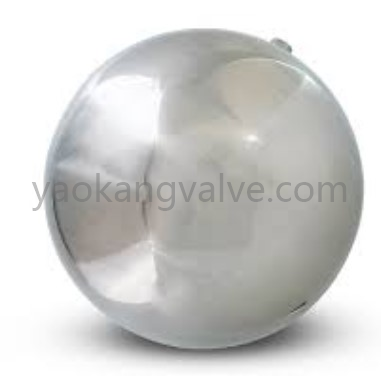
A Stainless Steel Float Ball Manufacturer must coordinate material selection, forming processes, surface treatment, dimensional control, and quality inspection when producing components for liquid-level equipment. Stainless materials can be suitable for environments involving moisture and repeated exposure to fluids, but their practical performance depends on selecting an appropriate grade and controlling every stage of fabrication.
Material evaluation should begin with the intended operating environment. Different stainless grades provide different combinations of corrosion resistance, mechanical properties, and fabrication characteristics. Water systems, industrial processing equipment, and cleaning-intensive applications may each require different considerations. Reviewing the actual operating medium helps manufacturers establish more appropriate material requirements.
The geometry of the floating component is closely related to its operating behavior. Buoyancy depends on volume, shape, and weight, so manufacturing variation can affect how the component responds to changes in liquid level. Forming processes should therefore be controlled carefully to limit deformation and maintain consistent geometry across production batches.
Stainless fabrication can involve several processes, including forming, machining, joining, cleaning, and finishing. Each process has the potential to influence the final component. For example, uncontrolled deformation may change critical dimensions, while poorly managed joining can introduce distortion. Process planning should account for these interactions rather than treating each manufacturing stage separately.
Surface quality is particularly relevant to components exposed to liquid environments. Appropriate finishing and cleaning can help establish a suitable surface condition for the intended application. Manufacturers should consider whether the component will encounter moisture, cleaning agents, dissolved substances, or other environmental factors when defining finishing requirements.
Dimensional inspection provides important control over assembly compatibility. The floating component may need to connect with an arm, pivot, fastening structure, or other valve element. Critical interfaces should be identified during technical review and checked during production. Maintaining these dimensions can help reduce installation difficulties and support consistent mechanical movement.
The operating fluid should also be considered when evaluating the finished component. Changes in liquid density can influence buoyancy, while component weight and geometry affect its position and movement. A suitable design therefore requires consideration of both the component and its operating medium rather than relying solely on material selection.
Applications may include water treatment systems, storage equipment, industrial machinery, and fluid-handling installations. Each environment can place different demands on the component. Some applications may emphasize corrosion resistance, while others may require particular surface characteristics, mechanical stability, or compatibility with existing valve assemblies.
OEM customization can introduce additional technical requirements. Customers may request specific dimensions, material grades, connection structures, or surface finishes. Engineering teams can review drawings and application details before production to determine whether the requested configuration can be manufactured consistently. This early assessment can also help identify potential issues with assembly or production feasibility.
Quality assurance should cover both materials and processes. Incoming material verification provides control at the start of production, while in-process inspections can monitor forming and dimensional stability. Final inspection can then confirm the agreed characteristics before shipment. Maintaining documented procedures helps support consistency when the same components are produced repeatedly.
Production traceability can also be valuable for industrial sourcing. Records related to materials, drawings, inspection requirements, and approved configurations can make repeat orders easier to manage. When customers require replacement components or additional equipment, consistent technical documentation can help maintain compatibility.
Proper handling and packaging complete the manufacturing process. Stainless surfaces can still be damaged by impact, scratches, or contamination during transportation. Suitable protection helps preserve the finished condition and reduces avoidable problems before the component reaches the customer's assembly operation.
The role of a Stainless Steel Float Ball Manufacturer therefore extends across material engineering, production control, surface management, dimensional inspection, and application support. Buyers seeking stainless components for liquid-level systems can review related products and technical information at https://www.yaokangvalve.com/product/ when evaluating industrial equipment and OEM sourcing requirements.
 Portuguese
 English
 Arabic
 French
 Spanish
 Deutsch
 Turkish
 Dutch
 Italiano
 Russian
 Romaian
 Portuguese (Brazil)
 Greek