


Inside the Wrapper: A Materials and Construction Guide for Soap Packaging
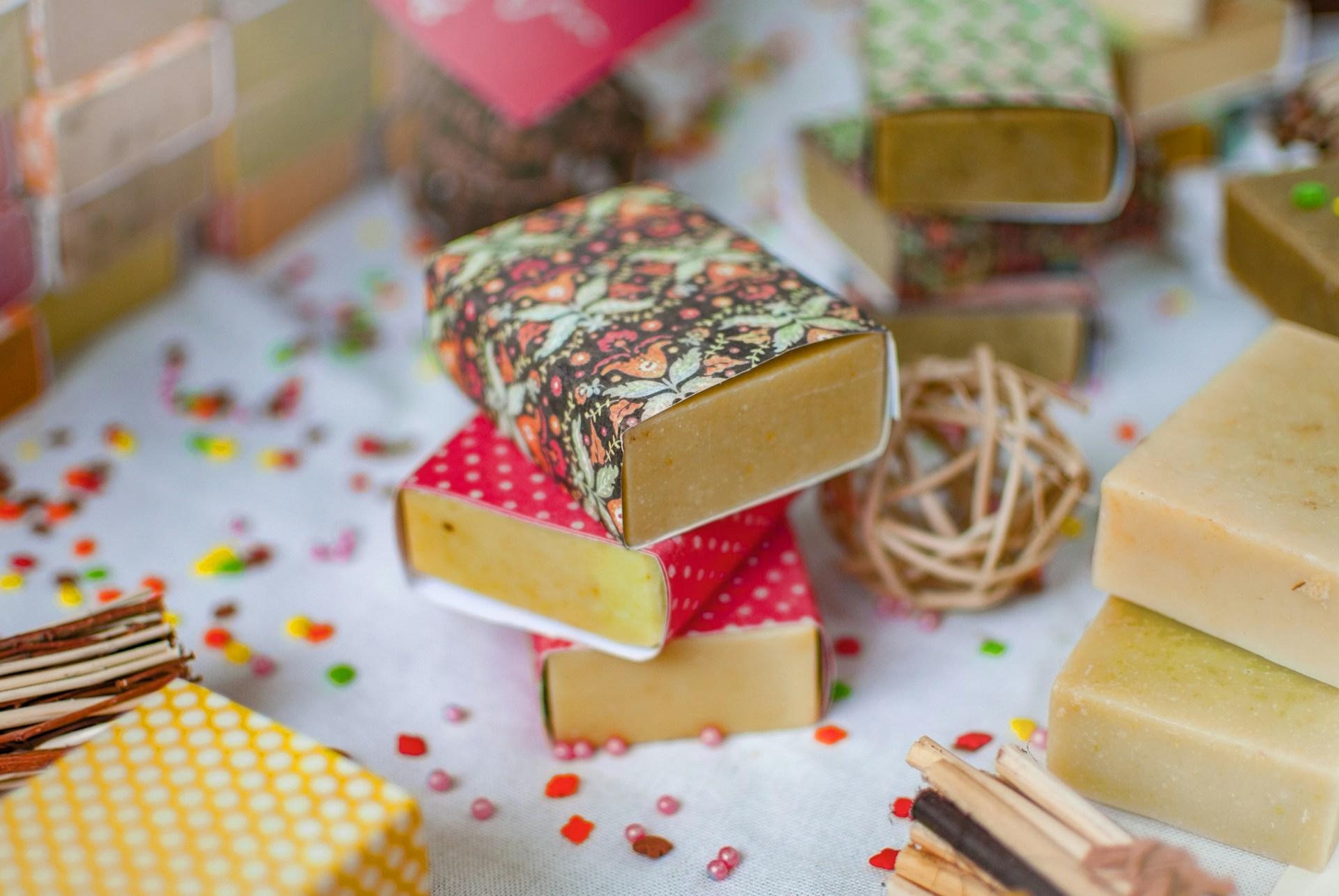
Most conversations about soap packaging happen at the level of appearance — colours, labels, finishes. Useful, but incomplete. Two wrappers that look almost identical in a photograph can behave completely differently once a curing bar is inside one and it has spent a fortnight in a warm storeroom.
The difference lives in the material: which board, how thick, whether it is coated, how the shape is formed, and whether air can move. Soap is one of the few products where the packaging has to breathe and protect at the same time, which makes material choice unusually consequential.
This guide works from the substrate outward. Understanding it makes you a better buyer of Soap Boxes: you will read a specification properly, spot where a low quote has been achieved by thinning something, and know which upgrades your bars actually need.
The Boards
Nearly all soap packaging starts as paperboard, but the category is wide.
Bleached paperboard is the smooth, white, coated end. It takes fine four-colour printing beautifully because the surface is sealed — and that same seal is why it breathes least. It suits fully cured bars and heavily designed brands, less so a bar leaving the workshop early.
Kraft board is unbleached, which is where the brown comes from. Skipping the bleaching stage usually makes it cheaper than white board of comparable weight, and its fibres tend to be longer and stronger. The surface is textured rather than glossy, so it takes stamping and labels well and fine photographic printing less well.
Rigid and folding boxboard sits between them in various grades, and thickness is specified in points, microns or millimetres depending on the supplier. What matters is comparing like with like: a cheaper quote on the same construction is usually a thinner board.
Kraft Soap Boxes are the default for handmade brands for two reasons that are often conflated. The look is one — natural board reads as honest and ingredient-led. The other is functional: uncoated kraft lets moisture move, which is why bars stored in it for weeks behave better than bars sealed in coated stock.
Ask your supplier:
-
What board weight is this, and what is the next grade up?
-
Is the surface coated, and will a rubber stamp take on it?
-
Is it uncoated on the inside face as well as the outside?
-
What is the minimum order at this price?
Folding Construction
Folding boxes arrive as printed, creased flat blanks and are assembled at packing. The economics are strong: you pay for a fraction of the shipping volume and a fraction of the storage space, which for a product as space-hungry as soap matters.
Homemade Soap Boxes are typically built this way — recyclable board, creased and die-cut flat, folded into a tuck-end or lidded box at packing. The trade is assembly time per unit, a labour cost rather than a rent cost, and usually the right trade until volumes get large.
Within folding construction, the closure is the variable worth asking about. Straight tuck ends are quickest; reverse tuck sits flatter; a lidded two-piece box presents better for gifts but doubles the board.
Ask your supplier:
-
Does it ship flat, and how long does one take to assemble?
-
Which closure style is this, and can I see it formed?
-
Is the crease deep enough to fold cleanly without cracking the print?
-
Does the board have enough stiffness to hold shape once filled?
Band Construction
A sleeve is the simplest structure in the category: a strip of board or paper formed into a loop, either glued or slotted, that holds the bar without enclosing it.
Soap Sleeves are defined as much by what they leave out as what they include. Most of the bar stays exposed, so air moves freely, scent escapes, and the customer can see and smell the product before buying. Material use is the lowest of any format and so is cost.
The engineering question is tension. A sleeve that is too loose slides off in a display; one that is too tight marks a soft bar or splits at the join. This is entirely a function of your cured bar dimensions, which is why it must be specified against a real bar rather than a mold size.
Ask your supplier:
-
Is this glued or slot-locked, and how strong is the join?
-
What tolerance is built in for bar-to-bar variation?
-
Will the stock mark a soft bar under tension?
-
Is it uncoated, so it can be recycled or composted straightforwardly?
Fitted Construction
A holster is the opposite philosophy: a close-fitting casing that contacts the bar on most faces and leaves it no room to move.
Holster Soap Boxes protect by eliminating empty space rather than by adding padding, which is why they preserve detail that a larger box does not — embossed logos, swirled tops and textured faces lose definition through simple rubbing, and rubbing requires movement. The open end also means the bar is not fully sealed, so some air exchange continues.
Fit tolerance is everything here. Specify against a cured bar, and re-check whenever a recipe changes, because cure shrinkage varies with oil blend and water discount.
Ask your supplier:
-
What tolerance does this allow above and below the stated bar size?
-
How much of the bar face stays covered?
-
Will the board scuff a soft or freshly cut bar on insertion?
-
Can the printed area wrap the visible faces?
Die-Cutting and Windows
A window is a die-cut aperture, and the decision that follows is whether to fill it.
Soap Boxes with Window can be specified open or filmed. An open die-cut costs less, adds no plastic, lets scent escape, and keeps the box straightforwardly recyclable. A filmed window keeps dust off and gives a cleaner retail look, at the cost of a material the customer may need to remove before recycling — and a barrier that reduces airflow.
Die shape is a one-time tooling charge, which is worth knowing when comparing quotes: a low unit price that excludes tooling is not the cheaper option on a first order.
Ask your supplier:
-
Is there a one-time die charge, and who keeps the die?
-
What is the minimum bridge width so the box stays rigid?
-
If filmed, what is the film and is it separable for recycling?
-
How close can the window sit to a crease without weakening it?
Metal
Tins are made from tinplate — thin steel with a tin coating — formed and seamed rather than folded, then printed or labelled.
Soap Tins behave differently from everything above. They protect completely, resist crushing entirely, and carry weight that customers read as value before the lid is lifted. They also seal, which makes them excellent for finished, fully cured bars and shave soaps, and less suitable for a bar that still needs to breathe.
The specification that matters most is the lid. A slip lid, a hinged lid and a screw lid all behave differently in a bathroom, and a poor closure undoes the format's main advantage.
Ask your supplier:
-
What gauge is the tinplate?
-
What lid type is this, and how does it seat after repeated opening?
-
Is the interior lacquered, and is that lacquer suitable for soap contact?
-
Printed directly, or labelled — and how does each wear?
Coatings, Inks and Claims
Whatever the substrate, finishing changes both performance and what you can honestly say.
Gloss and matt laminates improve scuff resistance and moisture resistance from the outside, while reducing breathability and complicating recycling. Aqueous coatings sit lighter. Foil and heavy metallic effects usually rule out kerbside recycling. Soy-based and vegetable-based inks are a straightforward substitution on paper stock.
None of this should be guessed at. Confirm coatings, inks and adhesives with your supplier in writing before printing any environmental claim, because soap customers ask about this more than most and a hedged answer costs trust.
Reading a Quote Properly
When two quotes differ noticeably, the gap is almost always in one of four places: board thickness, coating specification, whether tooling is included or billed separately, and what tolerance the fit allows. Ask about all four before comparing prices.
Then verify physically. Order samples, load them with your actual cured bars rather than something of similar size, and leave a few in the conditions your stock really sits in — a warm storeroom, a humid week — for longer than feels necessary. Ship one to yourself and open it cold. This is the only step that reliably catches a specification that reads well and behaves badly.
Conclusion
Knowing what a wrapper is made from changes how you buy it. Unbleached board gives Kraft Soap Boxes their strength, their stamp-friendly surface and their breathability. Flat-shipped folding construction keeps Homemade Soap Boxes cheap to hold, band construction makes Soap Sleeves the lowest-material option, and fitted construction lets Holster Soap Boxes protect detail by removing space rather than adding padding. Die-cutting decides whether Soap Boxes with Window stay recyclable, and formed tinplate gives Soap Tins their protection and their second life. Read the specification, ask the four questions, and sample before you scale.

 English
 Arabic
 French
 Spanish
 Portuguese
 Deutsch
 Turkish
 Dutch
Dutch
 Russian
 Romaian
 Portuguese (Brazil)
 Greek
Greek