


Stable Air Movement Through Multi-Blade Systems
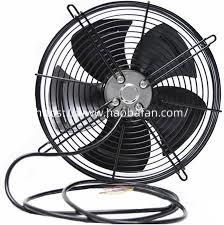
Centrifugal ventilation systems use rotating impellers to move air through controlled pathways, making them useful for industrial buildings, workshops, equipment rooms, and other applications where directed airflow is required. When evaluating a Multi-Wing Centrifugal Fan, buyers should consider the complete construction of the impeller, housing, motor, mounting system, and airflow connections rather than focusing only on the number of blades.
A centrifugal fan draws air into the central area of the impeller and redirects it outward as the impeller rotates. The housing then guides the air toward the discharge opening. A multi-wing configuration distributes numerous blades around the rotating assembly, creating a broad blade surface for interaction with the moving air. The final airflow behavior depends on blade geometry, rotation, housing design, and system resistance.
Blade manufacturing requires consistent forming and positioning. Even relatively small differences between blades can affect weight distribution and rotational behavior. Blade curvature, angle, spacing, structural rigidity, and attachment quality should therefore be controlled during production. Consistent components help support predictable rotation and reduce unnecessary mechanical imbalance.
Material selection is also important. Depending on the operating environment, manufacturers may use different metals or engineered materials for the impeller and housing. Industrial ventilation equipment may encounter dust, humidity, temperature fluctuations, or corrosive substances. Material selection and surface treatment should correspond with the conditions in which the equipment will operate.
The housing plays a key role in directing air after it leaves the impeller. Its internal geometry can influence the transition from rotating airflow to the discharge pathway. Structural rigidity is also important because weak or poorly supported panels may vibrate during operation. Properly manufactured connections can help maintain mechanical stability and reduce unnecessary sound transmission.
Motor integration needs to be coordinated with the rotating assembly. The motor must provide consistent rotation while remaining securely mounted. Manufacturers may consider alignment, mounting strength, electrical protection, heat dissipation, and access for maintenance during the assembly process. These factors can influence operating stability, particularly when equipment is expected to run for long periods.
Balancing is especially important for multi-wing impellers because numerous blades contribute to the total rotating mass. Differences in blade weight or positioning can create an imbalance that produces vibration. Excessive vibration may affect bearings, fasteners, mounting structures, and connected ductwork. Production inspection and balancing procedures can help maintain smoother operation.
Noise management involves both mechanical and aerodynamic factors. Blade movement can generate airflow sound, while turbulence may increase when the air encounters abrupt transitions or poorly matched system components. Motor vibration and structural resonance can add further sound. Accurate balancing, appropriate housing construction, secure mounting, and suitable duct design can help address these sources.
Maintenance should include inspection of the impeller, housing, motor, guards, mounting points, and airflow openings. Dust accumulation on the blades can affect both airflow and rotational balance. Loose fasteners or worn mechanical components may also create abnormal vibration. Routine cleaning and inspection can help maintain stable operating conditions and identify potential problems earlier.
Multi-wing centrifugal designs can be applied in factory ventilation, workshop air circulation, commercial buildings, equipment cooling, agricultural facilities, and other systems requiring directed airflow. The appropriate configuration depends on the building structure, airflow pathway, environmental exposure, installation space, and operating requirements.
For procurement teams, a Multi-Wing Centrifugal Fan should be assessed through manufacturing consistency and application compatibility. Buyers can review blade fabrication, housing quality, motor integration, balancing processes, inspection standards, maintenance requirements, and technical support when evaluating potential equipment. Taizhou Haoba Electromechanical Co Ltd. supplies ventilation equipment for different industrial air movement applications, and customers can find further product information at https://www.haobafan.com/product/mixed-flow-fan/ when reviewing suitable centrifugal ventilation solutions.

 English
 Arabic
 French
 Spanish
 Portuguese
 Deutsch
 Turkish
 Dutch
Dutch
 Italiano
 Romaian
 Portuguese (Brazil)
 Greek
Greek