


Rhinoplasty Dubai for Understanding Individual Nasal Anatomy
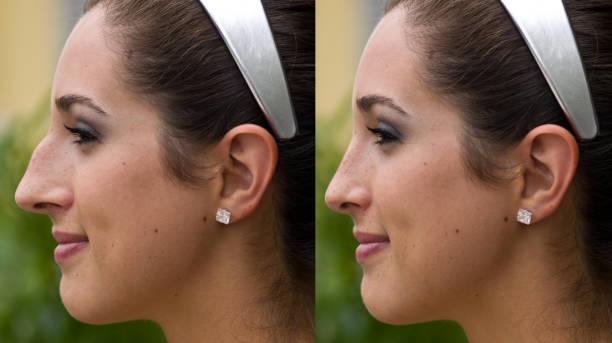
Every nose has its own combination of bone, cartilage, skin, soft tissue, and internal structure. For this reason, Rhinoplasty Dubai should be planned around individual nasal anatomy rather than using a standard shape or identical surgical formula for every patient.
Why Every Nose Requires Individual Assessment
Two patients can have similar concerns but completely different anatomical reasons behind them.
One person may have a prominent bony structure, while another may have thicker soft tissue or a cartilage-related contour. Their surgical plans would therefore need to be different even if both describe their nose as “too wide” or “not defined.”
The Nasal Framework
The nasal framework includes several interconnected components:
- Nasal bones
- Upper lateral cartilage
- Lower lateral cartilage
- Nasal septum
- Nasal tip structures
- Supporting soft tissue
- Skin and subcutaneous tissue
The relationship between these components determines much of the nose's visible form.
The Role of Nasal Bones
The nasal bones provide support for the upper portion of the nasal framework.
Their width, position, thickness, and relationship to the forehead can influence the appearance of the nasal bridge.
Small differences in bone structure can therefore affect how the nose looks from the front and side.
The Role of Cartilage
Cartilage becomes increasingly important toward the middle and lower parts of the nose.
Upper Lateral Cartilage
The upper lateral cartilages contribute to the middle vault and help form the transition between the nasal bones and tip.
Their shape and position can influence bridge contour and internal nasal architecture.
Lower Lateral Cartilage
The lower lateral cartilages have an important role in shaping the nasal tip and nostril region.
Differences in their orientation can affect tip width, projection, definition, and symmetry.
The Septum as a Central Structural Element
The nasal septum separates the two nasal passages and contributes to the structural support of the nose.
Its position can influence both internal airflow and external appearance.
A septal assessment may therefore be relevant when a patient has visible asymmetry, a crooked nose, or breathing concerns.
Skin Thickness Can Change the Appearance of Results
The underlying framework is only one part of the final nasal appearance.
Skin and soft tissue cover the structural framework and influence how sharply or subtly changes become visible.
Thicker Skin
Thicker skin and soft tissue may soften the appearance of small structural refinements, particularly around the nasal tip.
Thinner Skin
Thin skin may reveal underlying contours more clearly.
This means that the same structural modification can appear different in two patients with different soft-tissue characteristics.
Nasal Tip Anatomy
The nasal tip is a particularly detailed part of the nasal framework.
Its appearance depends on cartilage shape, orientation, projection, rotation, soft-tissue thickness, and the relationship with the columella and nostrils.
Why Tip Changes Need Precision
Changing one component of the tip can influence surrounding contours.
For example, increasing or reducing projection may alter the relationship between the tip, upper lip, and nasal profile.
The desired change therefore needs to be evaluated in the context of the entire face.
Individual Nasal Anatomy and Facial Proportions
The nose does not exist independently from the rest of the face.
The forehead, cheeks, lips, chin, and jaw all influence how nasal proportions are perceived.
The Nose and Chin Relationship
A nose may appear more prominent when the chin has less projection, even if the nasal dimensions themselves are within a normal range.
This is one reason facial analysis can be useful when establishing aesthetic rhinoplasty goals.
Why Photographs Alone Are Not Enough
Photographs can help document nasal shape, but they cannot provide a complete understanding of three-dimensional anatomy.
A clinical assessment can provide additional information about the framework, skin, soft tissue, internal structures, and nasal function.
Multiple Angles Provide More Information
Assessment may include frontal, profile, and three-quarter views.
The surgeon can compare these views to understand how the nasal framework changes visually across different perspectives.
Individual Anatomy and Surgical Approach
The patient's anatomy also influences whether an open or closed approach is appropriate.
A closed approach uses internal incisions and can be suitable for selected corrections. An open approach provides additional exposure for certain structural situations.
Neither approach is automatically appropriate for every patient.
Patients considering closed rhinoplasty in Dubai should first establish whether their anatomy and desired correction are compatible with that approach.
Understanding Structural Limitations
Rhinoplasty is not a process of creating an entirely new nose independent of the patient's anatomy.
The available cartilage, bone structure, skin characteristics, previous surgery, and existing support all influence what can realistically be achieved.
Why Conservative Planning Can Matter
Removing or changing structural tissue without considering support can produce unwanted changes.
A carefully planned procedure should account for the relationship between aesthetic refinement and structural stability.
How Individual Anatomy Influences Expectations
Patients sometimes compare their desired result with another person's nose.
However, differences in:
- Skin thickness
- Nasal bone structure
- Cartilage shape
- Facial width
- Chin projection
- Soft-tissue characteristics
- Existing asymmetry
can produce very different outcomes.
A more useful discussion focuses on how a patient's own anatomy can be refined appropriately.
Assessment Before Rhinoplasty
A personalized consultation may include:
- Discussion of the patient's concerns.
- Review of previous nasal surgery or trauma.
- External examination of the nasal framework.
- Assessment of skin and soft tissue.
- Consideration of internal nasal anatomy.
- Evaluation of facial proportions.
- Discussion of aesthetic expectations.
- Selection of an appropriate surgical approach.
The exact assessment varies according to the patient's concerns and clinical history.
Recovery and Individual Healing
Anatomy influences not only the surgical plan but also how the nose may look during recovery.
Swelling can be more noticeable in some areas or persist longer depending on tissue characteristics and the extent of surgery.
Patients should therefore expect gradual changes rather than an immediate final appearance.
Why Individualization Matters in Dubai
Patients seeking rhinoplasty in Dubai may have very different aesthetic goals, facial structures, and nasal characteristics.
A personalized consultation allows the treatment plan to be based on the individual rather than on a predefined nasal shape.
Build Your Rhinoplasty Plan Around Your Anatomy
If you are researching Rhinoplasty Dubai, understanding your own nasal anatomy is an important first step.
Tajmeels Clinic can help you discuss the structural characteristics of your nose, your aesthetic objectives, and the surgical options that may be appropriate for your individual anatomy.
For a personalized rhinoplasty consultation in Dubai, visit Tajmeels Clinic and discuss your goals with the clinic's team.

 English
 French
 Spanish
 Portuguese
 Deutsch
 Turkish
 Dutch
Dutch
 Italiano
 Russian
 Romaian
 Portuguese (Brazil)
 Greek
Greek