


Can HydraFacial Treatment in Dubai Help With Dehydrated Skin?
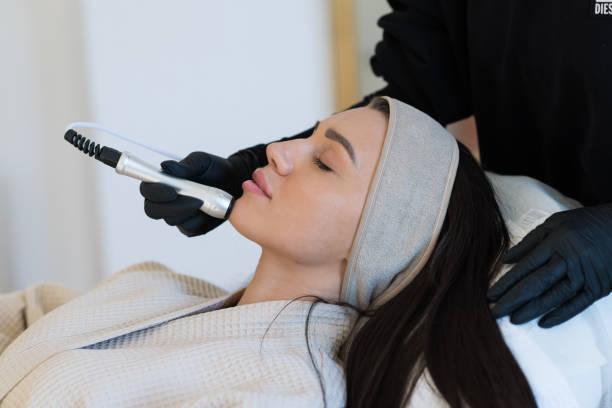
Skin can look oily and still be dehydrated. That distinction matters because dehydration refers to a lack of water in the skin, while dryness is more closely related to insufficient lipids and oils. HydraFacial Treatment in Dubai can address surface buildup while delivering hydrating solutions, making it a useful option for people whose complexion feels tight, dull or rough despite regular skincare.
Dubai can make this problem surprisingly easy to overlook. Air-conditioned interiors, strong outdoor heat, frequent sun exposure and changes between humid and dry environments can all affect how comfortable the skin feels.
Why Dehydrated Skin Can Look Different in Dubai
Dehydration does not always announce itself with obvious flaking.
Some people notice tightness after cleansing. Others see fine lines become more visible, especially around the eyes or cheeks, while the forehead and nose continue to look shiny.
That combination can be confusing.
Dehydration Is Not the Same as Dry Skin
Dry skin is generally associated with a reduced amount of skin lipids. Dehydrated skin, by contrast, has a water-content problem.
A person can therefore have an oily or combination skin type and still experience dehydration.
That is one reason simply applying a heavier cream is not always the answer.
Indoor Air Conditioning Changes the Experience
Moving from a hot Dubai street into strongly cooled indoor spaces creates a very different environment for the skin.
When the surrounding air is dry, water can be lost from the skin more readily. Dermatologists commonly recommend moisturization as part of maintaining hydration and supporting the skin barrier.
For someone who spends most of the day between offices, cars, hotels and outdoor environments, the problem can become a repeated cycle rather than a one-off episode.
How HydraFacial Approaches Dehydrated Skin
HydraFacial combines cleansing, exfoliation, extraction and hydration in one treatment system. The manufacturer's description of the technology explains that its Vortex-Fusion system uses a specialized handpiece to perform these stages while delivering treatment solutions to the skin.
The important point for dehydrated skin is not simply the word “hydration.”
Removing accumulated surface debris can make the skin feel smoother, while the hydrating stage focuses on replenishing the surface with treatment solutions.
Surface Buildup Can Make Skin Feel Rough
Dead skin cells and excess surface material can contribute to a dull, uneven appearance.
A controlled exfoliation step can remove some of that buildup without relying on aggressive manual scrubbing.
That distinction matters when the skin already feels uncomfortable or tight.
Hydration Should Be Considered With the Skin Barrier
A treatment should not be viewed as a replacement for daily skincare.
The skin barrier still needs consistent support after the appointment. Moisturizer, appropriate cleansing and daily sun protection remain important parts of maintaining skin comfort and appearance.
The American Academy of Dermatology notes that moisturizers help reduce water loss by trapping water in the skin, particularly when applied to damp skin.
What a Dehydrated-Skin HydraFacial Can Look Like
A professional session is not necessarily identical for every client.
The practitioner can consider the skin's current condition, sensitivity, oil production and treatment goal before selecting the appropriate approach.
The general concept is straightforward:
Assessment → Cleansing → Controlled exfoliation → Extraction where appropriate → Hydration → Post-treatment skincare
The sequence is simple, but the decisions made around intensity and product selection are where customization matters.
The Goal Is Not to “Strip” the Skin
One common misconception is that a facial needs to leave the skin extremely tight to prove that it worked.
That is not a useful clinical benchmark.
A dehydrated complexion may already be struggling with comfort and barrier function. Excessive exfoliation can be counterproductive, particularly for sensitive skin.
The objective should be cleaner, smoother and more hydrated-looking skin without unnecessarily irritating it.
Can Oily Skin Be Dehydrated?
Yes.
This is one of the most common misunderstandings among patients with combination or oily skin.
“If my face gets shiny by midday, how can it be dehydrated?”
Oil and water are not the same thing.
A person can produce substantial sebum while still experiencing a lack of water in the skin. In fact, repeatedly trying to remove every trace of oil can sometimes leave the skin feeling tight and uncomfortable.
When Congestion and Dehydration Appear Together
This is where a customized treatment can become more useful than choosing a facial based only on the word “hydrating.”
The practitioner may need to balance cleansing and extraction with hydration rather than pushing aggressively in one direction.
The right approach depends on what the skin actually looks and feels like during assessment.
How HydraFacial Differs From a Basic Hydrating Facial
| Approach | Main focus | Exfoliation | Extraction | Hydration |
|---|---|---|---|---|
| Basic hydrating facial | Surface comfort and moisture | Varies | Usually limited | Yes |
| HydraFacial | Cleansing, exfoliation, extraction and hydration | Integrated | Integrated where appropriate | Integrated |
| Chemical peel | Controlled chemical exfoliation | Yes | Not the primary purpose | Depends on protocol |
| Home skincare | Daily maintenance | Depends on products | Limited | Yes |
These treatments are not interchangeable.
A chemical peel, for example, is designed around controlled chemical exfoliation, while HydraFacial combines several treatment stages within one session. The appropriate option depends on the skin concern rather than the popularity of a treatment name.
Real Patient Concerns About Hydration Treatments
“Will my skin feel greasy afterward?”
Not necessarily. Hydration does not mean applying a heavy layer of oil. The treatment can be tailored around the patient's skin type and current condition.
“If my skin is sensitive, should I avoid exfoliation completely?”
Not automatically. The more useful question is how much exfoliation the skin can tolerate and whether the current condition makes treatment appropriate.
“Will one session permanently fix dehydration?”
No. A treatment can improve the appearance and feel of the skin, but ongoing hydration depends heavily on daily skincare, environmental exposure and individual skin behavior.
When Should You Consider HydraFacial for Dehydrated Skin?
A consultation is particularly useful when dehydration keeps returning despite a sensible skincare routine.
Persistent tightness, scaling, burning, redness or unexplained irritation may point toward an underlying skin problem that deserves professional assessment rather than repeated cosmetic treatments.
For someone mainly dealing with dullness, surface roughness and a dehydrated-looking complexion, a [professional HydraFacial treatment in Dubai] can be discussed as part of a broader skincare plan.
A Practical Treatment Roadmap
- Skin assessment
The current level of hydration, oiliness, sensitivity and congestion should be considered before treatment. - Treatment preparation
The skin is cleansed and prepared for the treatment stages. - Controlled exfoliation
Surface buildup is loosened and removed according to the treatment approach. - Extraction where appropriate
Congested areas can receive targeted attention rather than unnecessary aggressive manipulation. - Hydration stage
Hydrating treatment solutions are delivered as part of the HydraFacial process. - Post-treatment care
The skin should be protected from unnecessary irritation and supported with an appropriate home routine. - Maintenance
Future treatments should be based on the skin's response and ongoing needs rather than an arbitrary schedule.
Long-Term Skin Hydration Matters More Than One Facial
A HydraFacial can be useful when the immediate problem is dull, congested or dehydrated-looking skin, but long-term skin quality is built between appointments.
Daily moisturizer, appropriate cleansing, sun protection and avoiding unnecessarily harsh exfoliation all matter.
If dehydration keeps returning, the better question is not simply which facial to book next. It is why the skin keeps losing comfort and hydration in the first place.
For an individualized assessment, Tajmeels Clinic can help determine whether HydraFacial fits your current skin condition, sensitivity and aesthetic goals.

 Arabic
 French
 Spanish
 Portuguese
 Deutsch
 Turkish
 Dutch
Dutch
 Italiano
 Russian
 Romaian
 Portuguese (Brazil)
 Greek
Greek