


Material Selection for Industrial Shutoff Equipment
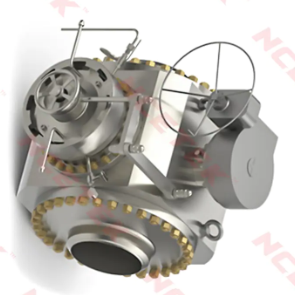
Pipeline flow control equipment must maintain appropriate structural and sealing performance while responding to changing pressure, temperature, and operating conditions. A Forged Steel Floating Ball Valve combines a forged body structure with a floating ball mechanism, creating a configuration used in various industrial shutoff applications. Its engineering involves coordinated consideration of material strength, ball movement, seat loading, machining accuracy, sealing materials, and manufacturing inspection.
Forged steel provides a strong foundation for the valve body and can be selected in different material grades according to the intended application. Carbon steel may be suitable for many general industrial services, while stainless or alloy steels can be considered when specific corrosion, temperature, or process requirements apply. The selected material should be compatible with the pipeline medium and expected operating environment, while internal components should be evaluated as part of the same material system.
The floating ball principle is central to the valve's operation. The ball is not fixed by a lower trunnion support and can move within a controlled range when influenced by line pressure. During closure, this movement can help establish contact between the ball and the downstream seat. The resulting interaction between pressure, ball position, and seat geometry makes accurate component dimensions especially important.
Seat design must accommodate the mechanical relationship between the ball and sealing surfaces. Seat materials can be selected according to process temperature, pressure, chemical exposure, and expected operating cycles. A suitable seat should provide controlled contact without creating unnecessary resistance during valve operation. Proper installation is equally important because even a well-designed sealing component depends on accurate positioning within the valve body.
Forging and machining work together during manufacturing. The forged body establishes the primary structural form, while subsequent machining creates the precise internal surfaces required for assembly. Critical areas may include the ball cavity, seat pockets, stem opening, connection surfaces, and other interfaces. Dimensional inspection helps ensure that these areas meet the required tolerances before the valve moves to final assembly.
The ball itself requires careful surface preparation. A smooth and accurately machined ball can provide more consistent interaction with the seats and support predictable movement during opening and closing. Stem machining is also important because the stem transfers operating force to the ball. The relationship between stem geometry, ball connection, and actuator or handle arrangement should be checked during assembly.
Quality control should cover material verification, dimensional inspection, assembly checks, pressure testing, leakage testing, and operational evaluation as appropriate. Body testing can provide information about structural integrity, while closure testing evaluates the sealing system. Functional testing can verify that the valve moves correctly through its intended operating range and that the operating mechanism works without abnormal resistance.
The application determines many of the final design considerations. Industrial water systems, chemical processing lines, energy facilities, oil and gas installations, and general process piping can have significantly different requirements. Fluid characteristics, temperature, pressure, installation orientation, pipeline size, and frequency of operation should therefore be considered before selecting a valve configuration.
Maintenance planning can help preserve valve functionality over its service life. Operators may need to inspect external connections, operating mechanisms, stem sealing areas, and associated actuators. Installation alignment should also be controlled because excessive external pipeline forces can place unnecessary loads on valve connections. Where replacement or servicing is required, clear records of materials and valve configuration can simplify technical evaluation.
The manufacturing environment also influences consistency. Controlled forging processes, precision machining equipment, trained assembly procedures, and documented inspection methods can help reduce variation between production batches. Traceability of materials and inspection results can provide useful information for industrial projects where equipment documentation is part of the procurement and maintenance process.
For pipeline applications requiring a combination of forged construction and floating ball operation, Forged Steel Floating Ball Valve engineering should address the complete relationship between body strength, ball movement, seat loading, material compatibility, and operating conditions. Careful coordination from forging through final testing supports a more consistent manufacturing process for industrial flow control equipment. Further valve configurations and product information can be reviewed at https://www.ncevalve.com/product/ when assessing solutions for pipeline and process applications.

 English
 Arabic
 French
 Spanish
 Portuguese
 Deutsch
 Turkish
 Dutch
Dutch
 Italiano
 Russian
 Portuguese (Brazil)
 Greek
Greek