


How Does a Fiber Welder Machine Improve Modern Metal Welding
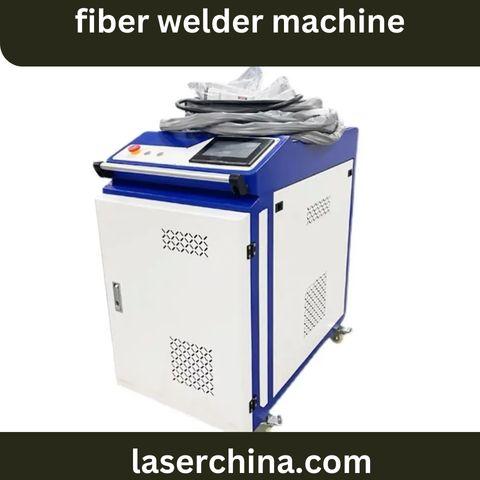
Metal fabrication continues to evolve as manufacturers look for cleaner, faster, and more controlled welding processes. A fiber welder machine is now widely used for joining different types of metal components in workshops, factories, fabrication facilities, and specialized production environments. By using a focused fiber laser beam, this type of welding equipment creates precise joints while allowing operators to work on many common industrial materials.
Modern laser welding technology has become increasingly accessible to businesses of different sizes. From small fabrication shops to large-scale manufacturing plants, companies can select equipment according to their material requirements, production volume, and desired welding applications.
Understanding Fiber Laser Welding
Fiber laser welding uses a laser source that generates and delivers concentrated energy through a fiber-optic delivery system. The laser beam is directed toward the workpiece, where its energy heats and melts the metal surface. As the molten material cools, it forms a strong welded joint.
Unlike traditional welding processes that rely on an electrical arc, electrodes, or other consumable materials, fiber laser welding uses a highly concentrated beam of light. This allows the welding process to be controlled accurately, particularly when working with thin metal sections and detailed components.
The exact welding parameters depend on the material, thickness, joint design, and production requirements. Operators typically adjust factors such as laser power, welding speed, focal position, and shielding gas according to the application.
Where Is a Fiber Welder Machine Used?
A fiber welder machine can be used across numerous metalworking industries. Manufacturing companies often use laser welding for components that require consistent and clean joints. Metal fabrication workshops may use it for customized products, repair work, and small-batch production.
Common applications include stainless steel fabrication, carbon steel components, aluminum products, galvanized materials, and certain specialized metal alloys. Industries such as automotive manufacturing, kitchen equipment, electronics, hardware production, construction equipment, and metal furniture can all incorporate laser welding into their production processes.
The machine can also be used for applications where the appearance of the weld is important. Decorative metal products, cabinets, enclosures, signs, and precision components may require carefully controlled welding to maintain a neat surface finish.
Fiber Welder Machine for Stainless Steel
Stainless steel is frequently processed with laser welding equipment because it is used extensively in industrial and commercial products. A fiber welder machine can be configured for different stainless steel thicknesses and joint designs.
For stainless steel fabrication, appropriate laser power and welding parameters are essential. Excessive heat can affect the surrounding material, while insufficient energy may result in incomplete penetration. Proper parameter selection helps operators achieve the required joint quality for the specific application.
Stainless steel laser welding is commonly found in the production of kitchen equipment, metal enclosures, medical equipment components, architectural products, and industrial machinery.
Working With Carbon Steel
Carbon steel is another widely used material in fabrication. It appears in machinery frames, brackets, structural components, automotive parts, and general metal products.
A fiber welder machine can be configured for carbon steel welding according to the thickness and joint requirements. Shielding gas selection and surface preparation are also important considerations during the process.
Before welding, the material should be properly cleaned to remove oil, dirt, rust, paint, and other contaminants that could interfere with the welding process. Good preparation contributes to consistent results and helps maintain a stable production workflow.
Aluminum Welding Applications
Aluminum presents different welding requirements because of its thermal properties and reflective surface. Modern fiber laser systems can be configured for aluminum applications with suitable power levels and process settings.
Aluminum laser welding is used in areas such as transportation components, frames, enclosures, heat-related equipment, and lightweight fabricated products. Because aluminum products can vary considerably in thickness and alloy composition, operators should establish suitable parameters through testing before beginning full-scale production.
Choosing the Appropriate Laser Power
Laser power is an important consideration when selecting a fiber welder machine. Different applications require different energy levels depending on material type, thickness, welding speed, and penetration requirements.
Lower-power systems may be suitable for thin sheet metal and detailed fabrication, while higher-power equipment can be considered for thicker materials and demanding production environments.
Rather than selecting equipment based only on the highest available power, manufacturers should evaluate their actual workload. Understanding the usual material thickness, daily production volume, joint types, and required welding speed can help determine a suitable configuration.
Preparing Materials Before Welding
Proper material preparation plays an important role in laser welding. Even advanced welding equipment requires clean and correctly positioned workpieces.
Operators should remove surface contaminants before welding and ensure that the components are properly aligned. Gaps between parts should be considered because joint spacing can influence the welding result.
For repeat production, fixtures and positioning systems can help maintain consistent component placement. A stable setup makes it easier to reproduce the same welding parameters from one workpiece to another.
Operating a Fiber Welder Machine
Training is an important part of introducing laser welding equipment into a workshop. Operators should understand the machine controls, welding parameters, material preparation, maintenance procedures, and workplace safety requirements.
Laser equipment should always be operated according to the manufacturer's instructions. Appropriate laser safety measures, protective equipment, ventilation, and controlled work areas are essential. Operators should also understand the requirements associated with shielding gases and metal fumes.
A structured operating procedure can help maintain consistency. Before production begins, the operator can inspect the equipment, prepare the material, verify settings, and perform a test weld when appropriate.
Maintenance and Routine Inspection
Regular maintenance helps keep welding equipment operating consistently. Operators should follow the manufacturer's recommended maintenance schedule and inspect important components regularly.
Cleaning the working area, checking optical components, inspecting connections, and monitoring cooling systems can form part of a routine maintenance program. Any unusual sound, warning message, temperature change, or welding inconsistency should be investigated according to the manufacturer's service procedures.
Keeping maintenance records can also help production teams identify recurring issues and schedule service before they interrupt important manufacturing work.
Fiber Laser Welding for Small Workshops
Laser welding is no longer limited to large industrial facilities. Small and medium-sized workshops can also consider a fiber welder machine when their production requirements justify the investment.
Fabricators working with stainless steel furniture, metal cabinets, gates, machinery components, kitchen products, and customized metal parts may find laser welding relevant to their workflow. Equipment selection should match the workshop's available space, electrical requirements, material range, and expected workload.
For businesses entering laser welding for the first time, operator training and application testing should be included in the purchasing process.
Building a More Efficient Welding Workflow
A successful laser welding operation involves more than the welding machine itself. Material preparation, component positioning, parameter selection, operator training, inspection, and maintenance all contribute to the final production process.
Quality inspection should also be incorporated into the workflow. Depending on the application, inspection may involve visual examination, dimensional checks, destructive testing, or other appropriate methods.
Final Thoughts
A fiber welder machine represents an important development in modern metal fabrication, offering manufacturers a precise method for joining many commonly used metals. Its applications extend from stainless steel and carbon steel fabrication to aluminum components and specialized industrial products.

 English
 Arabic
 French
 Spanish
 Portuguese
 Deutsch
 Turkish
 Dutch
Dutch
 Italiano
 Russian
 Romaian
 Greek
Greek