


Protected Electrical Connections for Outdoor Equipment
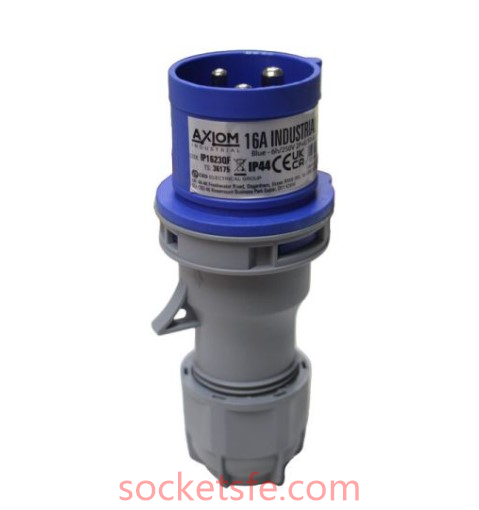
In outdoor electrical installations, an Outdoor Industrial Socket provides a structured connection point for compatible industrial equipment and power systems. Unlike connectors used only in controlled indoor environments, outdoor sockets may encounter rain, dust, temperature variation, sunlight, mechanical impact, vibration, and repeated handling. Their construction therefore needs to combine electrical performance with environmental and mechanical protection.
The socket housing forms the main structural barrier around internal components. Engineering plastics and other insulating materials can be selected to provide electrical isolation and mechanical strength. Depending on the intended application, material selection may also consider moisture, impact, temperature variation, oils, cleaning agents, and ultraviolet exposure. A stable housing helps protect internal contacts while maintaining the geometry required for reliable mating.
Sealing technology is important when outdoor sockets are installed where water or contaminants may be present. Seals and gaskets can be positioned around covers, mating interfaces, cable entries, and other openings. These components help limit environmental intrusion when properly installed. Their effectiveness depends on material properties, compression, surface condition, and dimensional accuracy.
The cable entry is another important part of socket construction. Cables installed outdoors may experience movement, pulling, bending, and environmental exposure. A suitable cable-entry structure can help support the cable while maintaining the intended sealing arrangement. Strain-relief features may also reduce mechanical stress transferred to internal electrical terminations.
Electrical insulation separates conductive components from one another and from the outer housing. This helps maintain controlled electrical paths within the socket. Insulating materials should remain stable under the expected environmental and operating conditions. Accurate molding and assembly are important because internal insulation components must maintain suitable clearances and hold the conductive contacts securely.
Conductive contacts establish the electrical interface with the mating plug. Contact materials are generally selected according to requirements such as conductivity, corrosion resistance, and mechanical durability. Contact geometry needs to be precise so that the plug can engage correctly. Suitable contact pressure helps maintain electrical continuity while allowing the connector to be operated according to its intended design.
Mechanical retention is especially relevant in outdoor applications where vibration and movement may occur. A secure locking structure helps keep the plug correctly engaged with the socket. The housing also needs to protect internal components from normal mechanical handling. A strong interface between the connector and its mounting structure can further support stability during operation.
Manufacturing accuracy affects the interaction between housing, seals, contacts, and locking components. Plastic components can be produced through controlled molding processes, while conductive parts require accurate forming and assembly. Dimensional consistency around mating surfaces, contact supports, cable entries, and sealing grooves helps ensure that the finished socket performs as intended.
Quality assurance may include visual inspection, dimensional checks, electrical testing, mechanical verification, and environmental testing appropriate to the connector design. These procedures can help identify manufacturing variations before products are installed. Users should also understand the conditions associated with any stated environmental protection classification rather than assuming protection against every possible outdoor situation.
Different outdoor applications create different requirements. Construction equipment may operate around dust, vibration, and temporary weather exposure. Agricultural machinery can encounter soil and moisture, while outdoor production equipment may experience changing temperatures and repeated maintenance. Commercial facilities may use external electrical equipment in areas with different levels of environmental exposure. Selection should therefore consider electrical requirements together with environmental and mechanical conditions.
Installation has a significant influence on connector performance. Technicians should inspect the socket, cable, sealing components, and mating interface before installation. Cable routing should minimize excessive tension and sharp bending. Covers and locking components should be properly positioned, while the mating plug should be fully engaged according to the connector design.
Maintenance inspections can help identify problems before they affect operation. Common inspection points include cracked housings, damaged seals, corrosion, loose cable entries, contaminated contacts, and worn locking components. Cleaning should use methods compatible with the socket's materials and intended application. Damaged components should be evaluated before continued use.
A well-designed Outdoor Industrial Socket integrates housing materials, sealing structures, electrical insulation, conductive contacts, cable protection, and mechanical retention into one coordinated connection system. These features help engineers and installers evaluate sockets according to the actual environment in which they will operate. Industrial plug and socket solutions are available at https://www.socketsfe.com, where electrical compatibility, environmental exposure, connector materials, cable requirements, and installation conditions can be considered together.

 English
 Arabic
 French
 Spanish
 Portuguese
 Deutsch
 Turkish
 Dutch
Dutch
 Italiano
 Russian
 Romaian
 Portuguese (Brazil)