


How Bristle Structure Supports Floor Maintenance
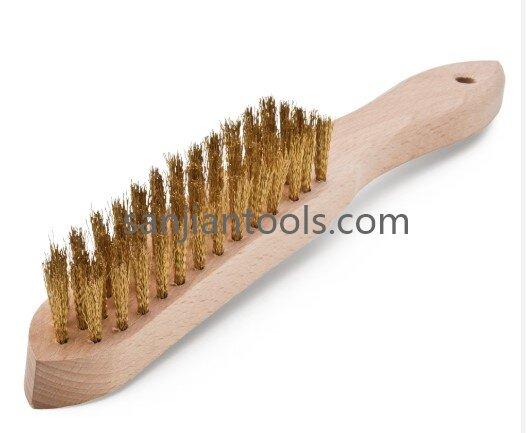
Floor maintenance often involves removing dirt and debris that cannot be effectively handled by soft sweeping tools alone. For these applications, a Stiff Floor Brush provides firm bristle contact for scrubbing, sweeping, and cleaning surfaces where greater mechanical action is required. From a manufacturing perspective, bristle material, stiffness, density, brush-head structure, handle connection, and production consistency all influence the finished tool.
Bristle material is the foundation of the brush's working characteristics. Synthetic fibers are commonly considered for applications requiring consistent dimensions and resistance to routine moisture exposure, while other materials may be selected according to specific cleaning requirements. The appropriate material depends on the floor surface, type of contamination, and whether the tool is intended for dry or wet cleaning.
Bristle stiffness must be carefully controlled. Very soft fibers may bend too easily when users apply pressure, reducing direct contact with stubborn debris. Excessively rigid fibers, however, may not be appropriate for every surface. Manufacturers can adjust filament dimensions, material characteristics, length, and density to create different levels of brushing action for concrete, workshop floors, outdoor areas, warehouses, and other environments.
The arrangement of the bristles also affects cleaning behavior. A well-designed brush head distributes the fibers across the working surface so that contact remains relatively consistent during movement. Dense configurations may help collect and dislodge debris, while different spacing arrangements can support other cleaning patterns. Consistent tufting or fastening processes are important for maintaining the intended structure.
The brush block needs sufficient strength to support the bristles during repeated use. Floor cleaning often involves pushing the brush across a surface while applying downward pressure. The working head must therefore remain stable and resist excessive movement or separation of the bristle bundles. Manufacturers can inspect attachment strength, bristle alignment, trimming, and block dimensions as part of routine quality control.
Handle construction has a direct effect on usability. A long handle can allow users to clean larger floor areas without repeatedly bending down, while a suitable grip provides control during pushing and pulling movements. Handle materials should be selected according to the expected environment. Plastic components can offer consistent molding and practical surface finishing, while the connection between handle and brush head should provide adequate stability.
Commercial and industrial environments can create different demands from household cleaning. Warehouses may have larger floor areas and accumulated dust or debris, while workshops can involve metal particles, residue, and other materials. Outdoor surfaces may contain soil and coarse debris. These conditions can influence preferred bristle stiffness, head width, handle length, and overall construction.
Manufacturing consistency is particularly important when floor brushes are supplied through wholesale channels. Buyers may expect identical dimensions, bristle density, and assembly quality across large orders. Production inspection can cover filament material, bristle length, tufting density, handle dimensions, joint strength, and surface finish. Standardized processes can reduce batch-to-batch variation and support predictable product quality.
Packaging should protect the brush during storage and transportation. Long handles, brush heads, and stiff bristles may require suitable packing arrangements to prevent bending or deformation. Efficient packaging can also help distributors organize warehouse inventory and reduce unnecessary handling damage before products reach customers.
For professional buyers, a floor brush should be selected according to the surface and cleaning conditions rather than simply choosing the stiffest available bristles. Material compatibility, bristle configuration, handle design, structural strength, and manufacturing quality should all be considered together. When evaluating a Stiff Floor Brush, these factors can help buyers identify suitable tools for workshops, warehouses, commercial facilities, outdoor cleaning, and other demanding maintenance environments. More information about related cleaning and hand tools is available at https://www.sanjiantools.com/product.

 English
 Arabic
 French
 Spanish
 Portuguese
 Deutsch
 Dutch
Dutch
 Italiano
 Russian
 Romaian
 Portuguese (Brazil)
 Greek
Greek