


ACell PRP Treatment for Hair in Dubai After Postpartum Hair Shedding
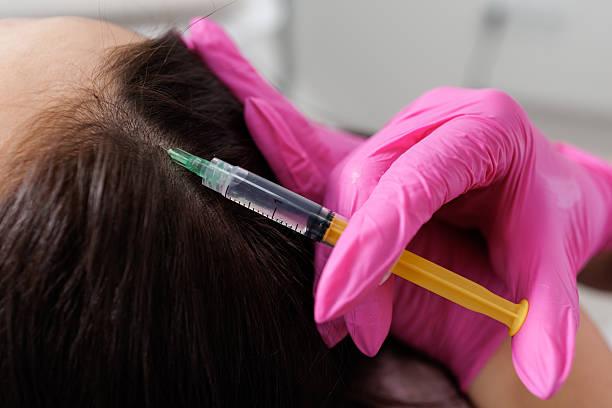
Hair shedding after pregnancy can look dramatic, but postpartum shedding is often different from progressive pattern hair loss. Before considering ACell PRP Treatment for Hair in Dubai, women should first determine whether the increased shedding is temporary postpartum telogen effluvium or whether another form of hair loss is developing at the same time.
The distinction matters because postpartum shedding often improves naturally, while persistent or patterned thinning may require a different evaluation.
Why Hair Shedding Happens After Pregnancy
Many women notice increased shedding several months after giving birth.
The American Academy of Dermatology describes postpartum hair shedding as telogen effluvium associated with the hormonal changes following pregnancy. It commonly becomes noticeable a few months after childbirth.
This can make the hair appear significantly thinner even though the follicles themselves may not have suffered permanent damage.
Postpartum Shedding Is Not the Same as Progressive Hair Loss
Temporary shedding generally involves an increase in the number of hairs entering the shedding phase.
A woman may notice:
- More hair on the pillow
- Increased shedding during washing
- More hair in a brush
- A thinner-looking ponytail
- Reduced overall fullness
The AAD reports that many women regain their normal fullness within the first year after childbirth.
When a Closer Assessment Makes Sense
If fullness does not return as expected, another cause may need to be considered.
An assessment can be useful when:
- Significant thinning continues beyond the expected recovery period
- The central part keeps widening
- The temples become noticeably thinner
- Hair caliber continues decreasing
- There are scalp symptoms
- Hair loss becomes progressively patterned
The AAD recommends evaluation when normal fullness does not return because other causes may be contributing.
Should Postpartum Shedding Be Treated Immediately
Not necessarily.
If the hair loss is consistent with temporary telogen effluvium, the appropriate approach may involve observation and supportive hair care rather than immediately pursuing a regenerative procedure.
This is one reason diagnosis should come before treatment.
Trying to treat every episode of postpartum shedding as permanent hair loss can create unnecessary interventions.
Where ACell and PRP May Be Considered
If a later assessment identifies another form of persistent hair thinning, a clinician may discuss several treatment options.
PRP has been investigated for pattern hair loss, but the evidence is not the same as evidence specifically proving that an ACell-plus-PRP protocol will reverse postpartum shedding.
Therefore, ACell and PRP should not be presented as a routine treatment for normal postpartum shedding.
The decision should depend on the diagnosis and the patient's current hair condition.
Postpartum Hair Changes Can Have More Than One Cause
Pregnancy and childbirth can coincide with other factors that affect hair.
For example, a woman may experience:
- Nutritional challenges
- Hormonal changes
- Significant physical stress
- Sleep disruption
- Changes in medication
- A previously unnoticed pattern of hair loss
The AAD emphasizes that hair loss has many possible causes and that accurate diagnosis is important when shedding persists.
How Progress Can Be Monitored
Rather than judging recovery every day, patients can monitor broader changes over time.
Useful observations include:
- Overall scalp visibility
- Hair part width
- Ponytail thickness
- Hair caliber
- Amount of daily shedding
- Consistent clinical photographs
This can make gradual recovery easier to recognize.
When to Reconsider the Original Assumption
If postpartum shedding continues longer than expected or develops into a recognizable pattern, it may no longer be appropriate to assume that pregnancy alone explains the thinning.
A fresh assessment can determine whether the patient is experiencing ongoing telogen effluvium, female pattern hair loss, or another condition.
Frequently Asked Questions
Is postpartum hair shedding permanent?
Usually not. Many women regain their normal fullness within the first year after childbirth.
Should I have PRP immediately after pregnancy?
Not automatically. The cause of the shedding and the patient's individual circumstances should be assessed first.
Can postpartum shedding reveal another type of hair loss?
Yes. Persistent or patterned thinning may indicate another contributing condition.
When should ongoing postpartum hair loss be evaluated?
If normal fullness does not return as expected or thinning continues to progress, medical assessment can help identify the cause.
Taking a Measured Approach After Pregnancy
Postpartum shedding can be alarming without necessarily representing permanent hair loss. Giving the hair cycle time to recover while monitoring persistent or changing patterns can prevent unnecessary assumptions about treatment.
If ongoing thinning remains after the postpartum period, Tajmeels Clinic can provide an individualized hair assessment and discuss whether an ACell and PRP-based approach is appropriate based on the underlying pattern and treatment goals.
Learn more about personalized hair-restoration options at Tajmeels Clinic.

 Arabic
 French
 Spanish
 Portuguese
 Deutsch
 Turkish
 Dutch
Dutch
 Italiano
 Russian
 Romaian
 Portuguese (Brazil)
 Greek
Greek